Kristin Reger – IRRLICHT

IRRLICHT

de Kristin Reger

Febrero 8, 2024.
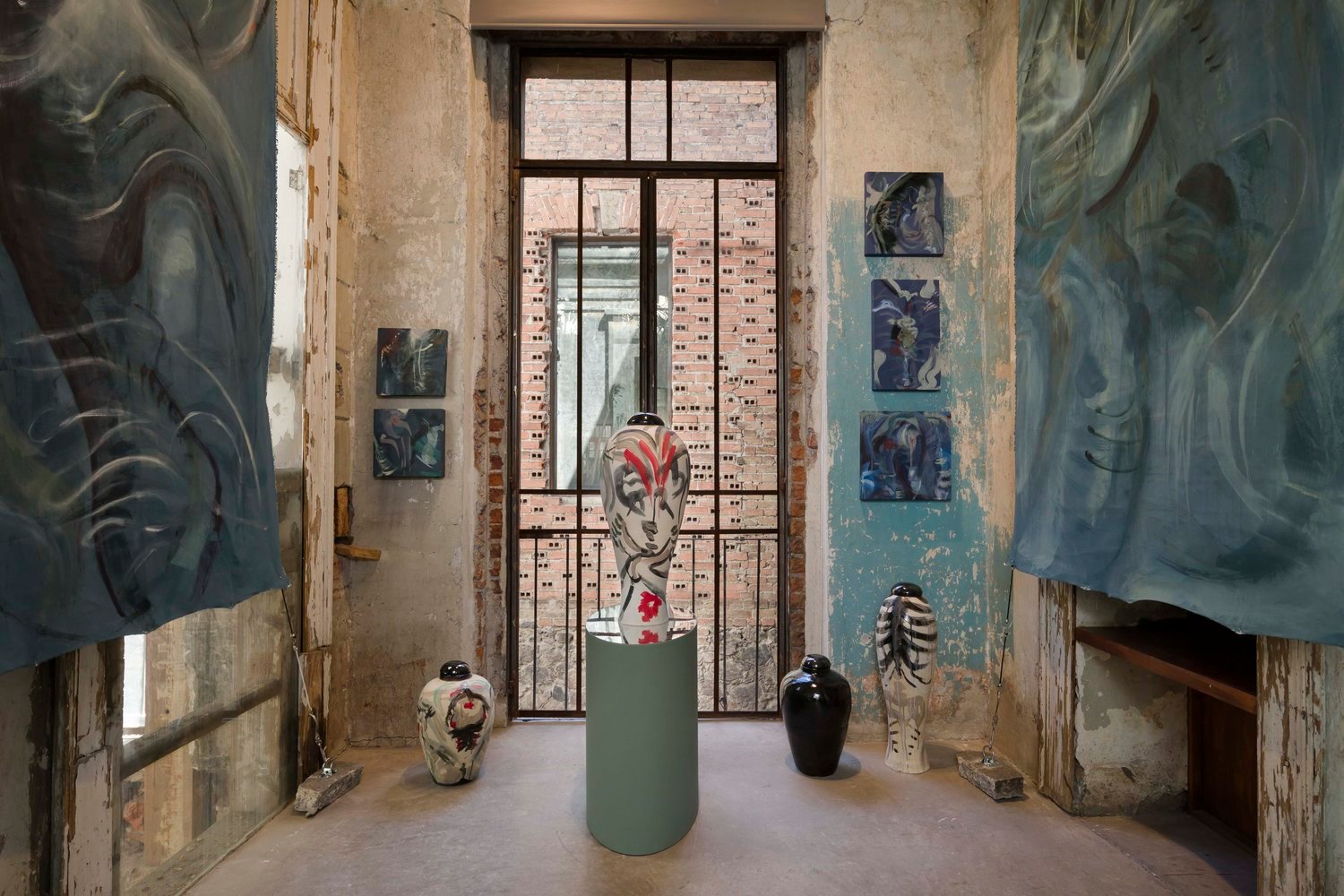
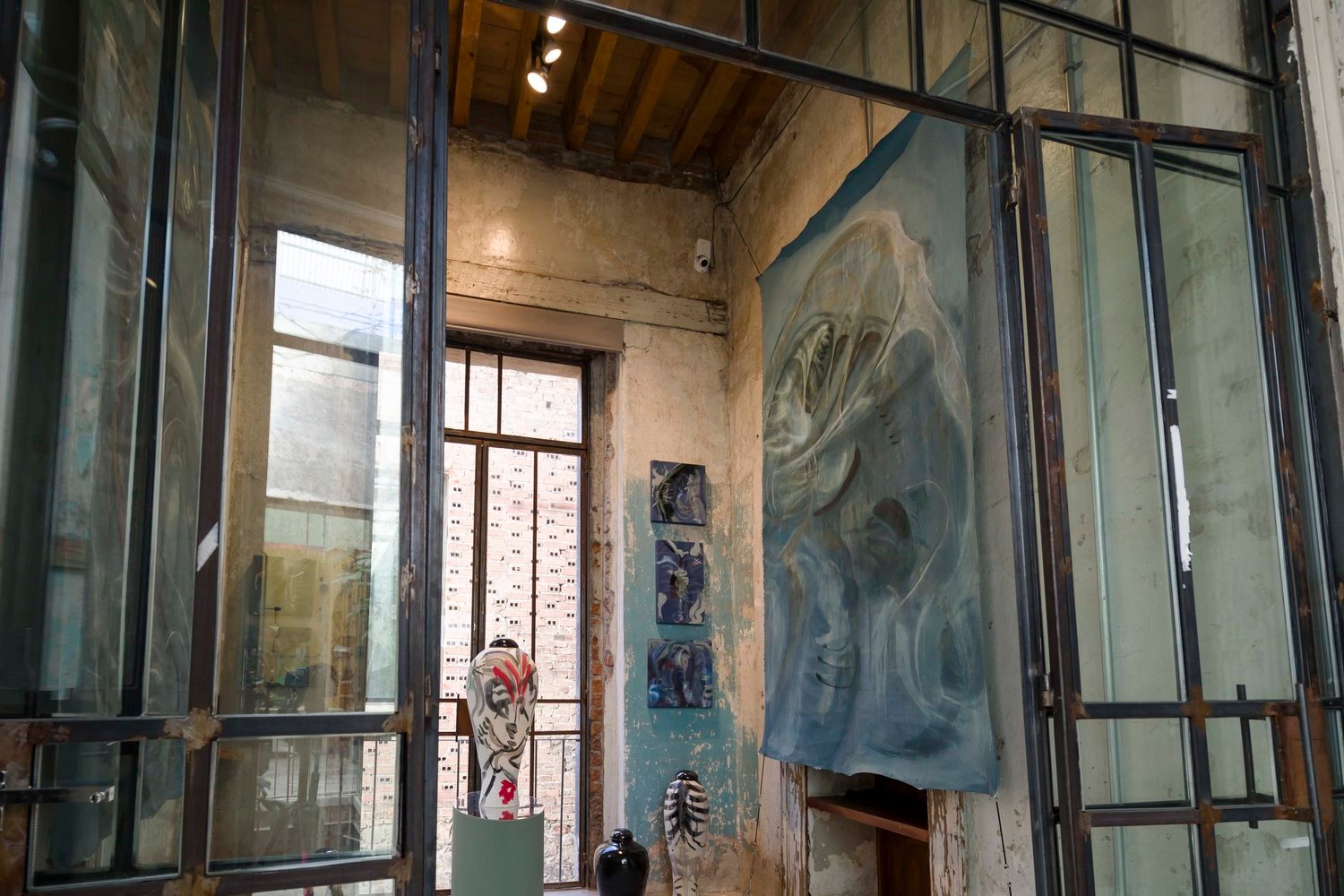
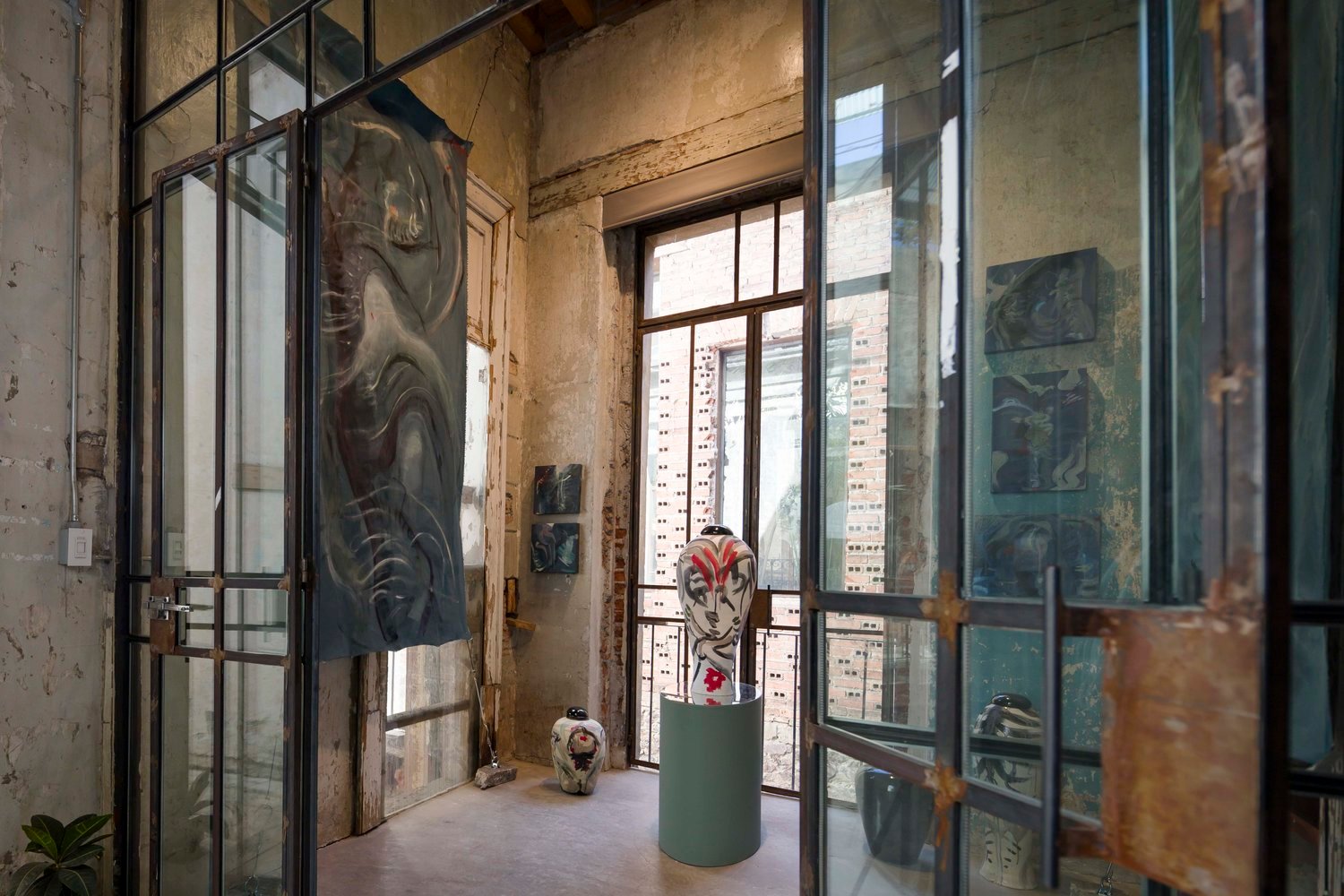
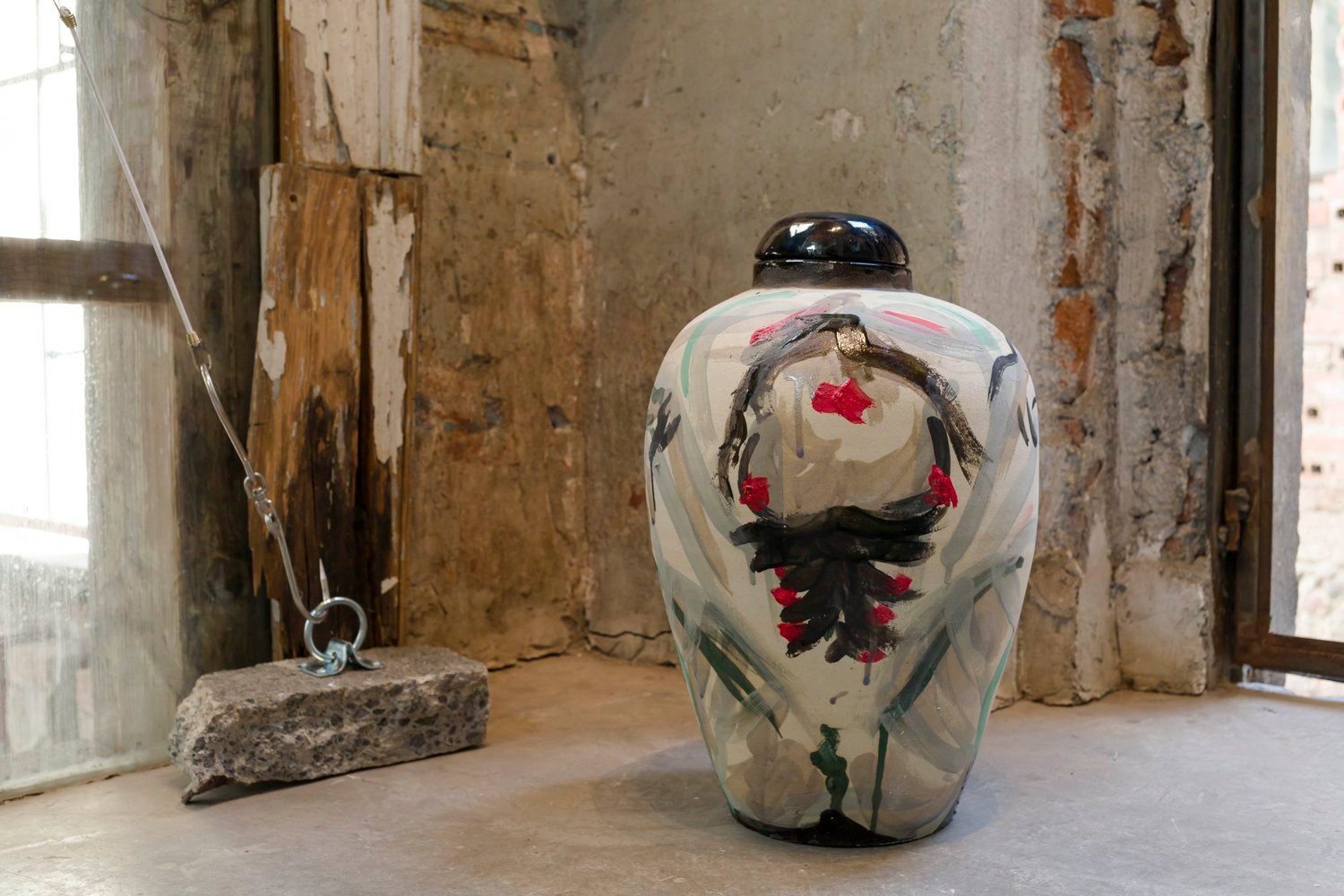
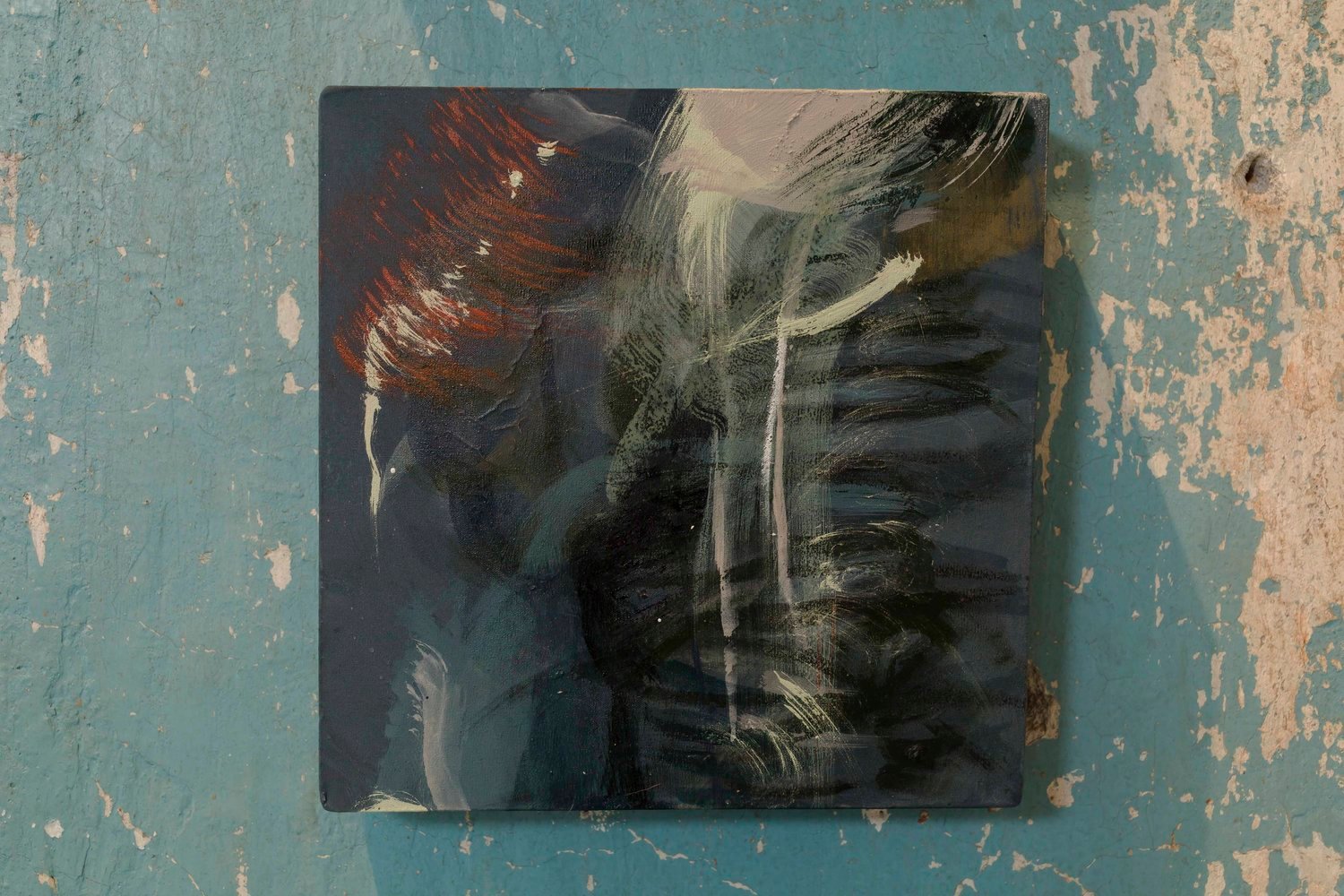
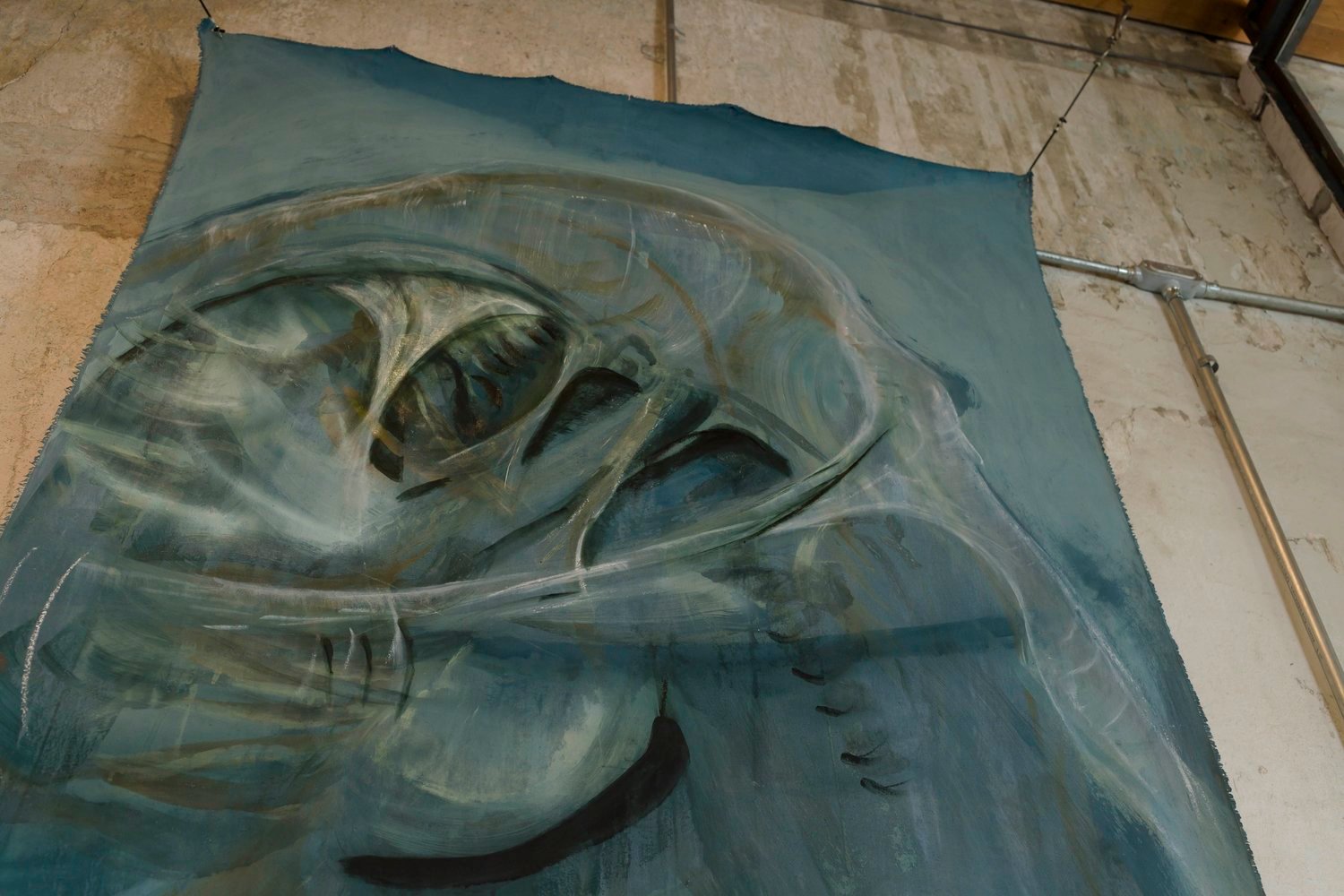
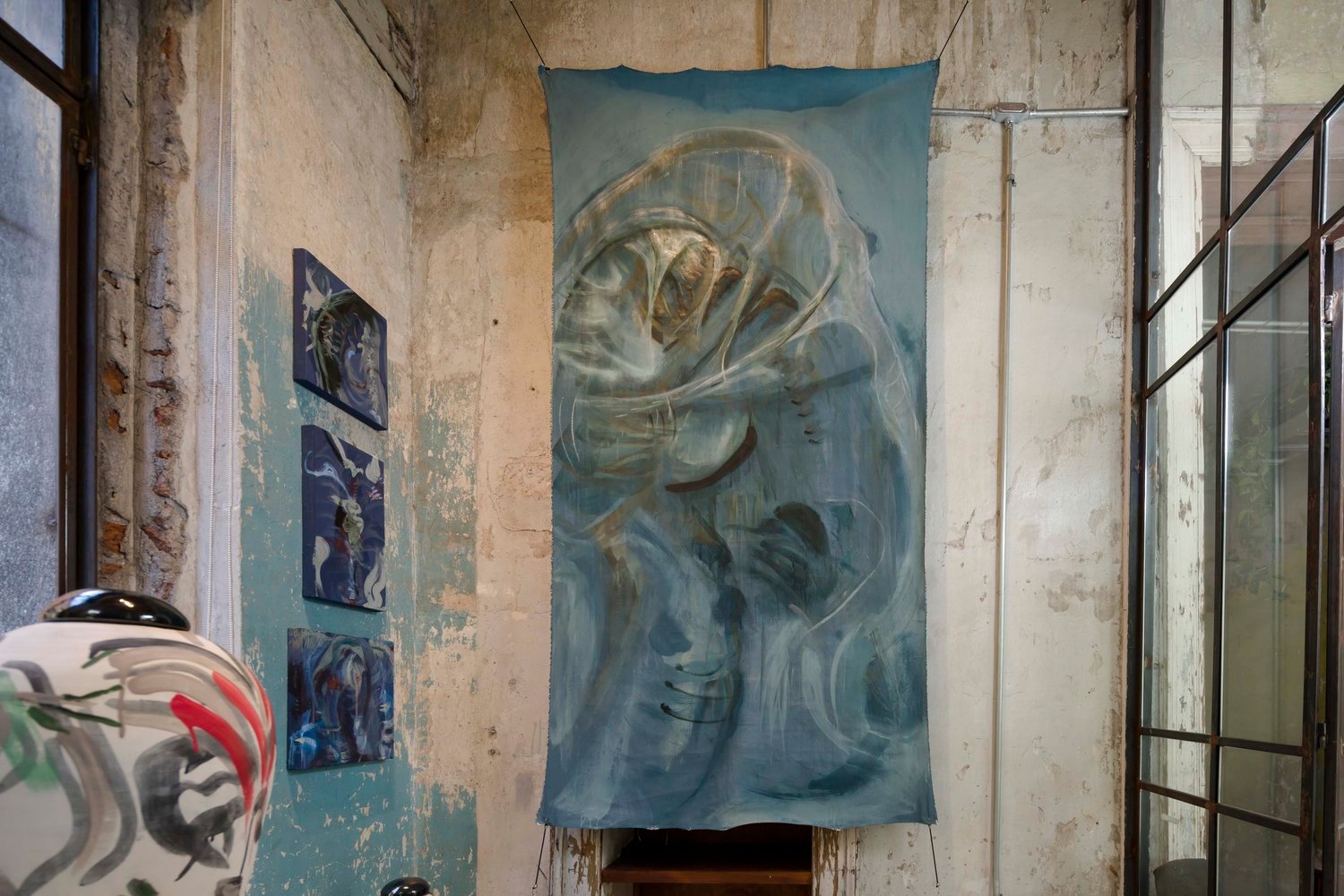
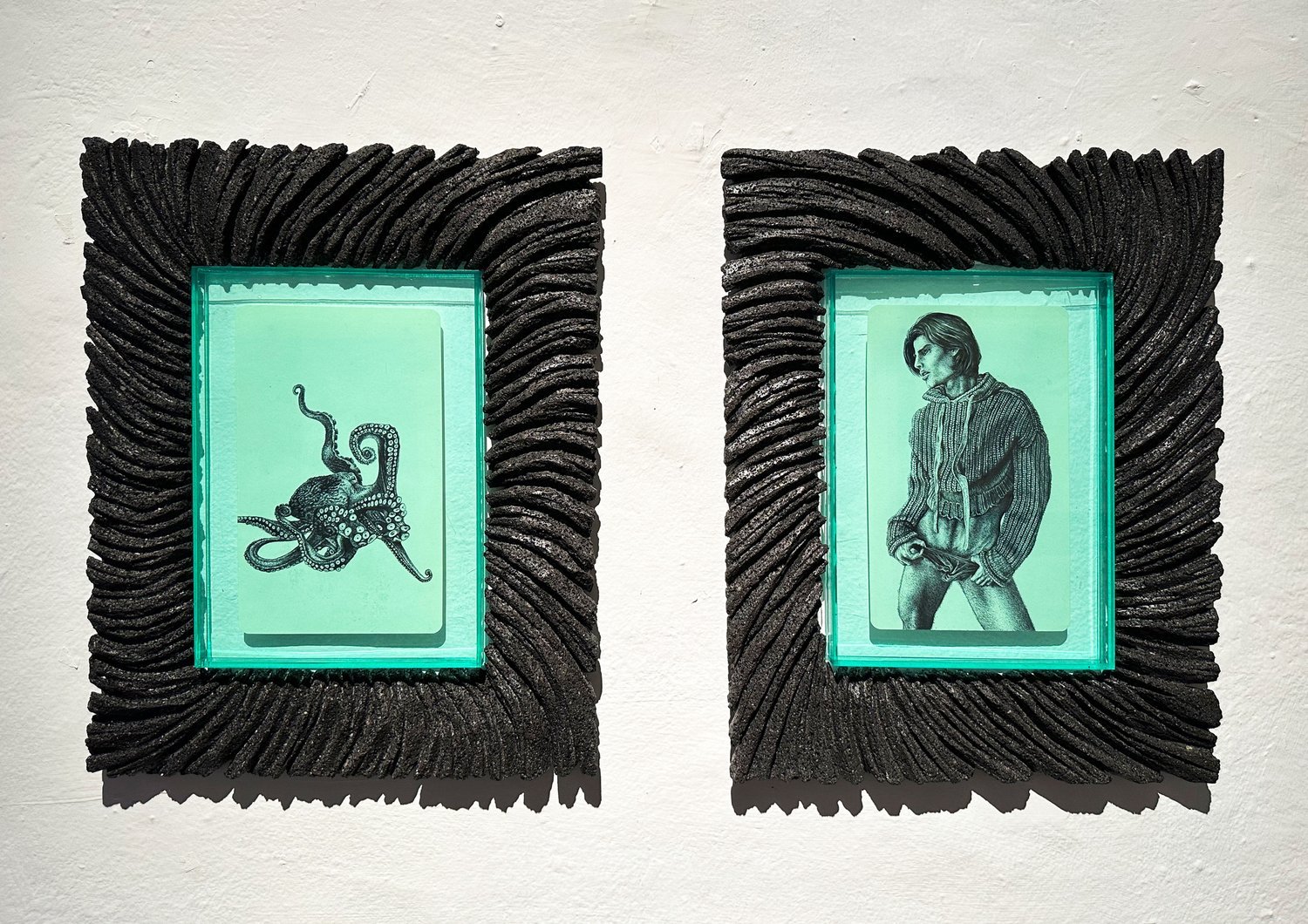
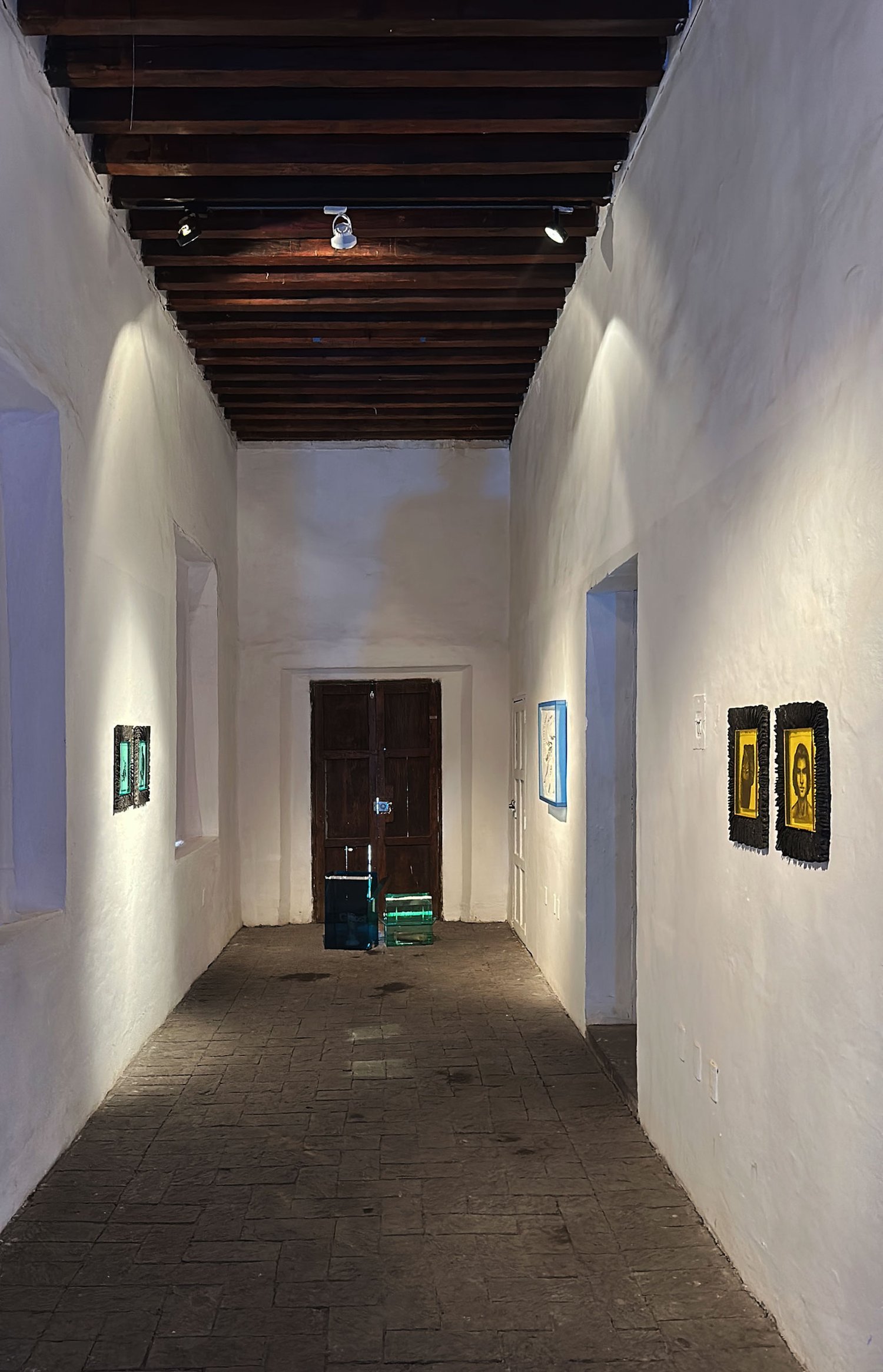
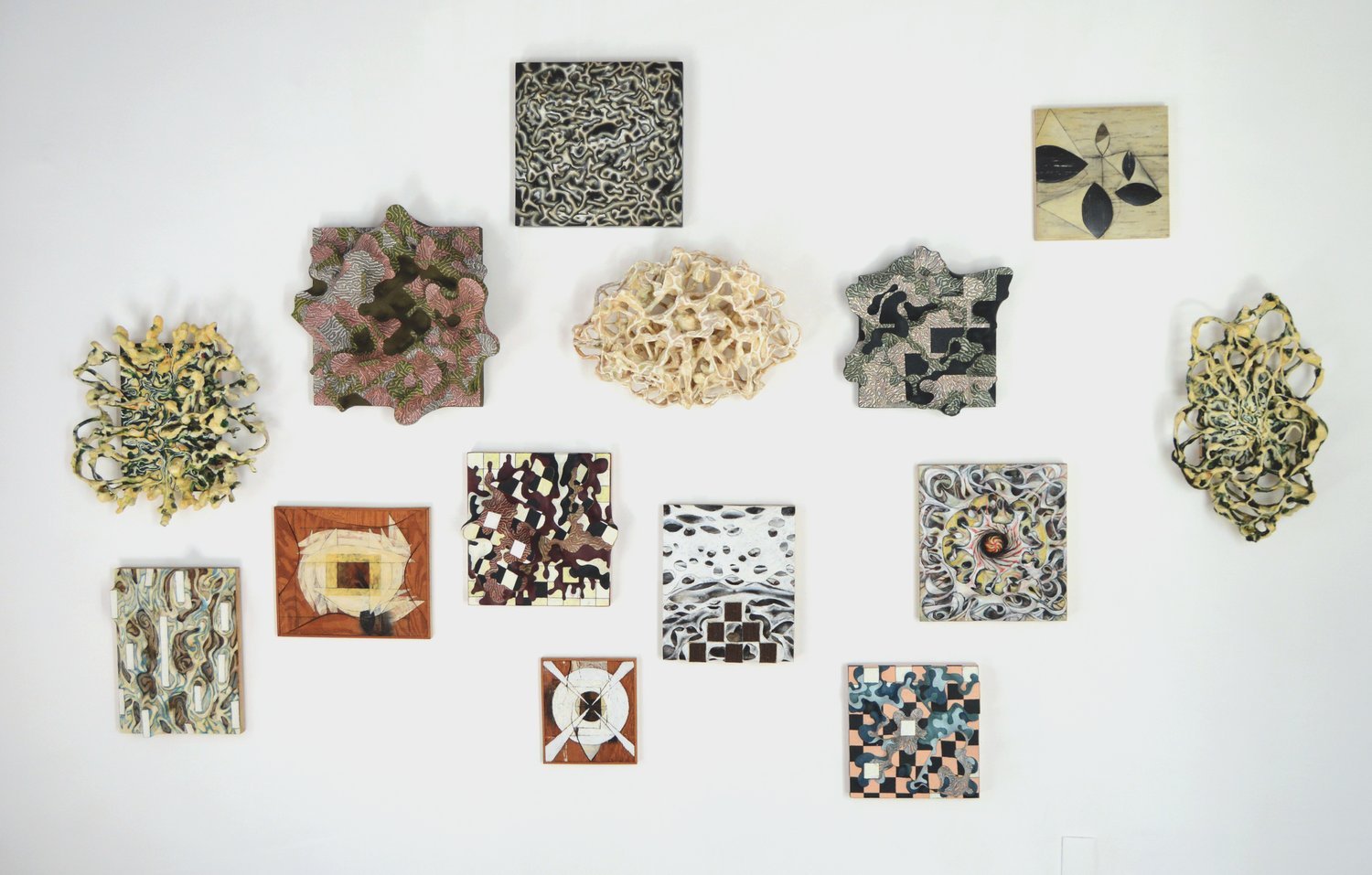
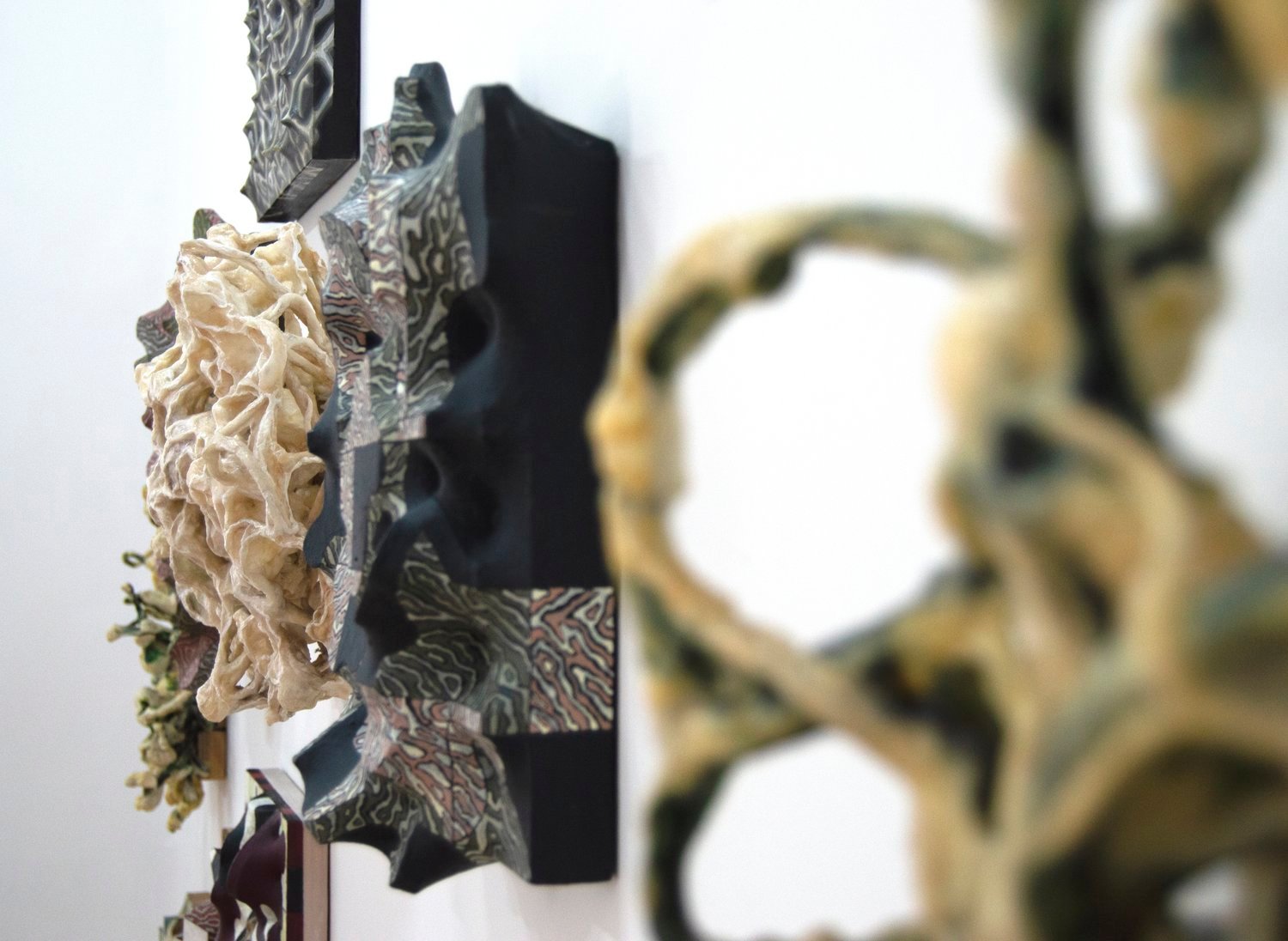
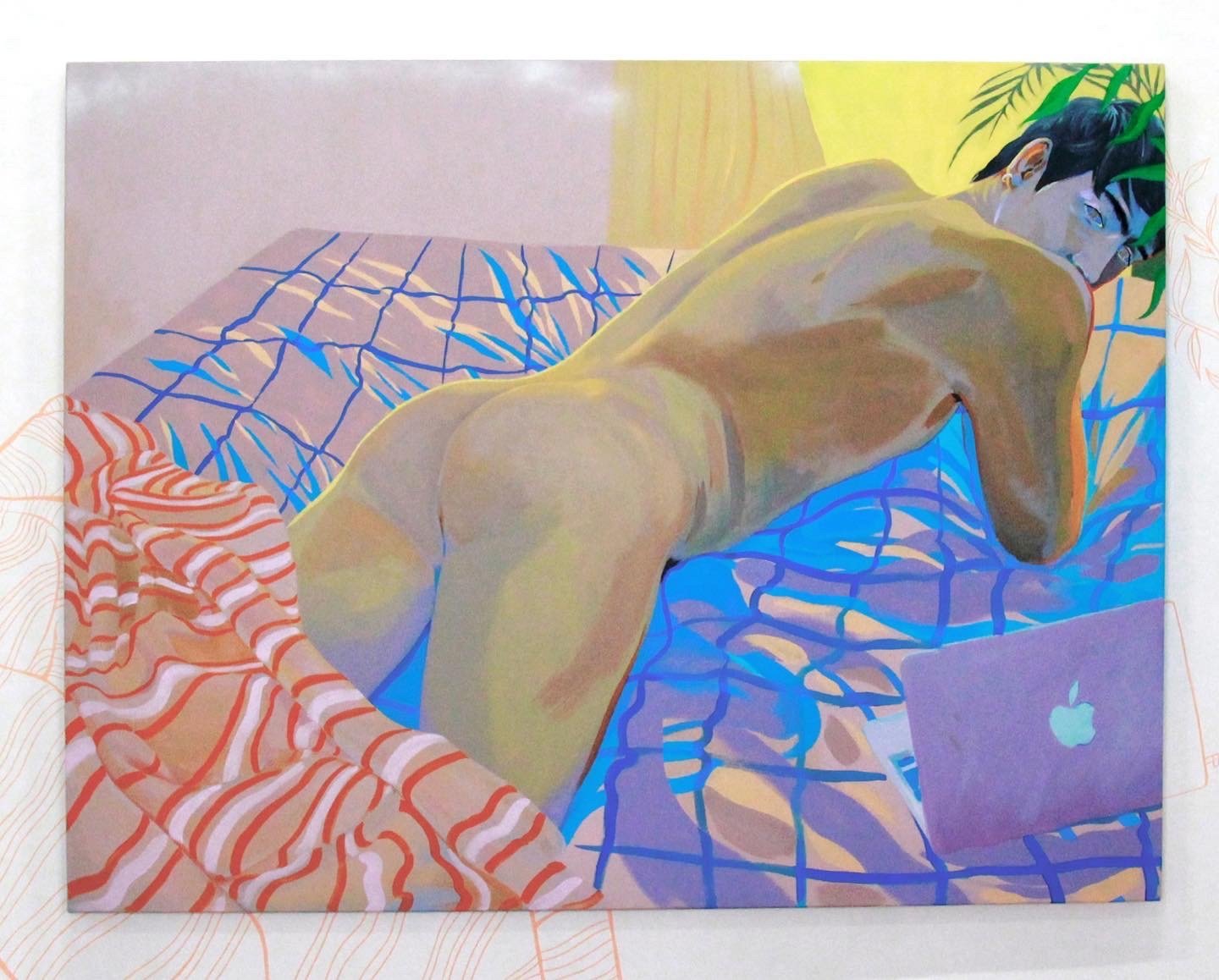
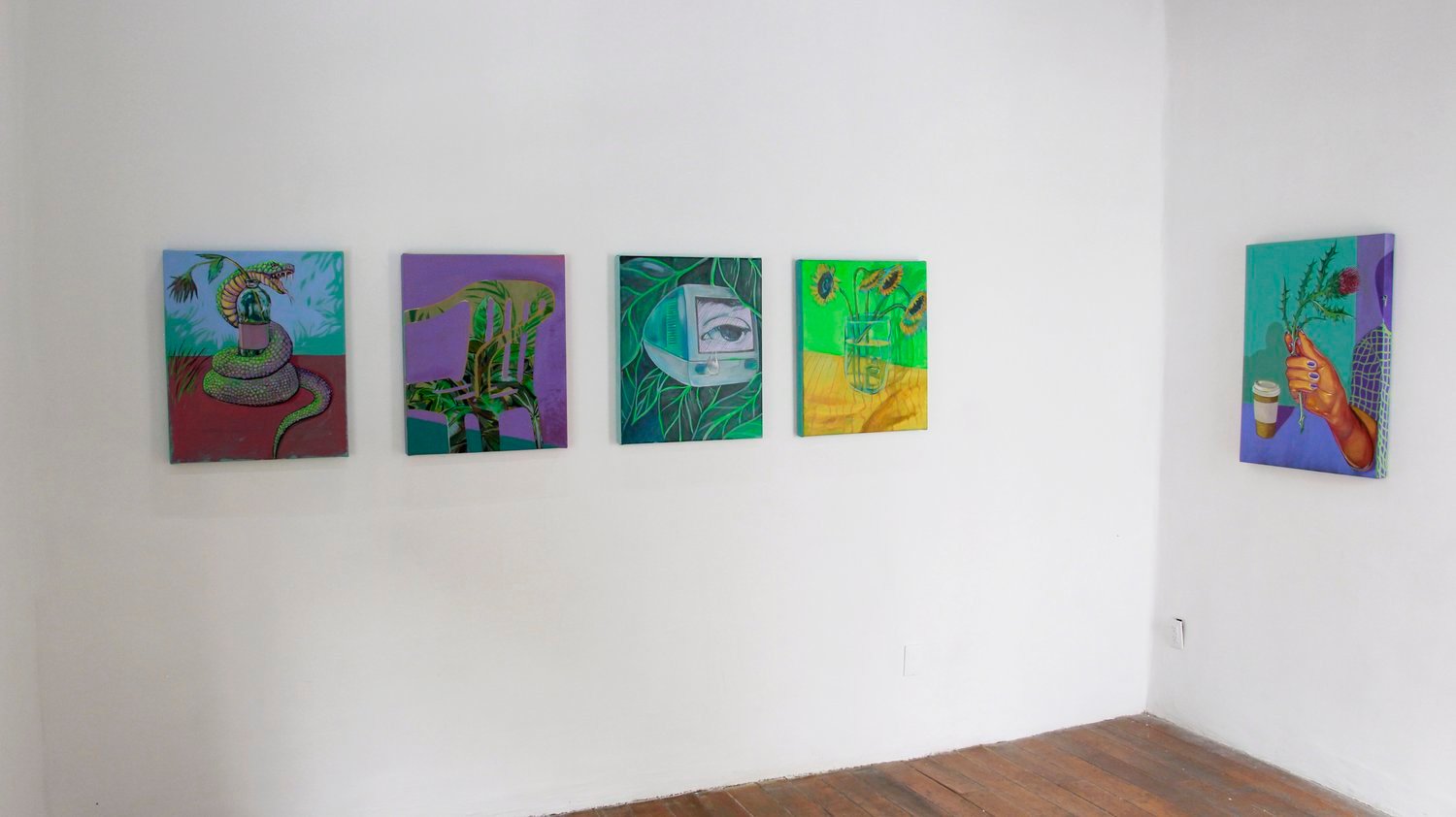
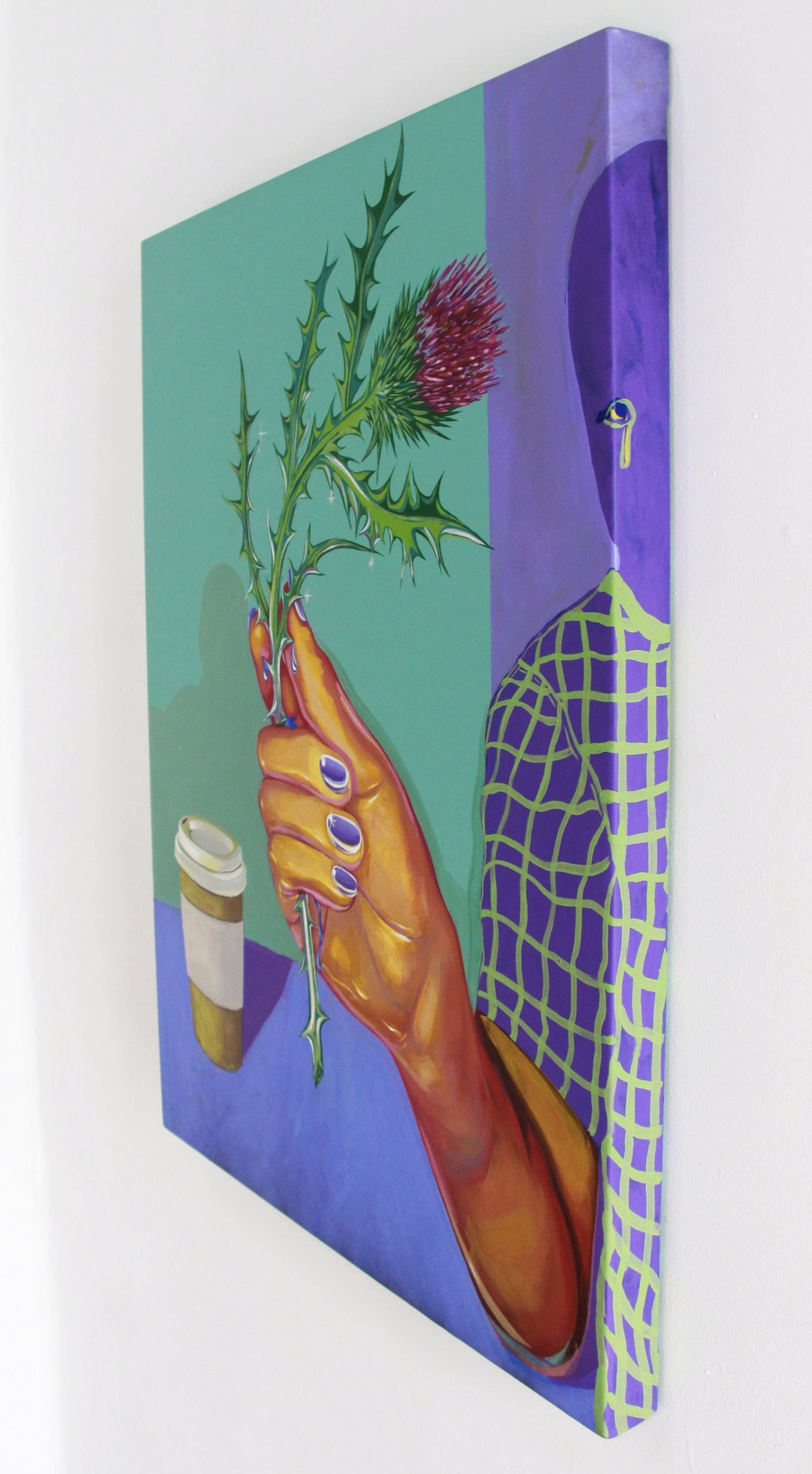
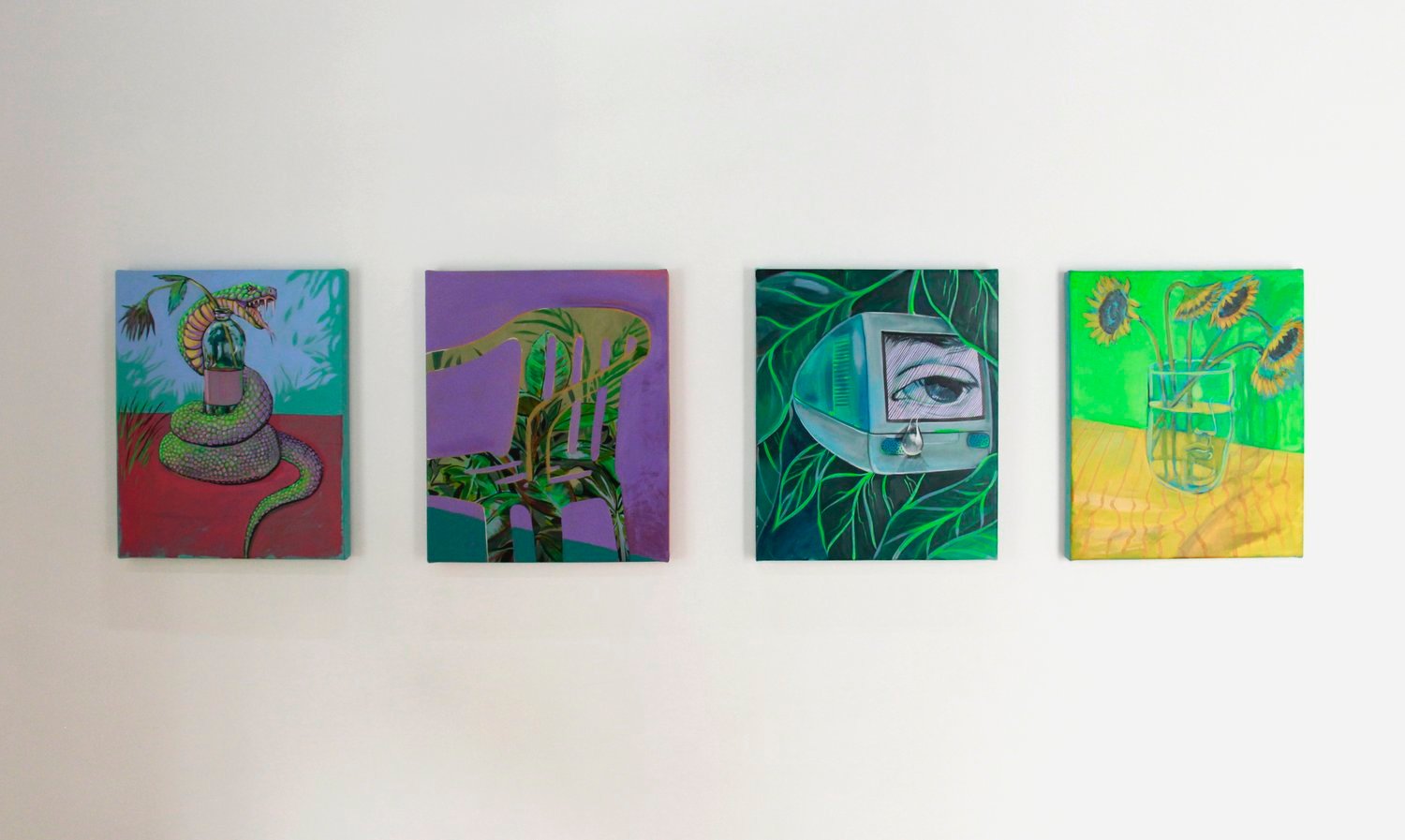
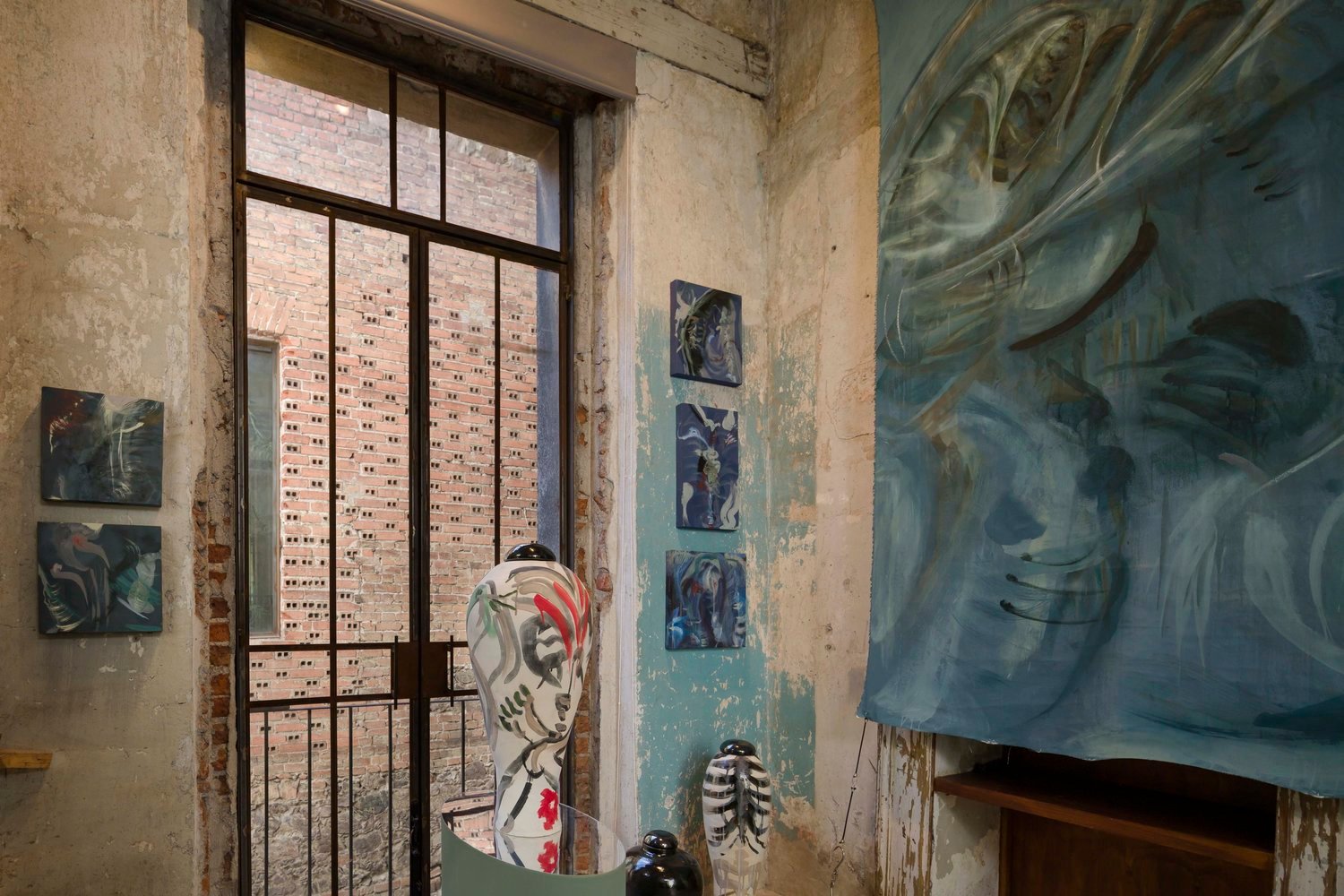
Irrlicht se refiere al fenómeno luminoso de aparición de misteriosos orbes de luz en pantanos y páramos. Alrededor del mundo el folclore sugiere que estas pequeñas entidades luminosas tienen un encanto siniestro que hace que quien sea testigo del avistamiento pierda la orientación, el juicio y la vida. Literalmente, “luz equivocada”, la palabra alemana implica una fuerza ilusoria que es capaz de conducirnos a las profundidades de la locura. La alegoría del Irrlicht, también conocida como “fuego fátuo” o “fuego sin sentido” en México, ilumina el magnetismo de todo aquello misterioso y fugaz, formando un vínculo entre el encanto y el abismo.

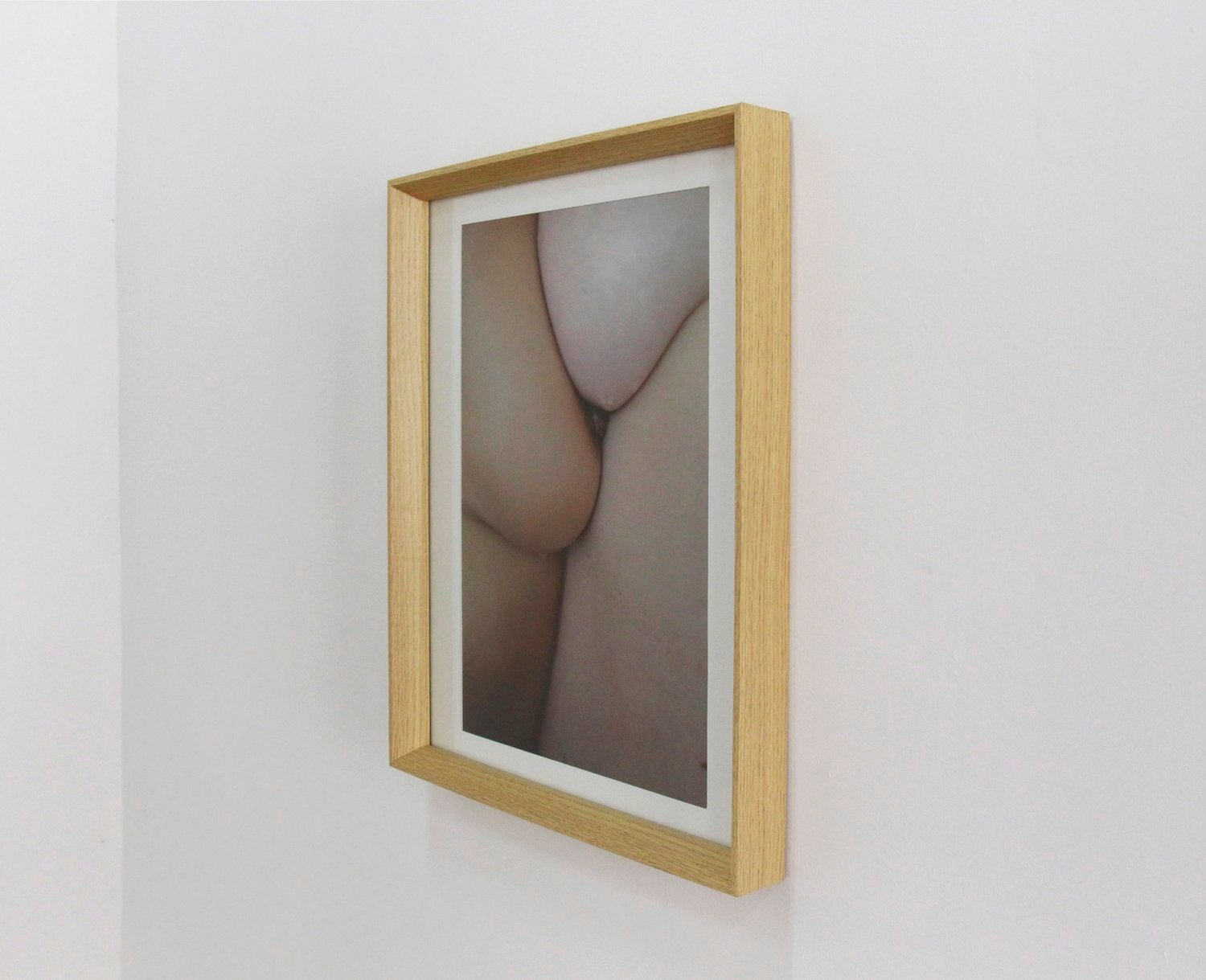
Mientras la ciencia ofrece explicaciones químicas o a través de la electrodinámica cuántica, nos devuelve a los misterios de la materia y la energía, las luces han sido, desde tiempos remotos, comúnmente interpretadas como ánimas que carecen de un cuerpo físico. Lo que emerge en estas pinturas no se trata de la idea de un “fantasma” propiamente tal, sino más bien de la proyección emocional ante tales entidades.

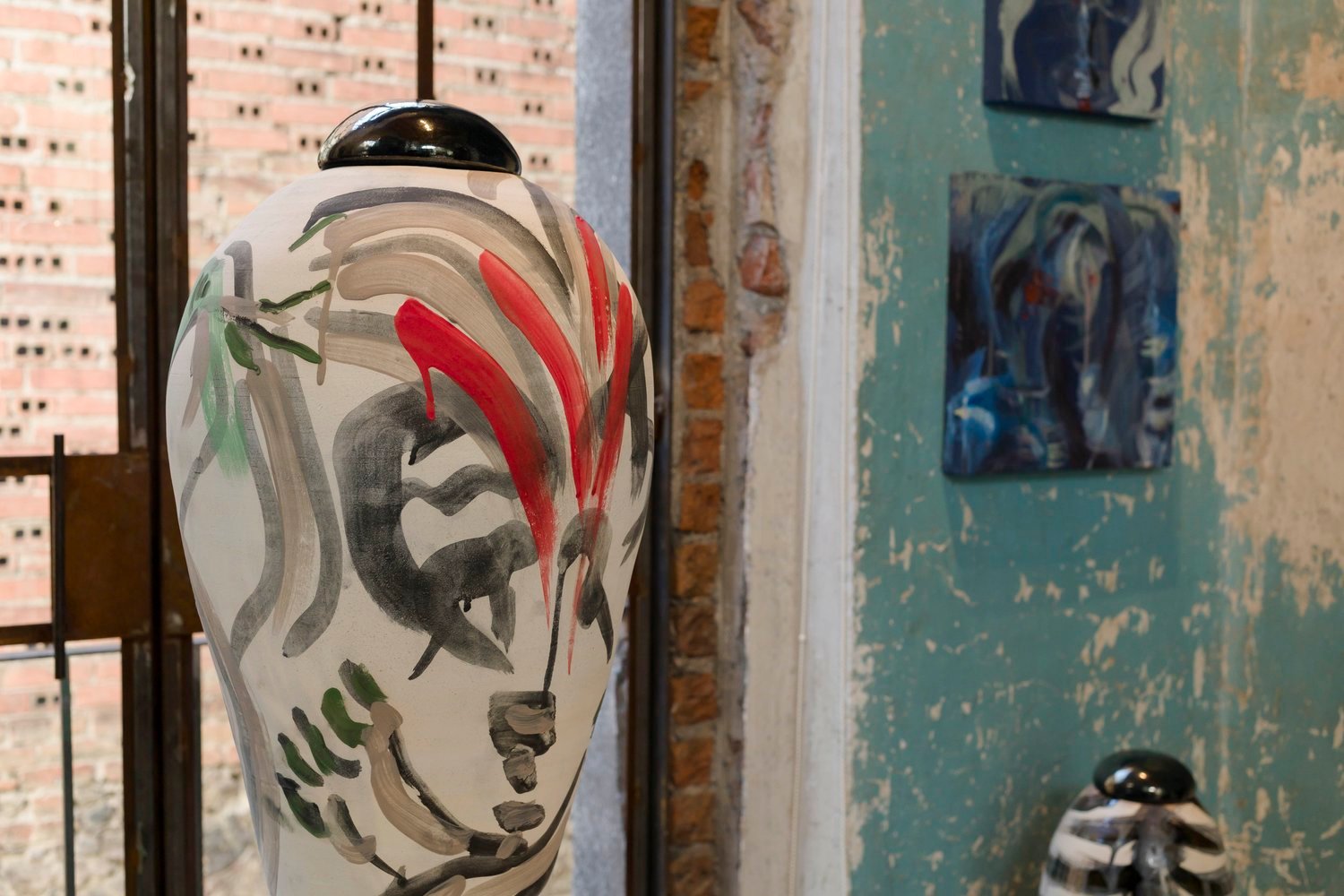
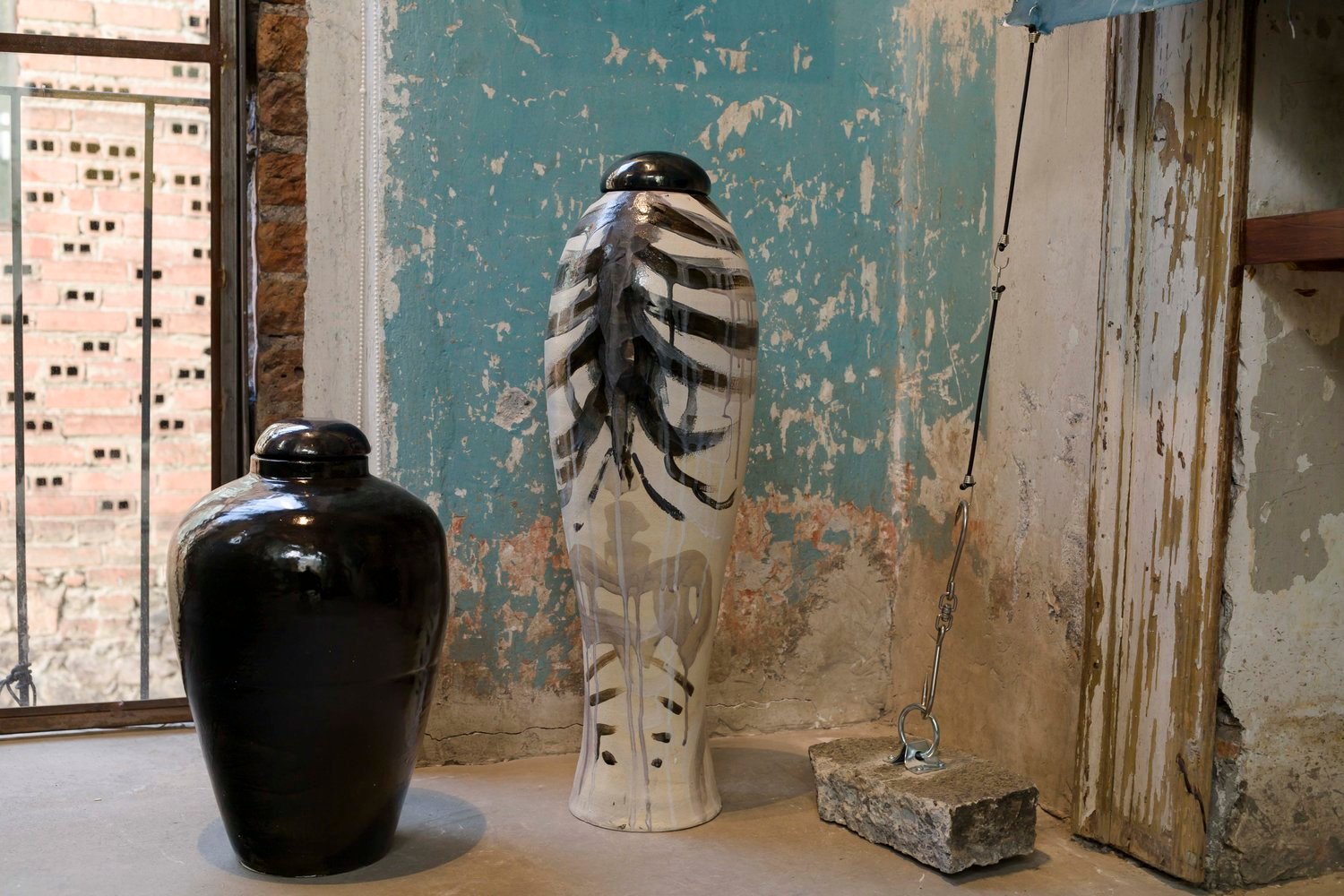
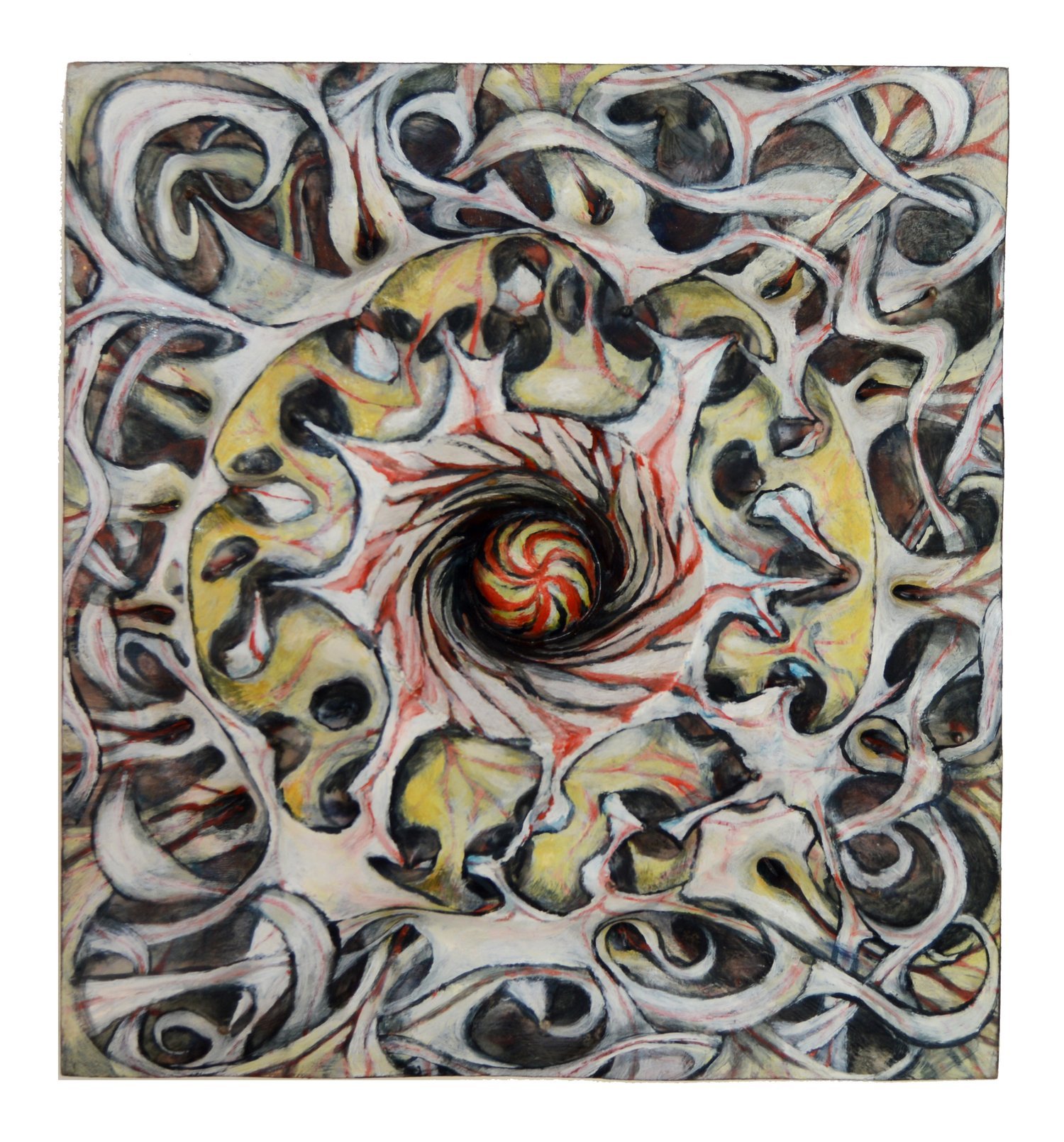
Una luz, o de lo que sea que se trate, que provoca un deseo que todo lo consume: la definición misma de fetiche. Un agente para consumir y querer ser consumido; para acercarse a lo incognoscible y lo inmortal. En estos cuadros, el Irrlicht se convierte en un Denkfigur del fetiche. Promesas débiles de sosiego pasan a convertirse en un vacuo chivo expiatorio al caer en sus redes. Se desea ser convocado y consumido por completo, pero la moneda de cambio del deseo se consigue a pequeños bocados: no es un amante, sino su pecho, sus labios, un latigazo; o incluso una costilla, vértebra o cartílago lo que negocia con el fantástico placer. Euforia y depresión, un salto y un choque, escuálidos movimientos humanos se arremolinan en un ciclón de delirio, atraídos por la parafernalia.

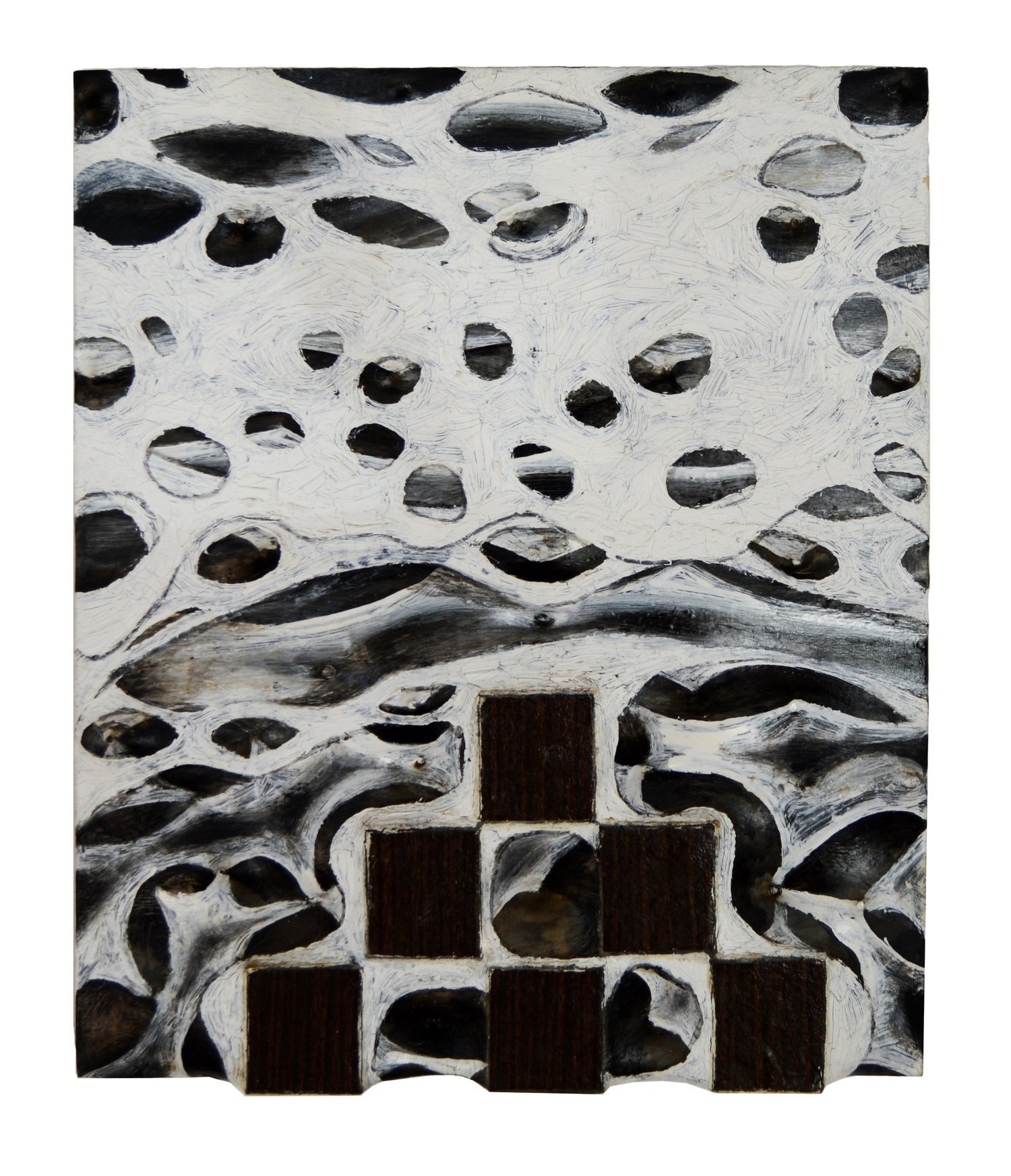
El impulso que jala hacia una cacofonía de imágenes y el dejo de figuras deconstruidas que emergen de rajaduras decisivas y esqueléticas en planos psicodélicos. Las marcas y los movimientos se extienden en una red de signos primordiales, influidos por peculiares estados de ánimo, permitiendo que la dicha y la furia se derramen en color, textura y línea, eclipsando lo cerebral. Sólo el cuerpo, sólo el gesto: un único canal para un trasfondo infinito.

La imagen aparece en hábiles trazos pendulares, el empapamiento de un lienzo. Huesos que se rompen, garras que rasgan. Trozos deseados del cuerpo que prometen todo un ánima, el fetiche es una forma de sinécdoque que hace menos aterradora la aproximación a lo incognoscible (Otro). Das Irrlicht atrae con gravedad propia, un agujero negro de vacuidad sin retorno, el melodrama de la absorción total; somos arrancados de una narrativa mayor; somos arrastrados por pequeñas mitologías.

Kristin Reger (Traducción de Mariana Soto Otárola)
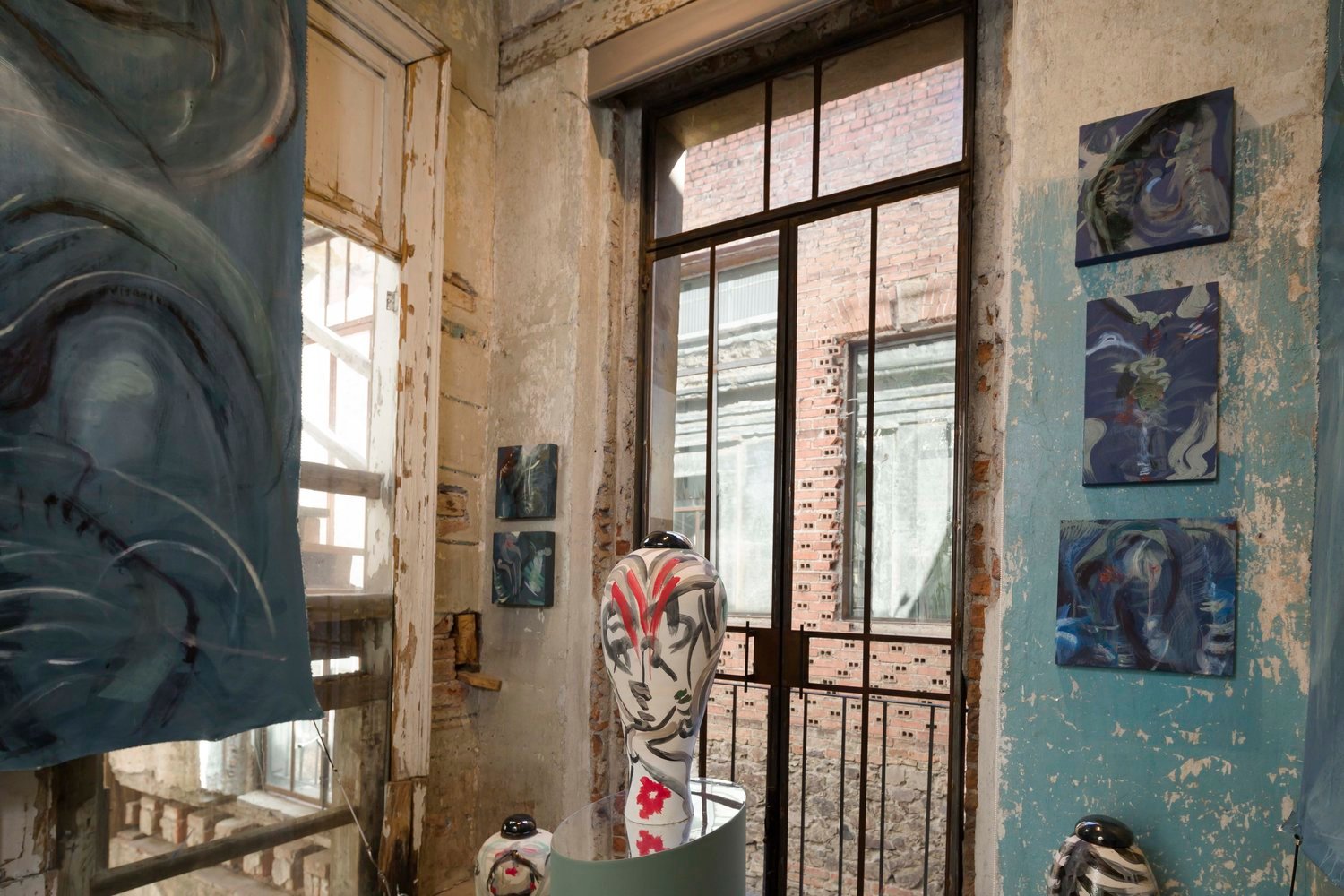
Irrlicht refers to the phenomenon of mysterious orbs of light appearing in swamplands. Folklore across the globe suggests these small luminous entities have a sinister allure, causing people to lose their ways, minds, and lives. Literally, “mistaken light,” the German word implies a misguiding force bringing one to the depths of madness. The allegory of Irrlicht –known as fuego fátuo or “pointless fire” in Mexico– illuminates the magnetism of all things mysterious and fleeting, binding enchantment to abyss.

While science offers chemical explanations –which, via quantum electrodynamics, only return us to mysteries of matter and energy– the lights are commonly interpreted as bodiless spirits. It’s less the idea of a “ghost” itself but rather the emotional projections placed onto such entities that emerge in these paintings.

A light, or anything else, provoking an all-consuming desire: this is fetish. A proxy for consuming, wanting to be consumed, to approach the unknowable and deathless. In these paintings, the Irrlicht becomes a Denkfigur of fetish. Faint promises become a vacuous scapegoat of the Fall. One wants to be summoned and wholly consumed, but the currency of desire is in small morsels: it is not a lover, but a breast, a lip, a lash; or indeed a rib, vertebrae, or gristle that negotiates fantastic pleasure. A rush and a push, a jump and a crash, feeble human movements whirl in a cyclone of delirium, beckoned by paraphernalia.

I pull from a cacophony of imagery and let deconstructed figures emerge from decisive, skeletal slashes in psychedelic planes. Marks and movements extrude into a web of primordial signs, influenced by peculiar states of mind, allowing bliss and fury to spill forth in color, texture, and line, eclipsing the cerebral. Only the body, only gesture: a single channel for infinite backstory.

Image appears in deft pendulous strokes, the soaking of a canvas. Breaking off of bone, claws tearing through. Desired bits of the body promising a whole spirit, fetish is a form of synecdoche that makes approximating the unknowable (Other) less terrifying. Das Irrlicht lures with its own gravity, a black hole of nothing left and no way back, feeling the melodrama of absorption; deferred from a grand narrative, we are strung along by small mythologies.

Kristin Rege
 

Fotografías de Weima Art Photography

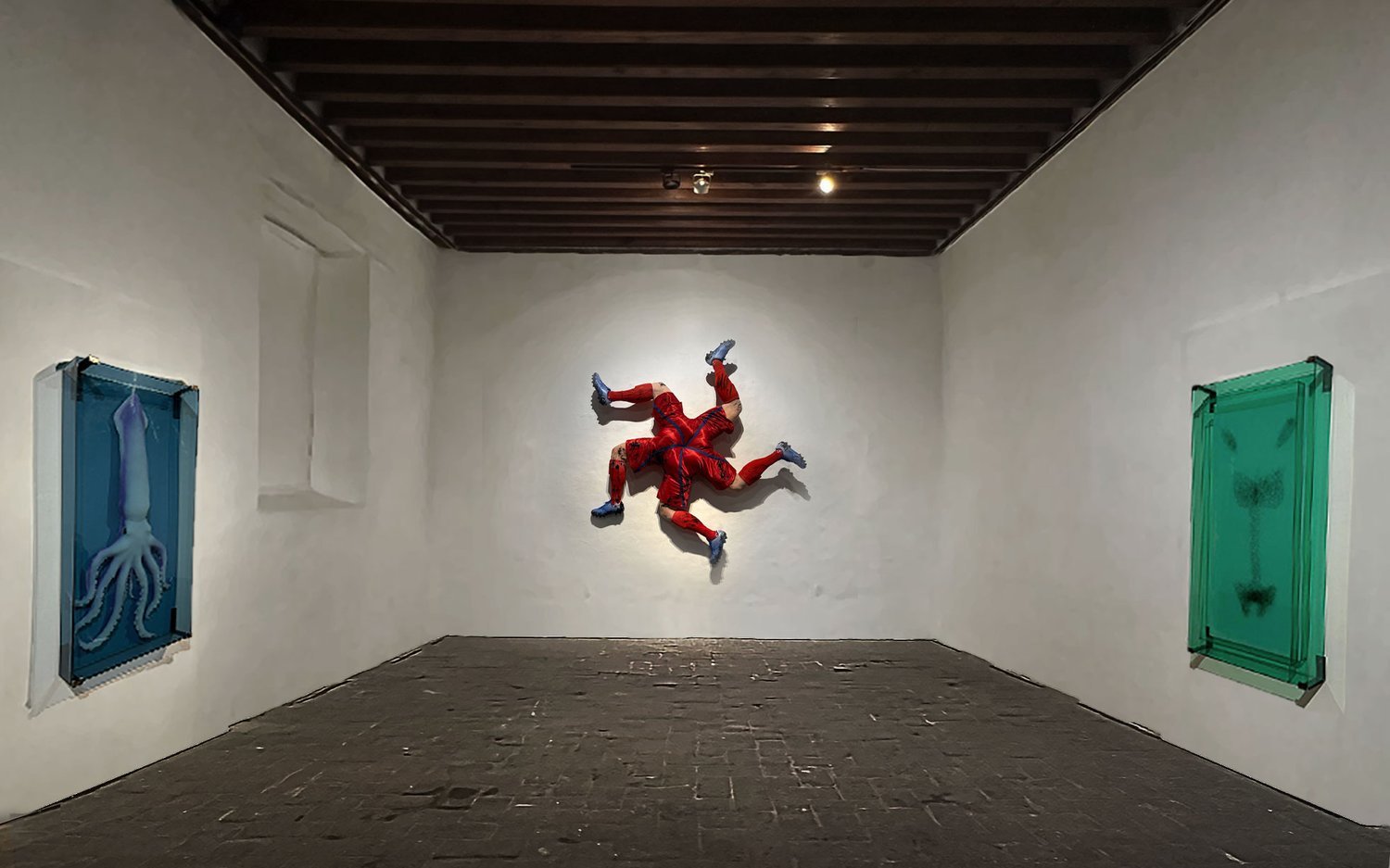
Romeo Gómez López – The Horrors Persist

The Horrors Persist

de Romeo Gómez López

Feria de Arte Material, Febrero 8 – 11, 2024.

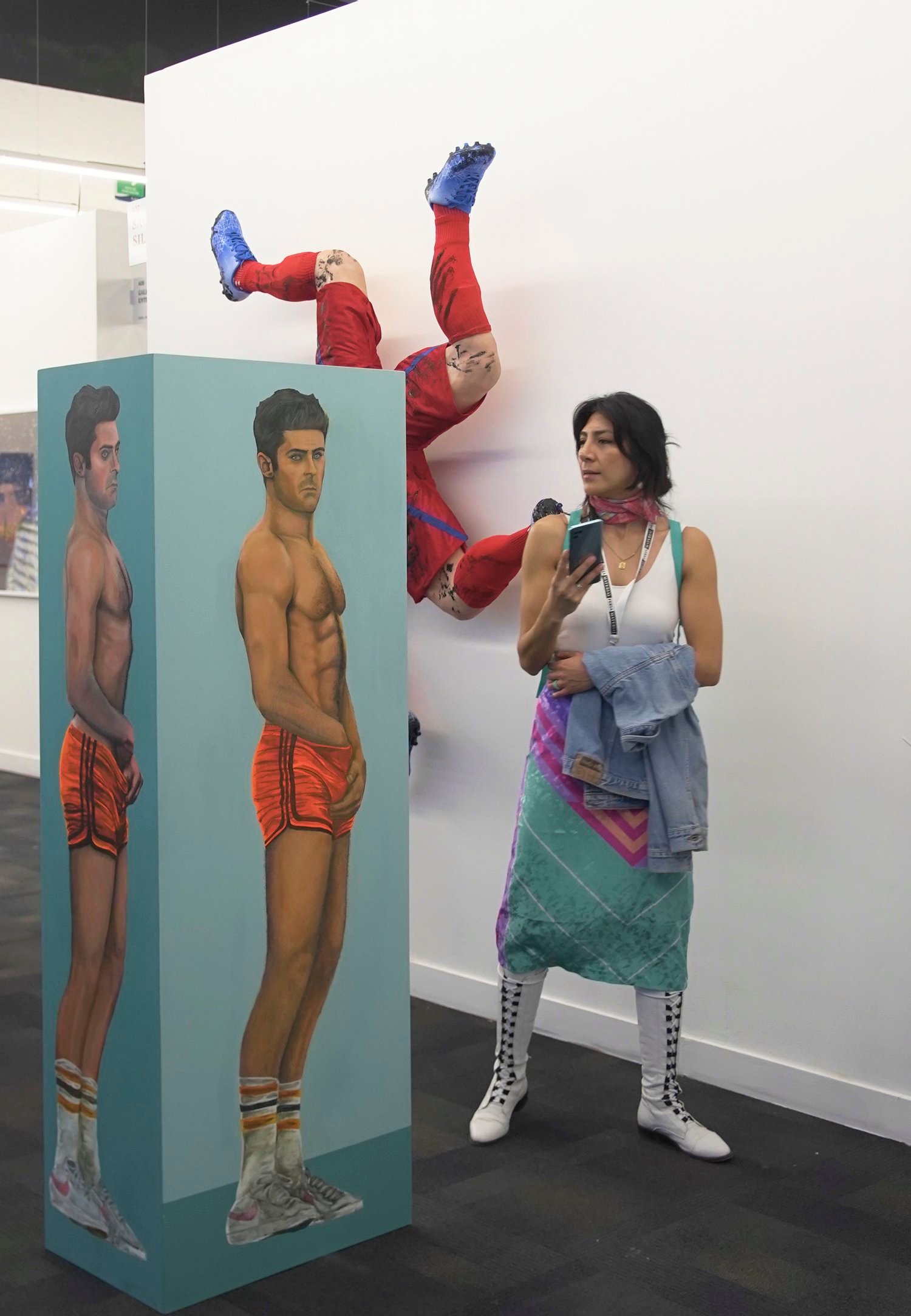
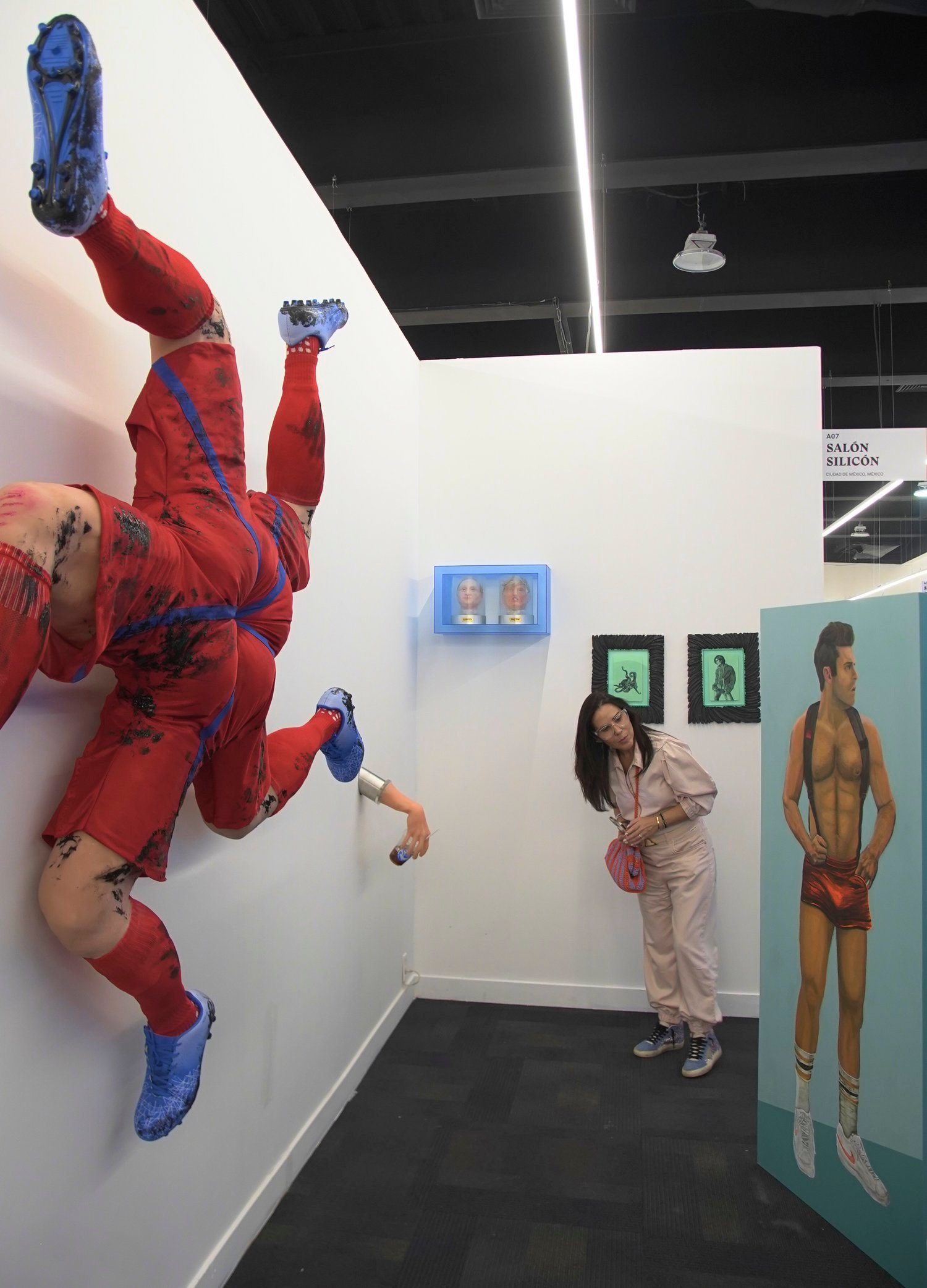
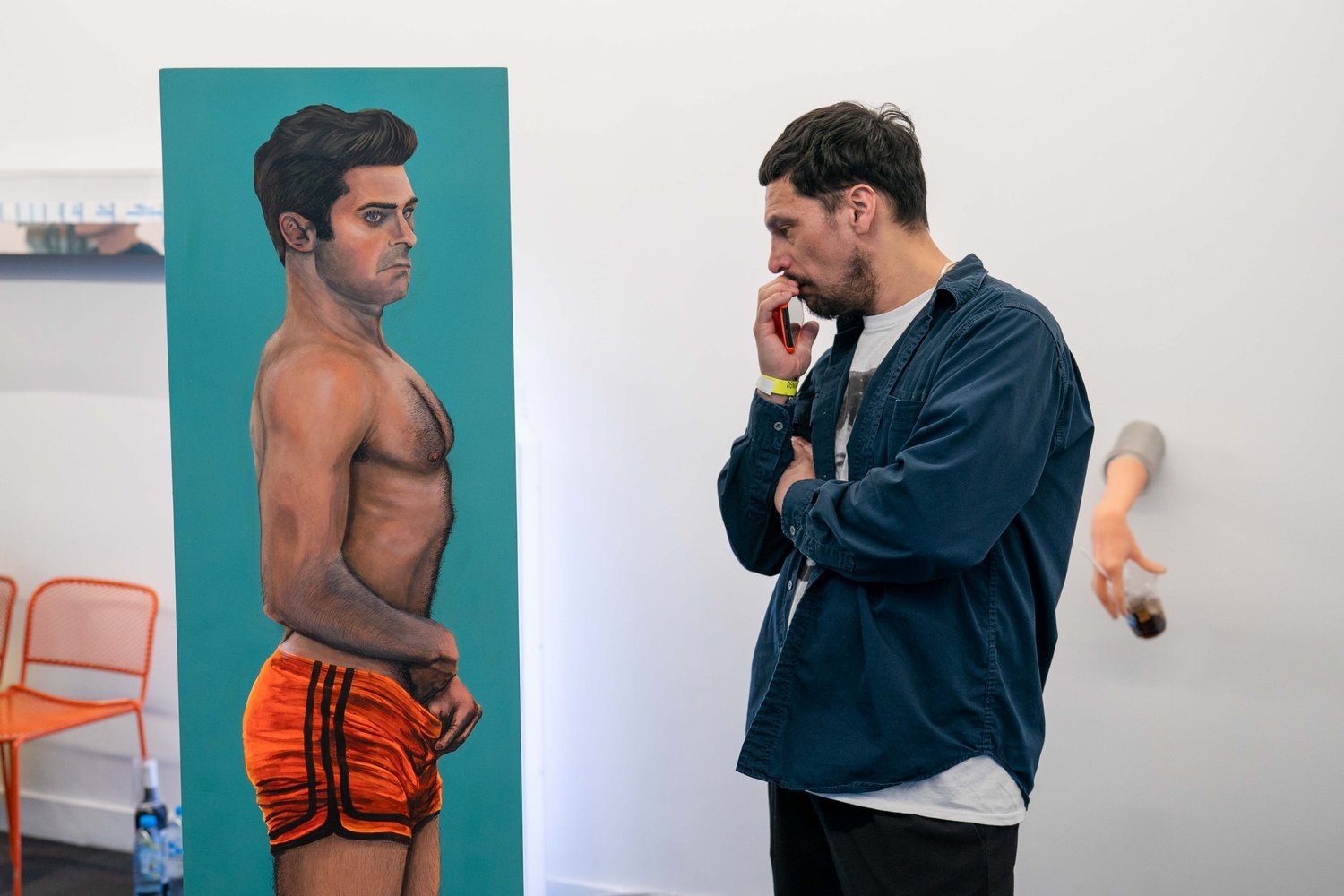
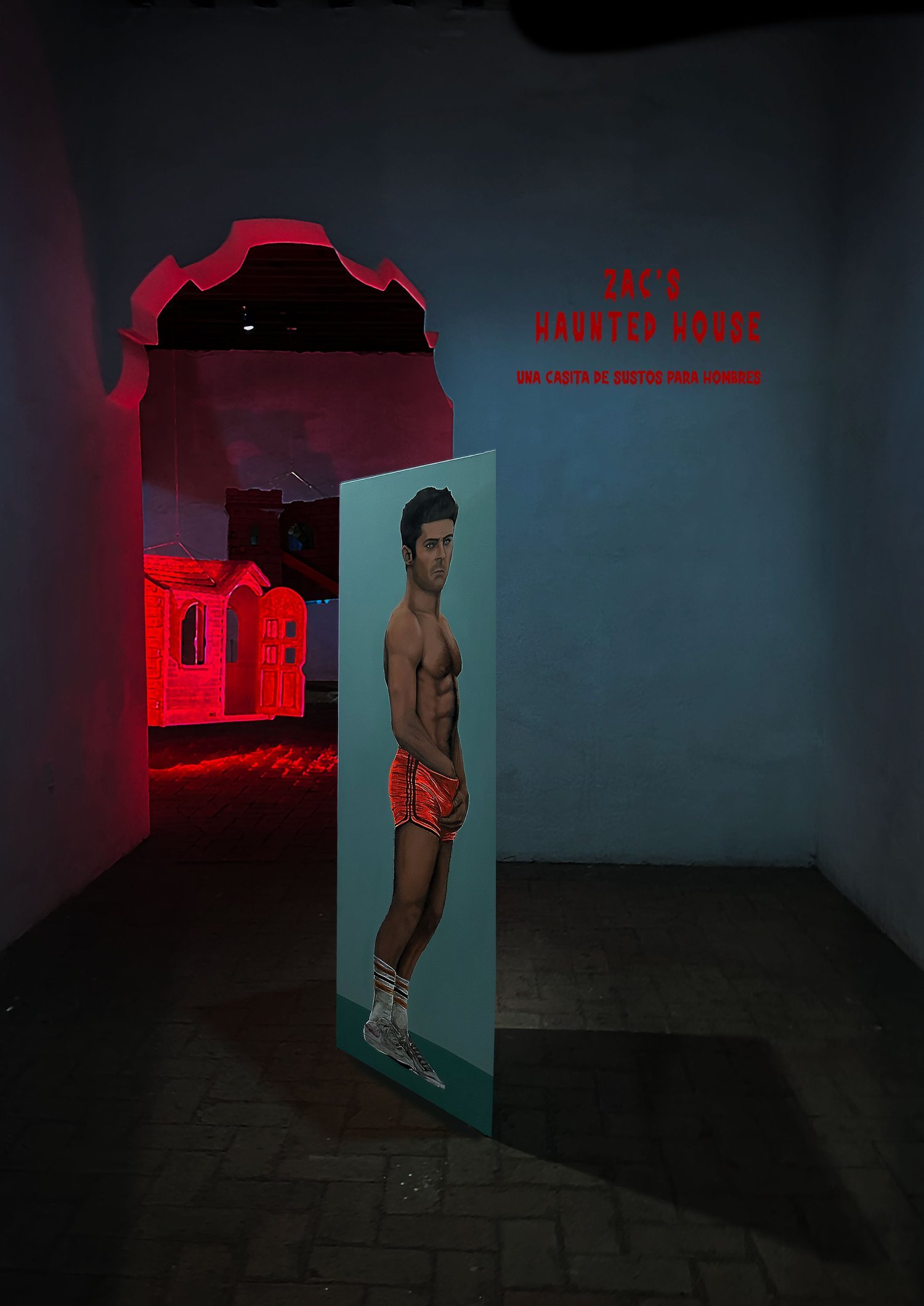
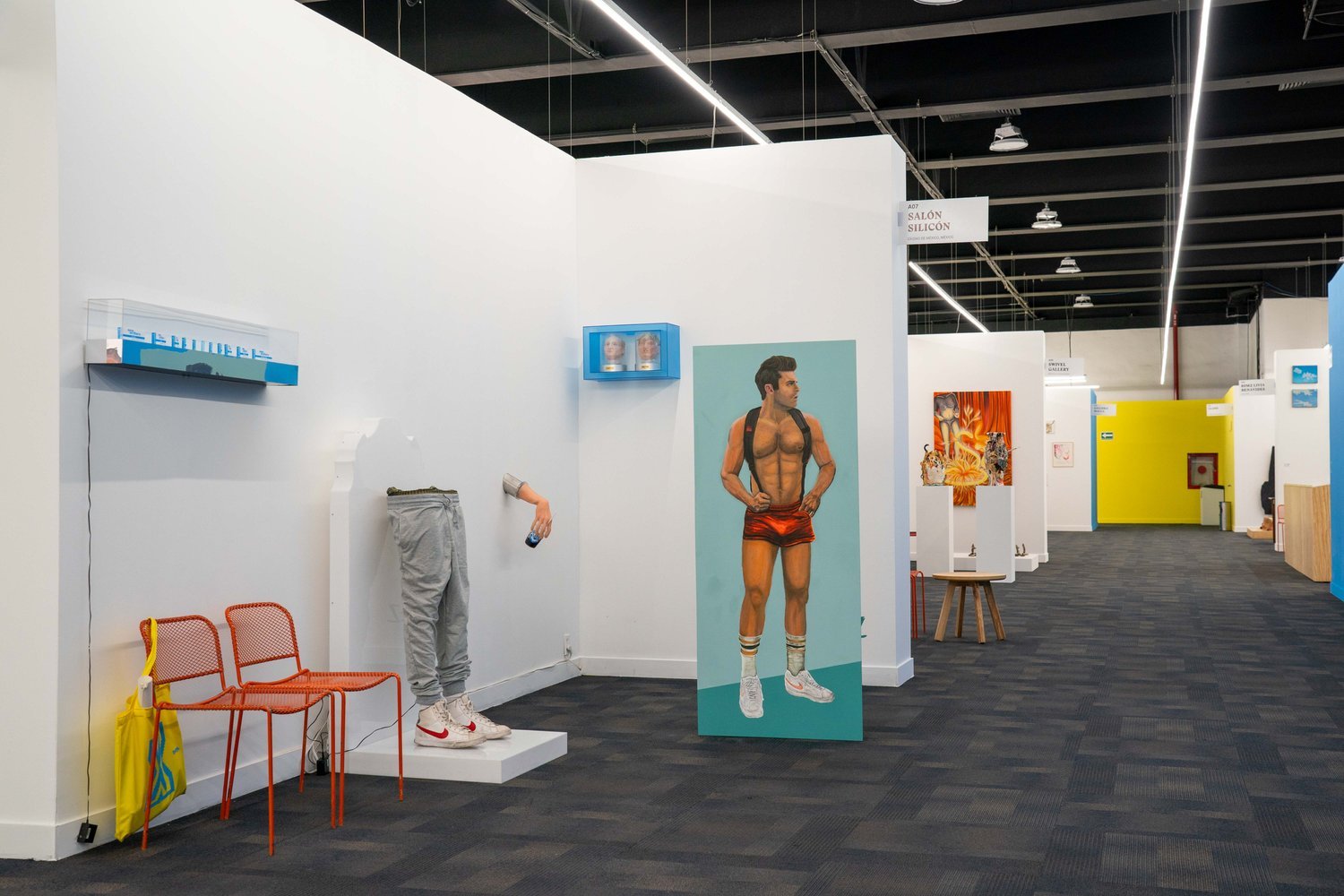
Booth individual de Romeo Gómez López mostrando su obra recientemente expuesta en Zac’s Haunted House, en el Museo de la Ciudad de Querétaro.

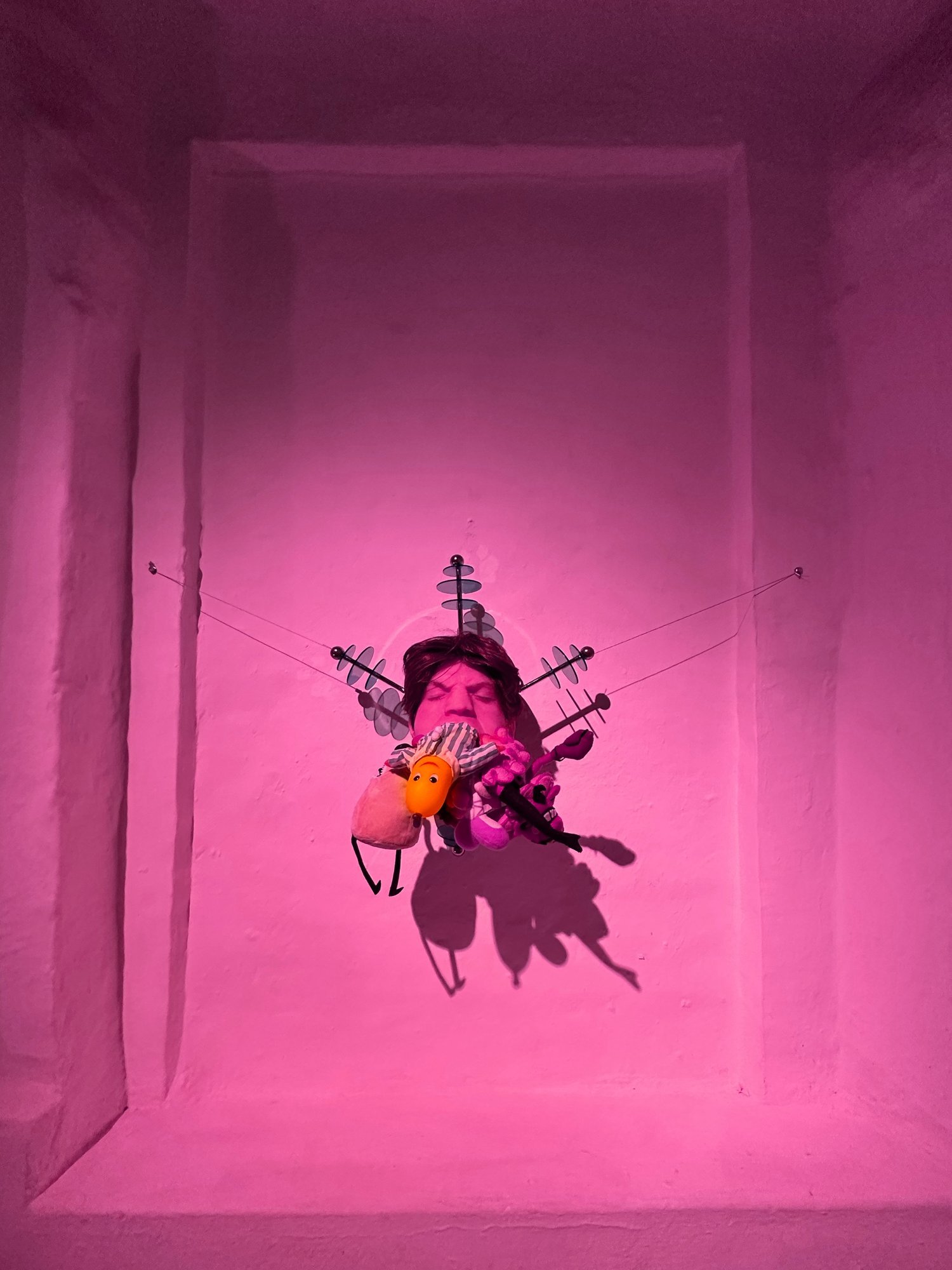
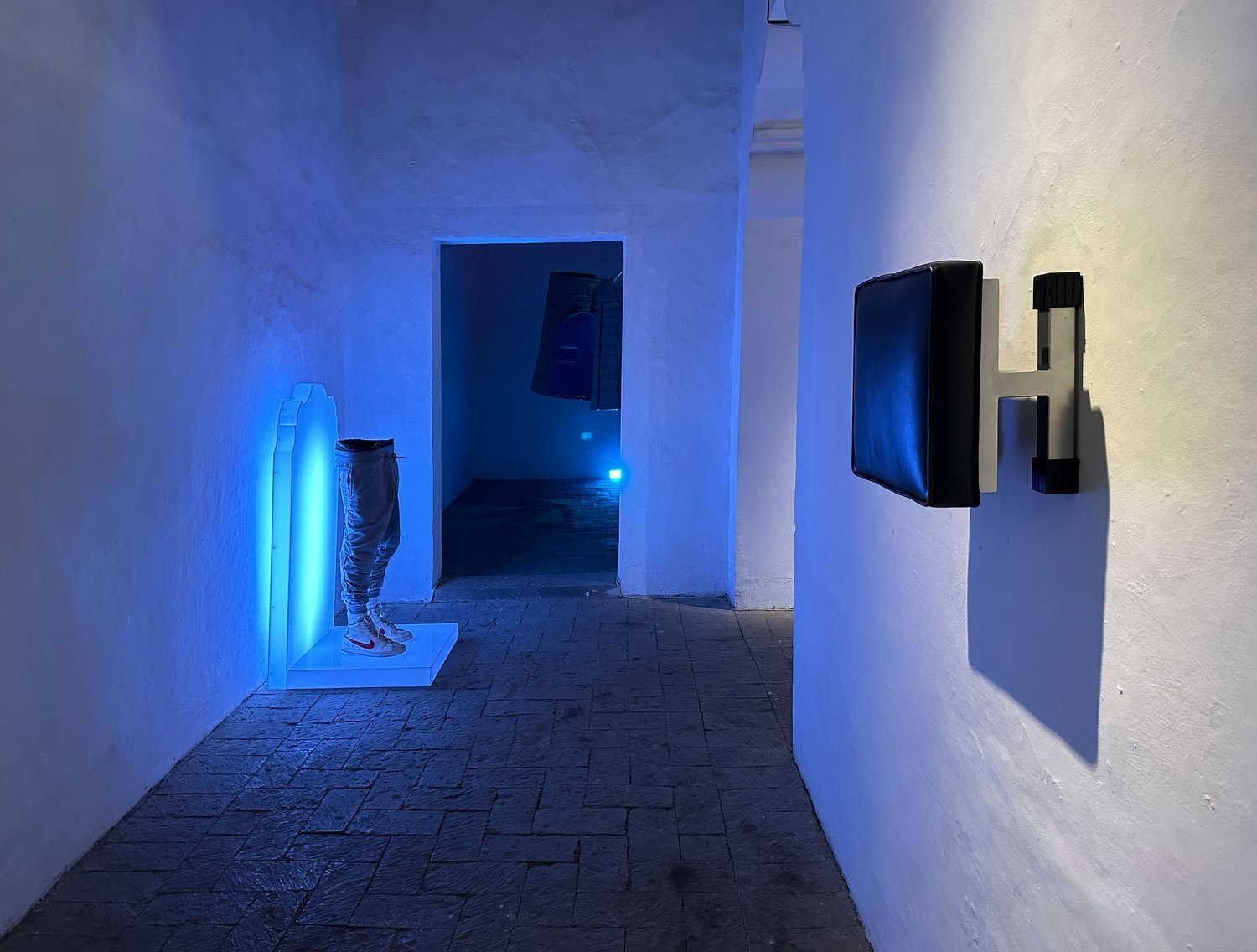
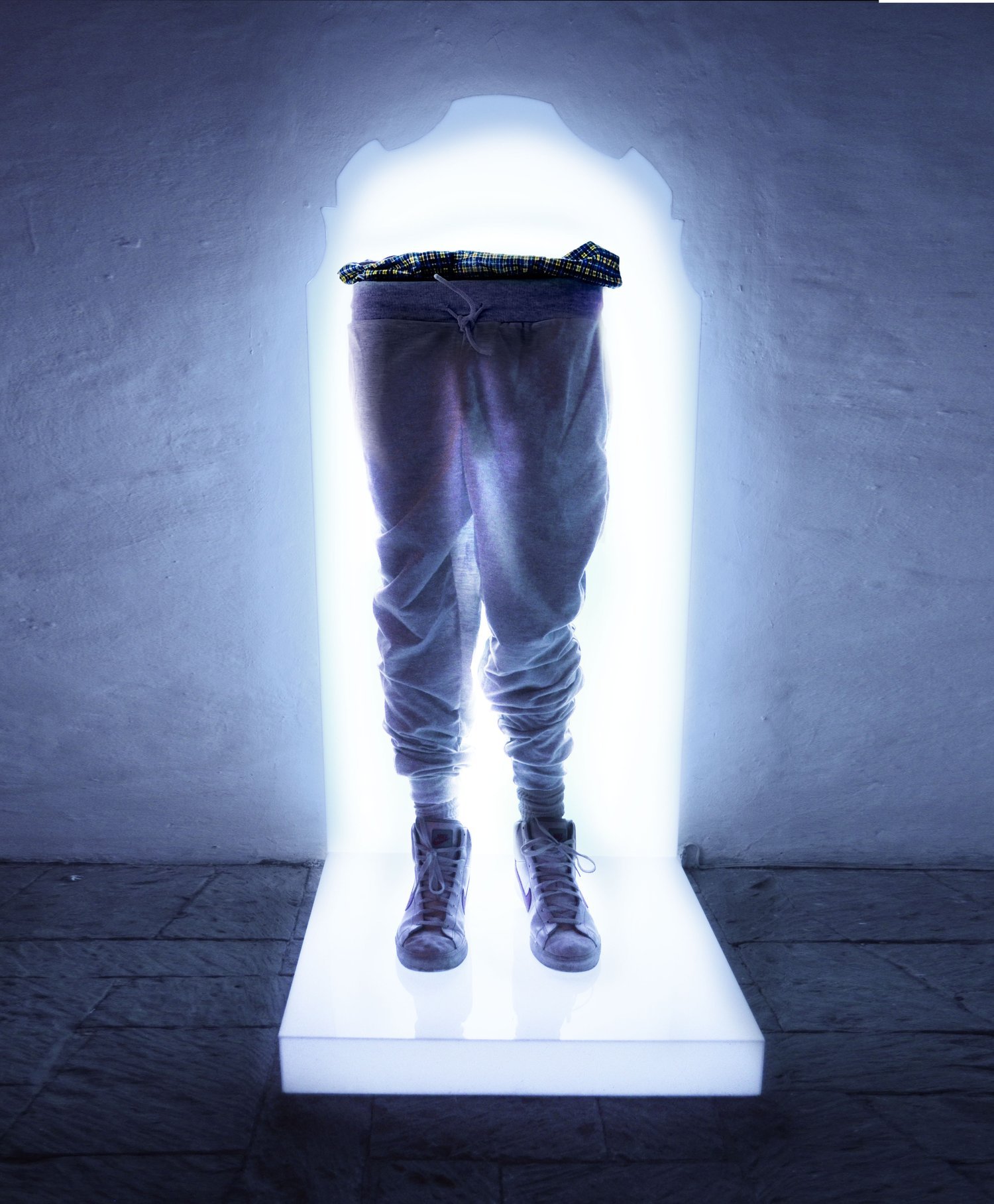
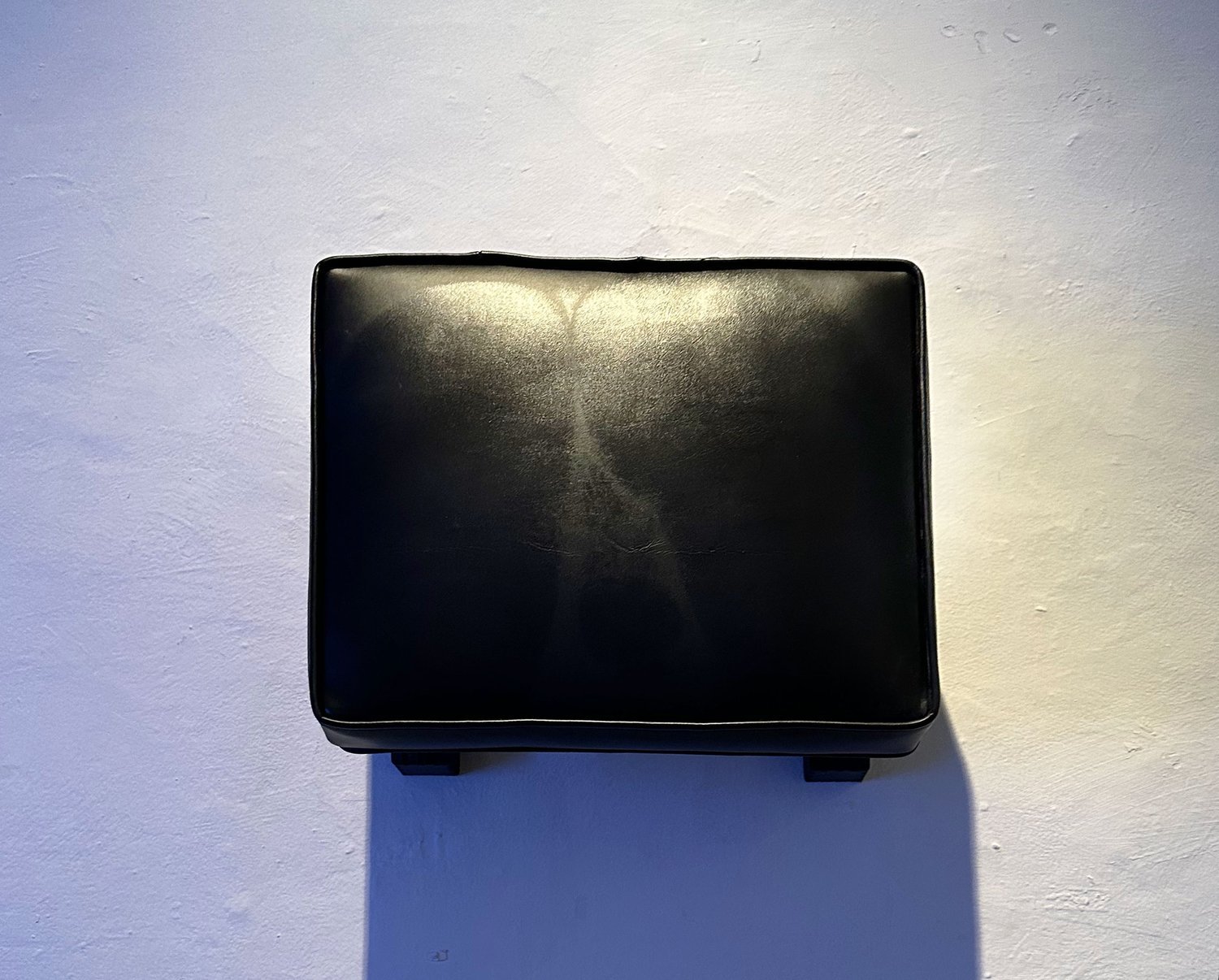
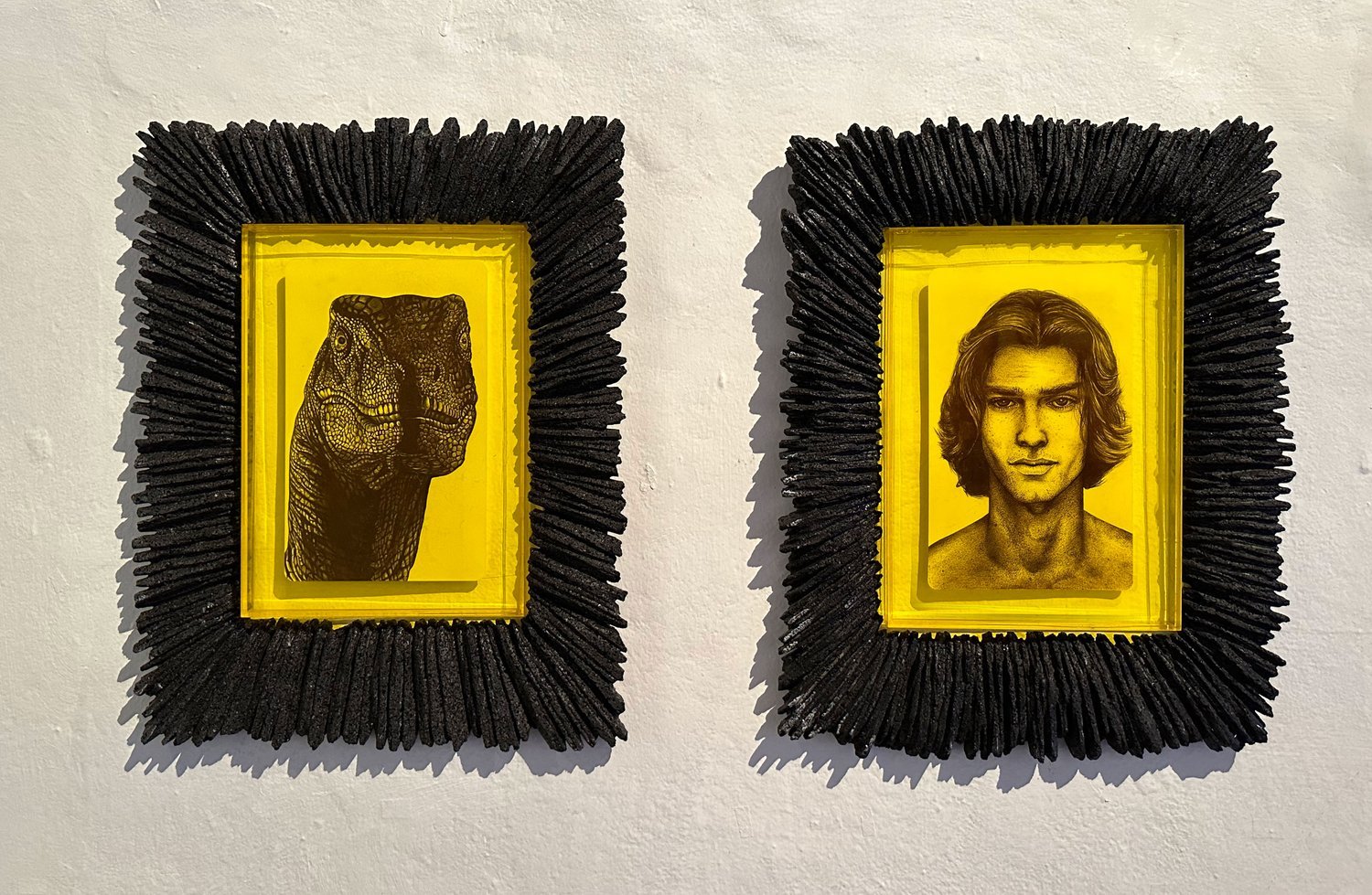
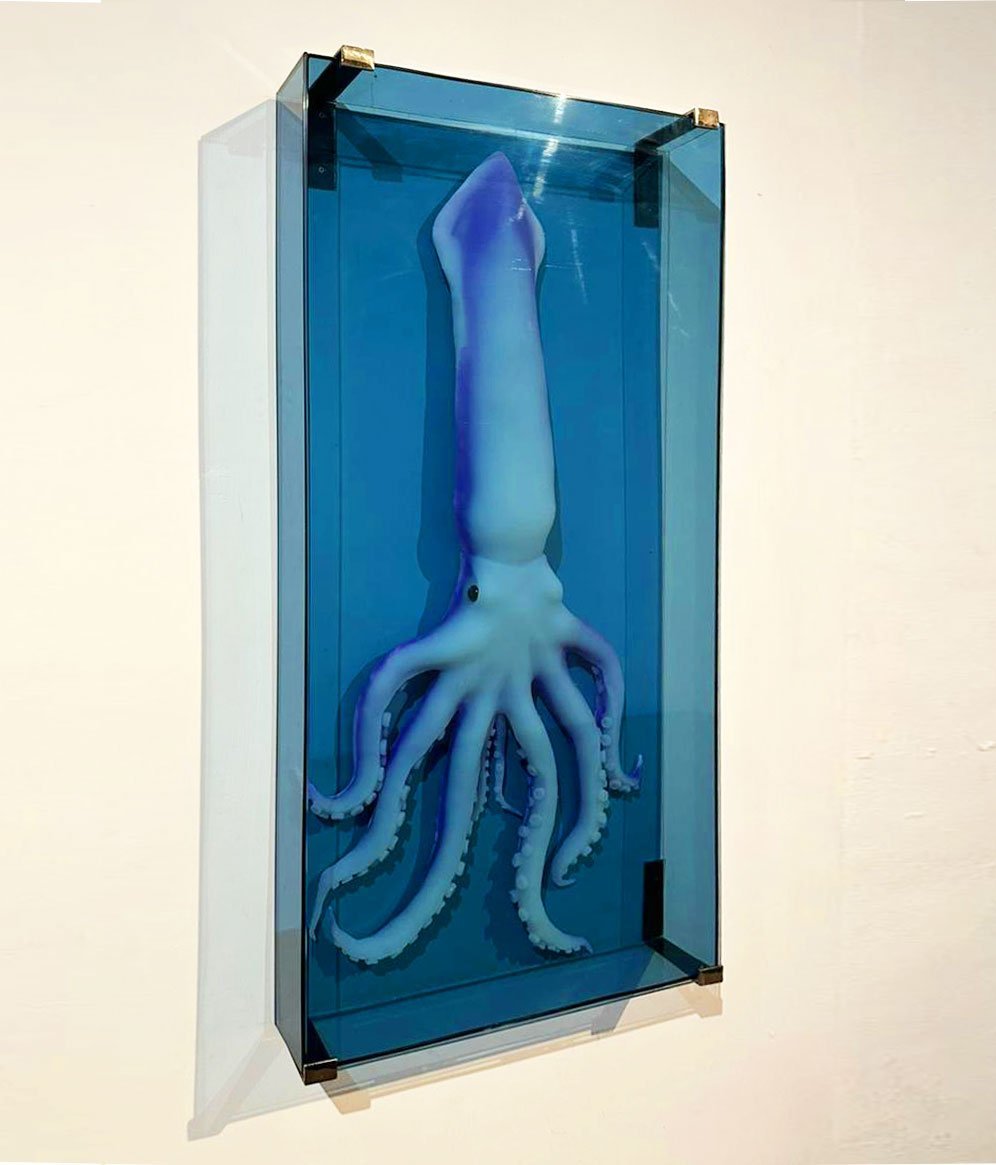
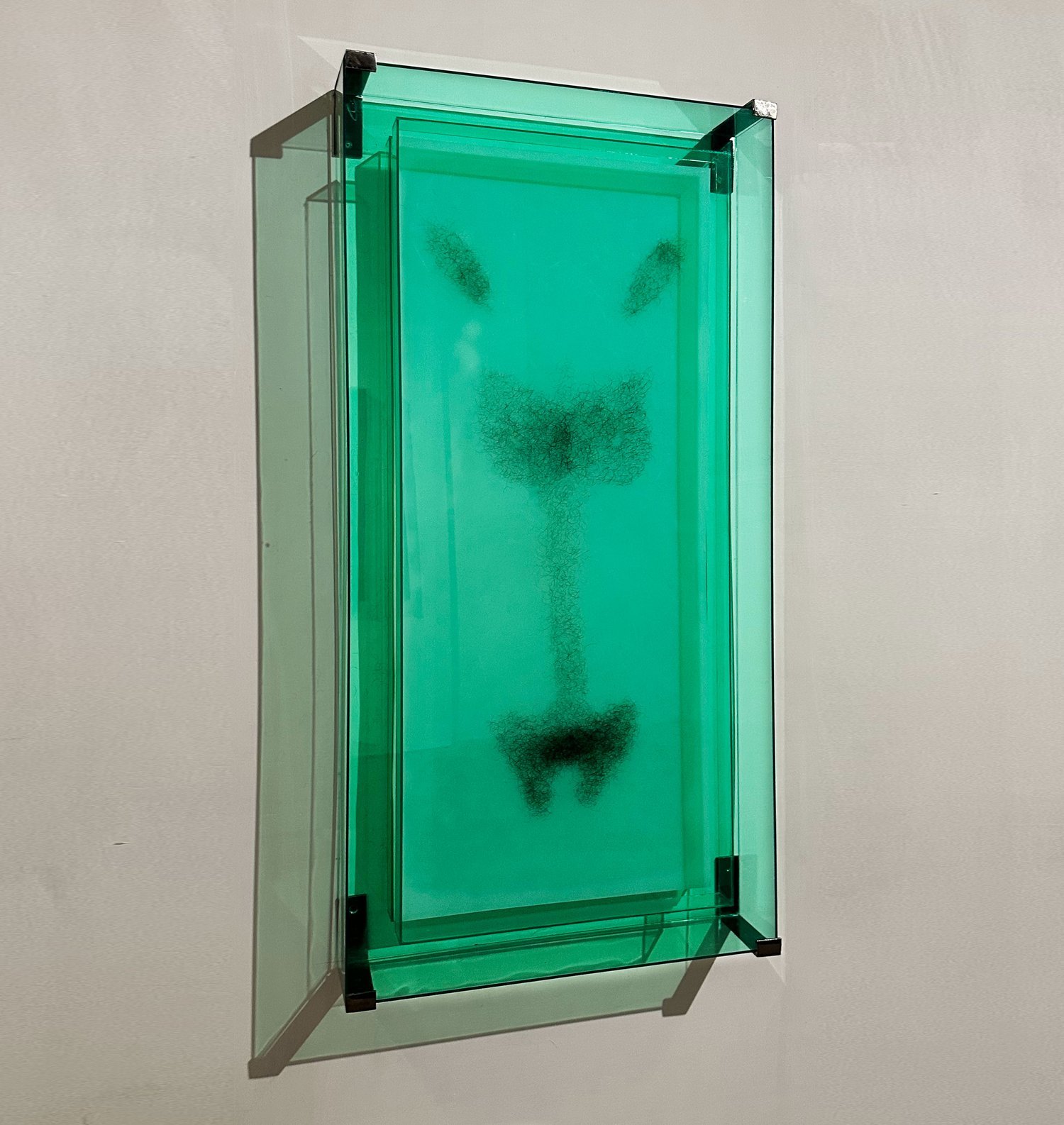
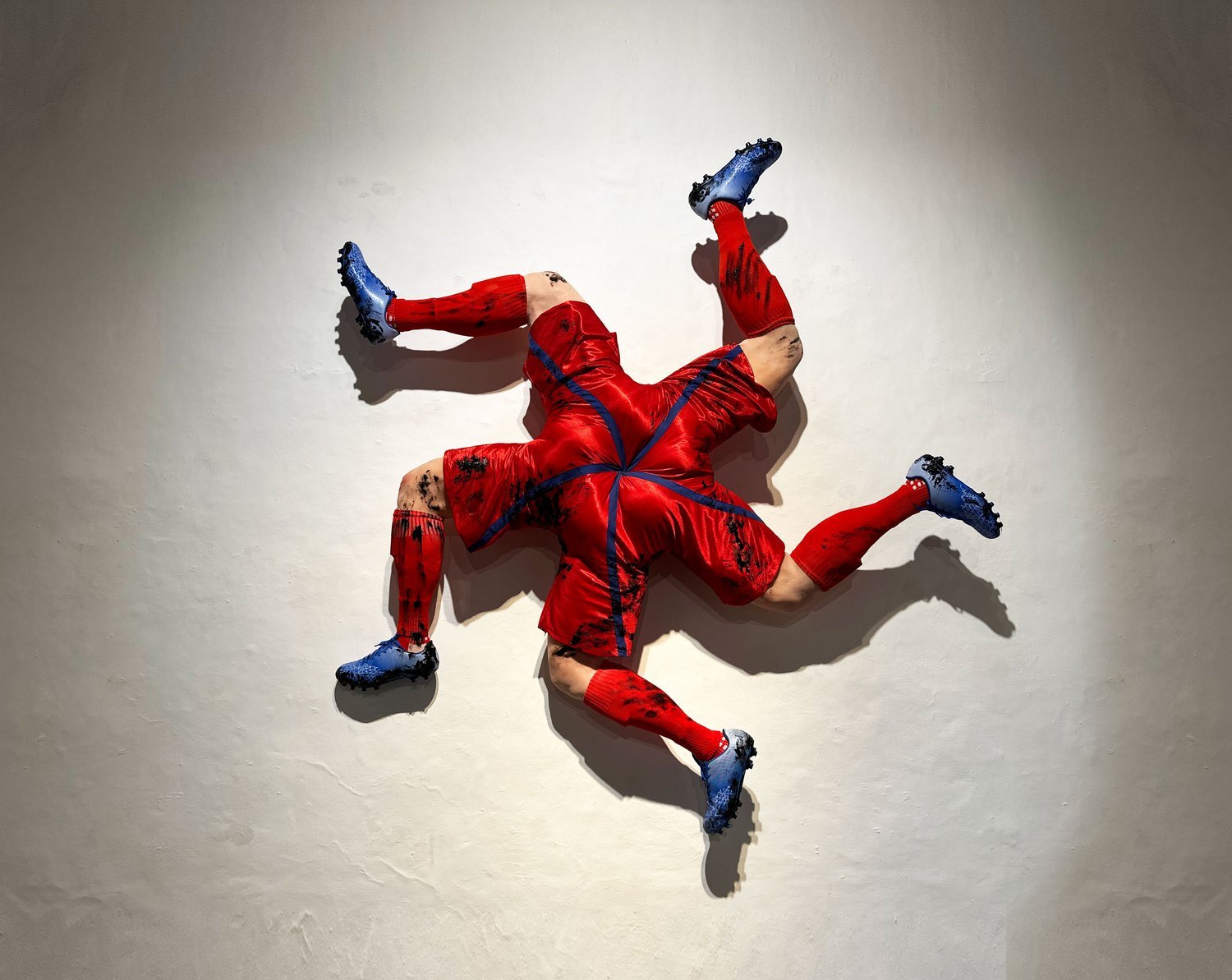
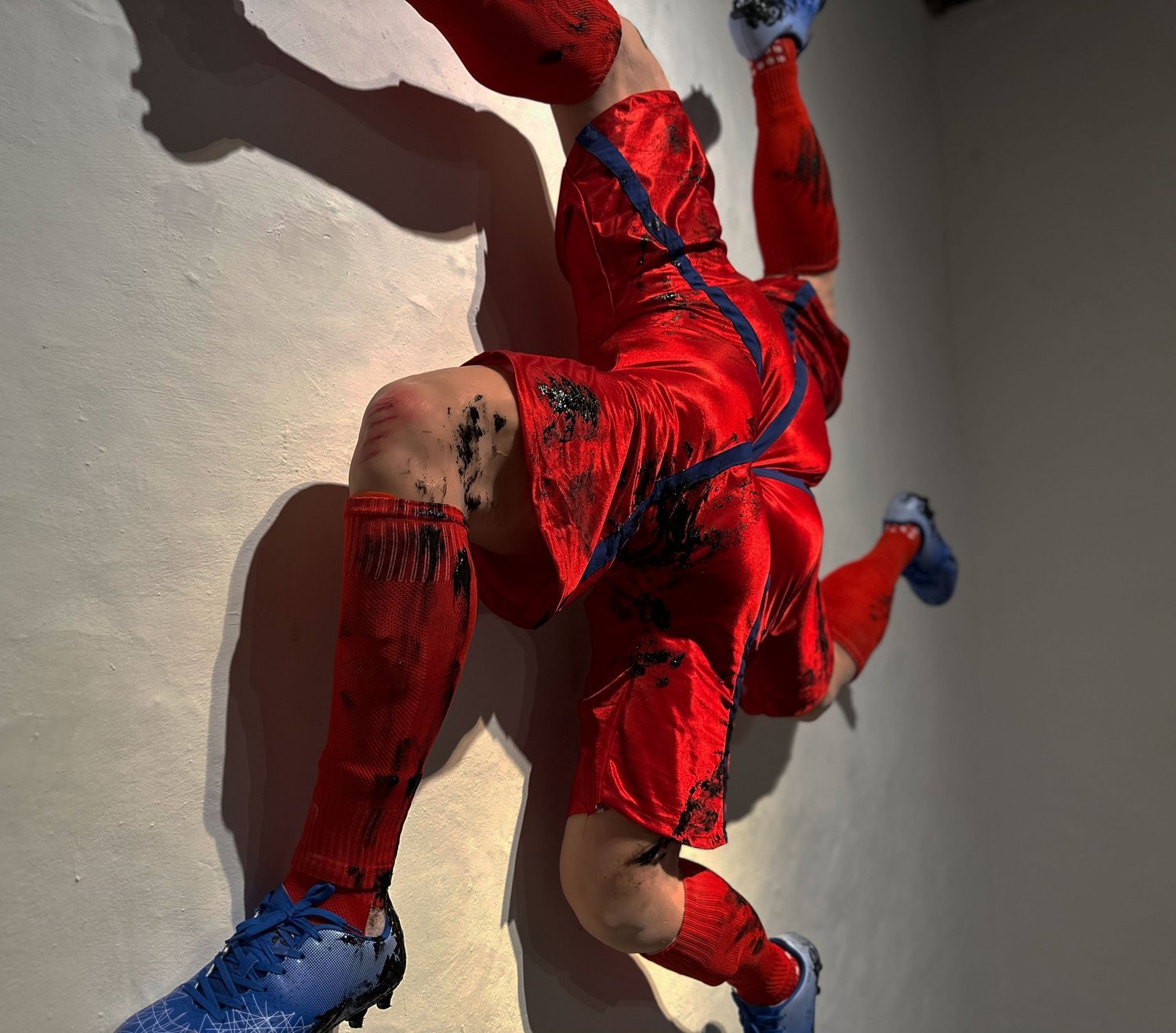
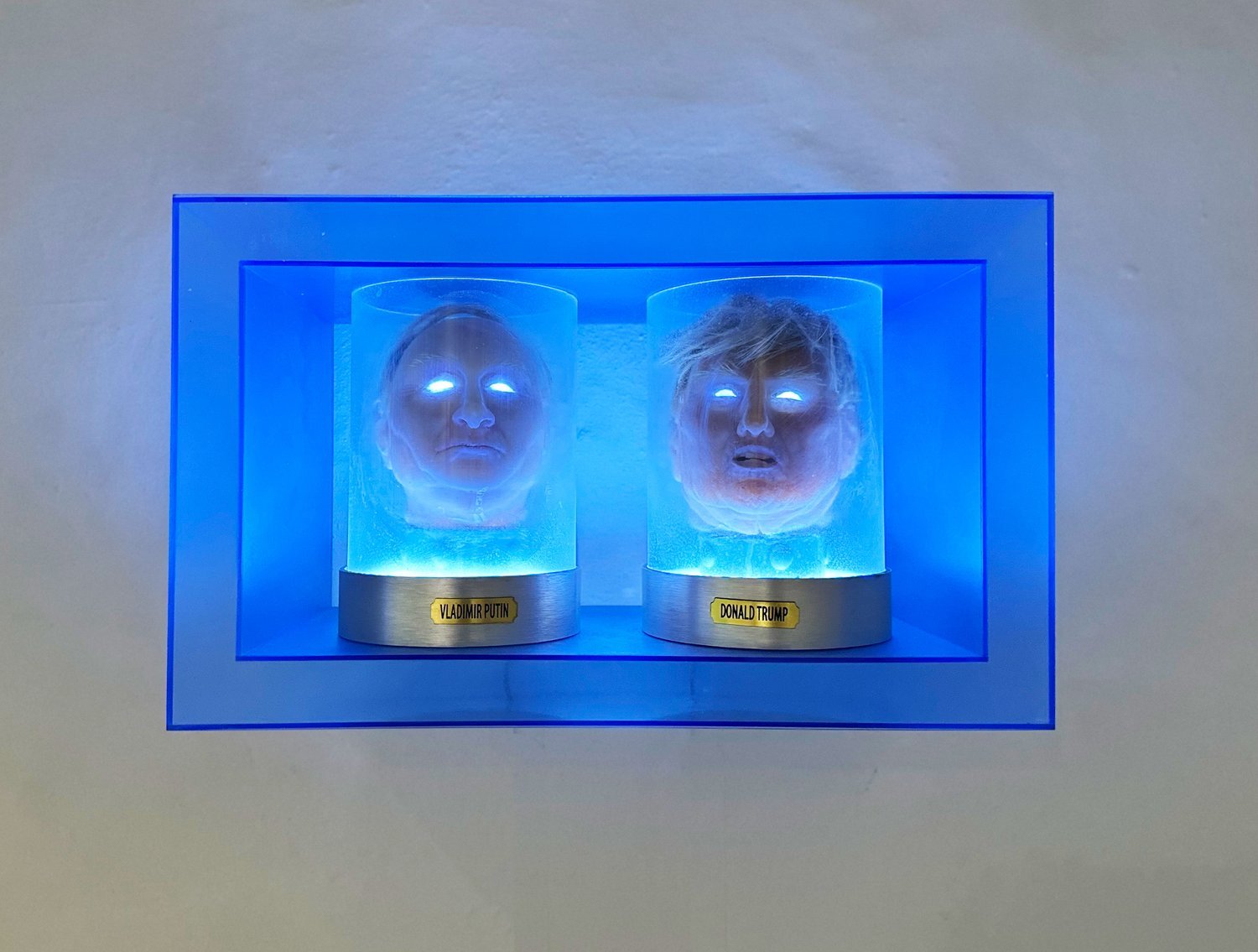
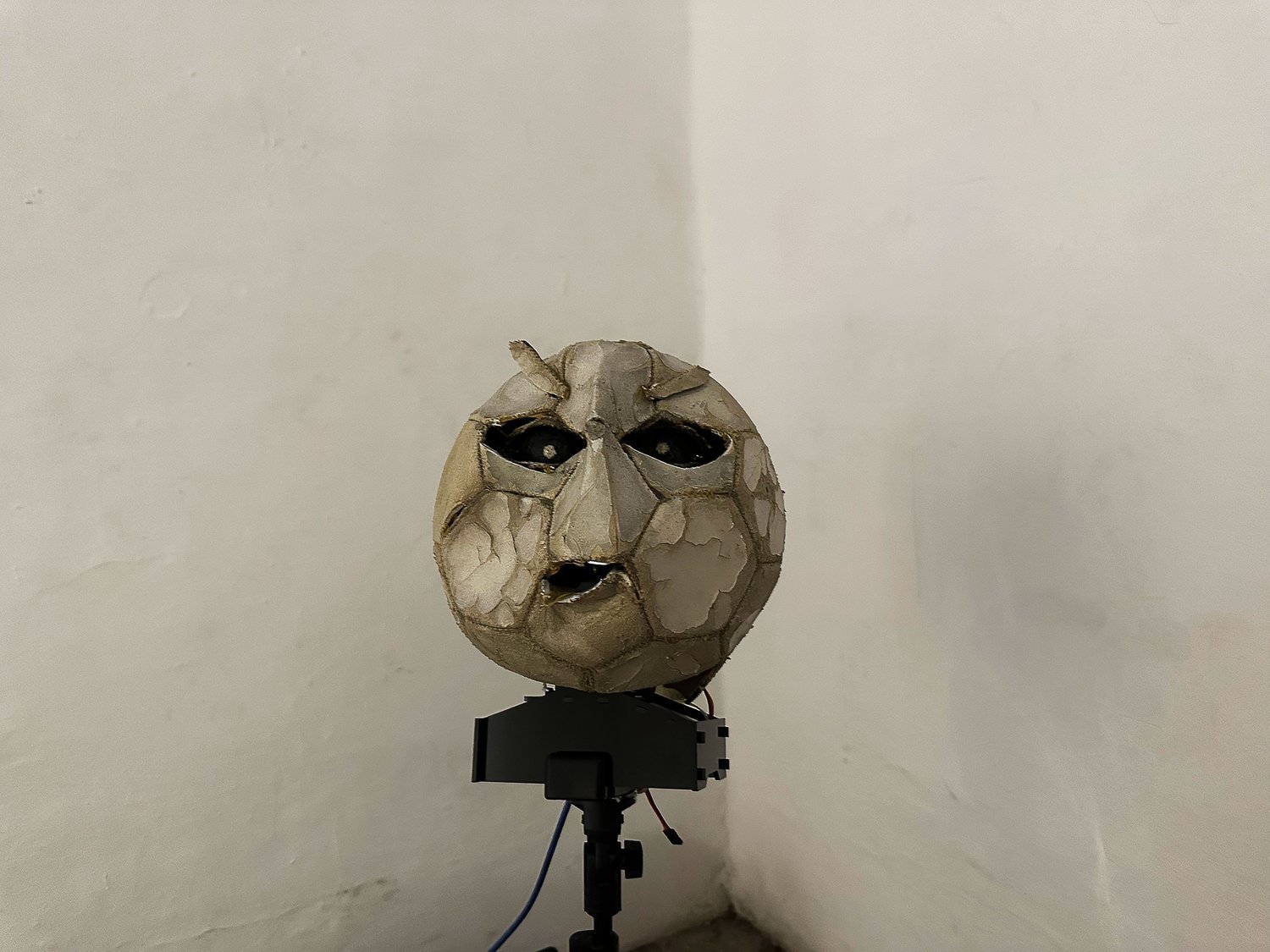
Las piezas, en su mayoría escultóricas, continuan el interés del artista por cuestionar la masculinidad sistémica y la hegemonía heterosexual, usando personajes de la cultura de masas y el humor como herramientas para desenmascarar los miedos del varón contemporáneo.

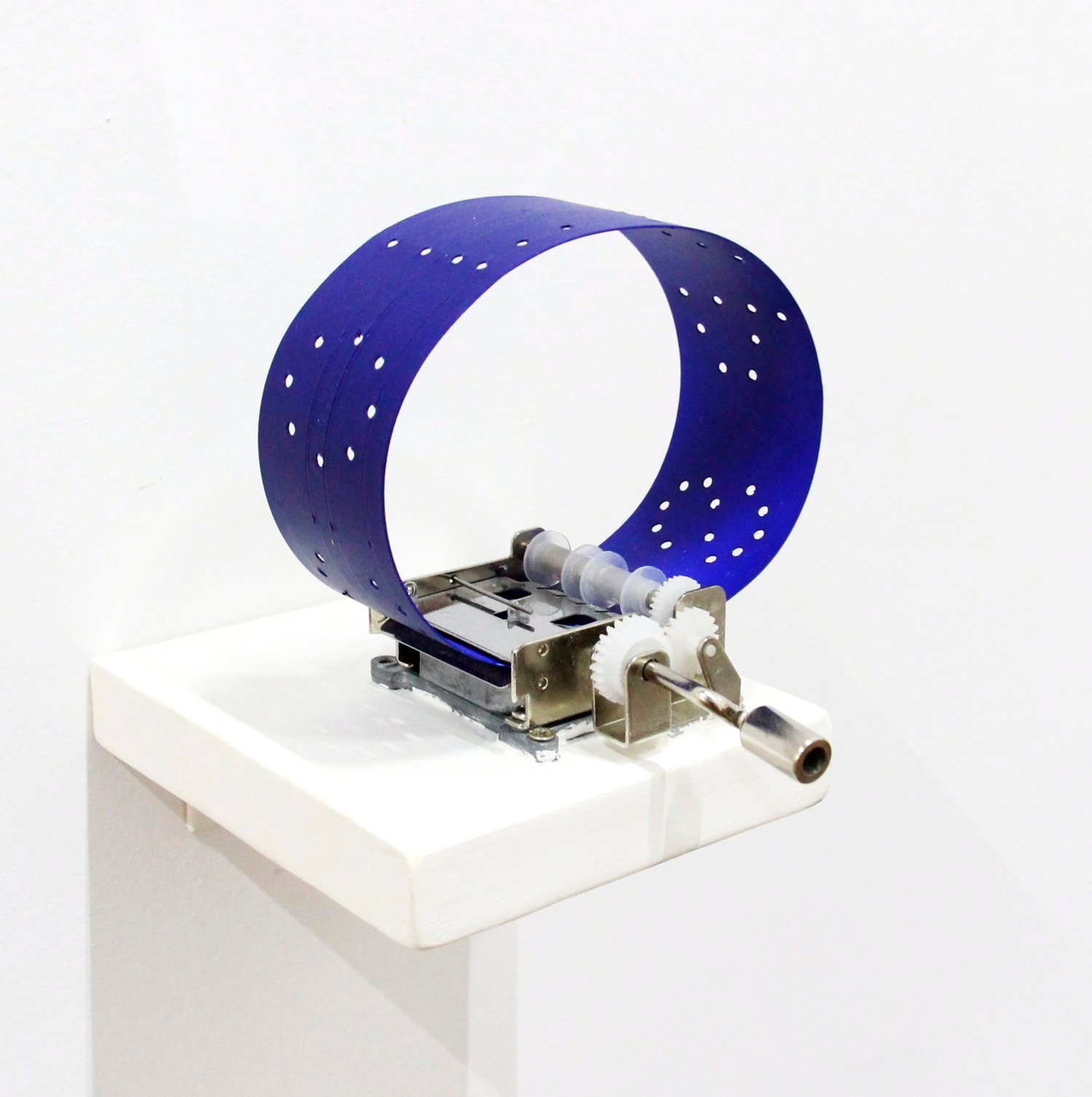
Terrores de la masculinidad, del capitalismo y del cuerpo que se repiten, atacando en espiral. Esculturas que también son sistemas, gifs, loops, boomerangs, ciclos y péndulos.

(ENG)

Romeo Gómez López’s solo booth showing recently exhibited works from Zac’s Haunted House, his solo show at the Museo de la ciudad, Querétaro.

The pieces, mostly sculptural, continue the artist’s interest in questioning toxic masculinity and heterosexual hegemony, with characters from mass culture and using humor as a tool to unmask the fears of contemporary men.

Terrors of masculinity, capitalism and the body repeating themselves, attacking in spiral. Sculptures that are also systems, gifs, loops, boomerangs, cycles and pendulums.

Romeo Gómez López – Zac’s Haunted House en Museo de la Ciudad Queretáro

Zac’s Haunted House, Una casita de sustos para hombres.

Romeo Gómez López

2 de diciembre 2023 - 1 de febrero, 2024

Museo de la Ciudad de Queretáro.

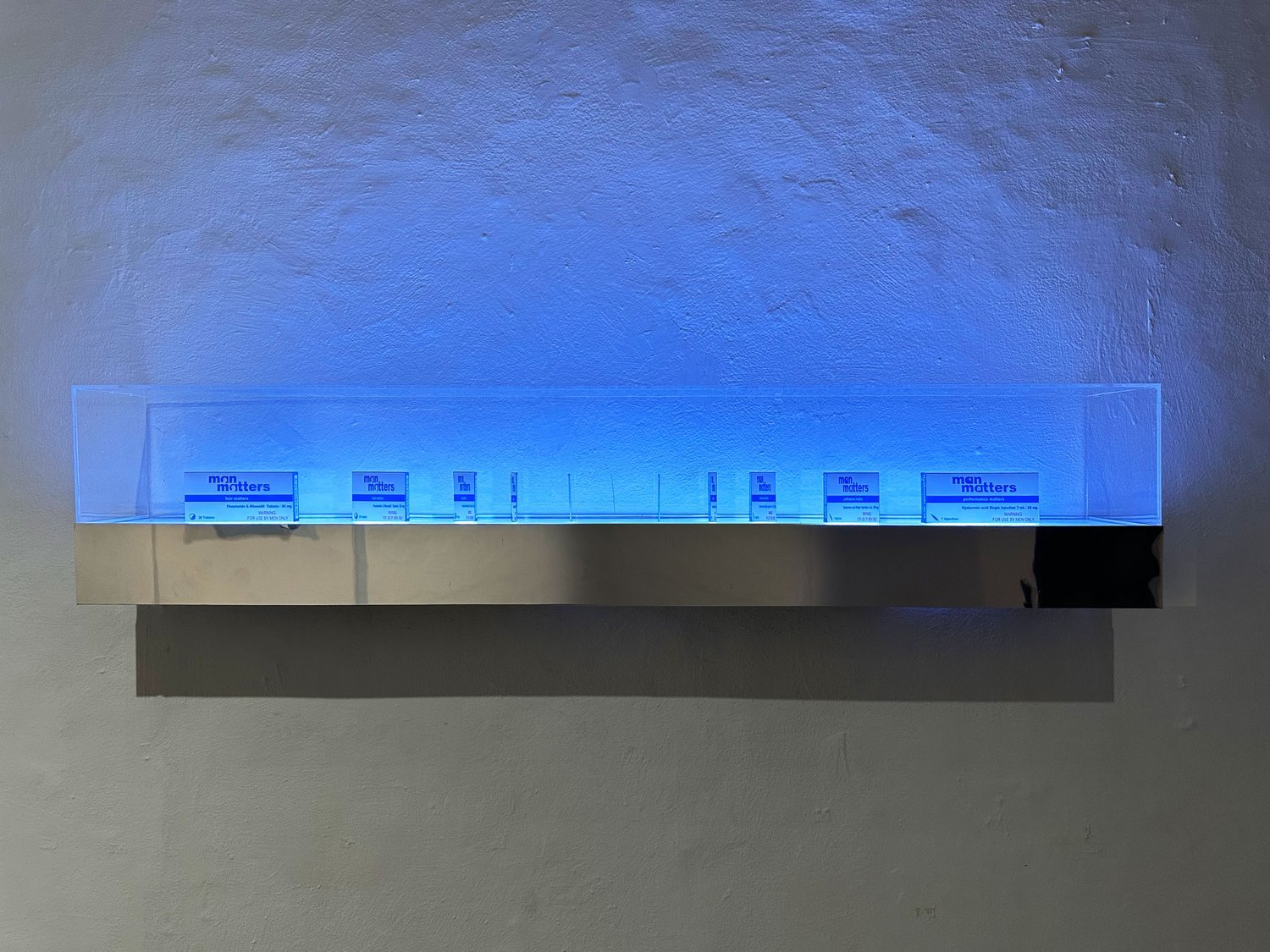
Un fantasma es una presencia perturbadora que sólo algunos pueden ver. Otros creen por los efectos: el vaso que se cae, la cuerda que se mueve, la mancha persistente. Algunos ni así. Los fantasmas son las estructuras de poder, las discriminaciones, la industria farmacéutica, pornográfica, de la moda, pambolera. El capitalismo petrosexoracial de Paul B.Preciado y las categorías binarias que hasta ahora han organizado la vida.

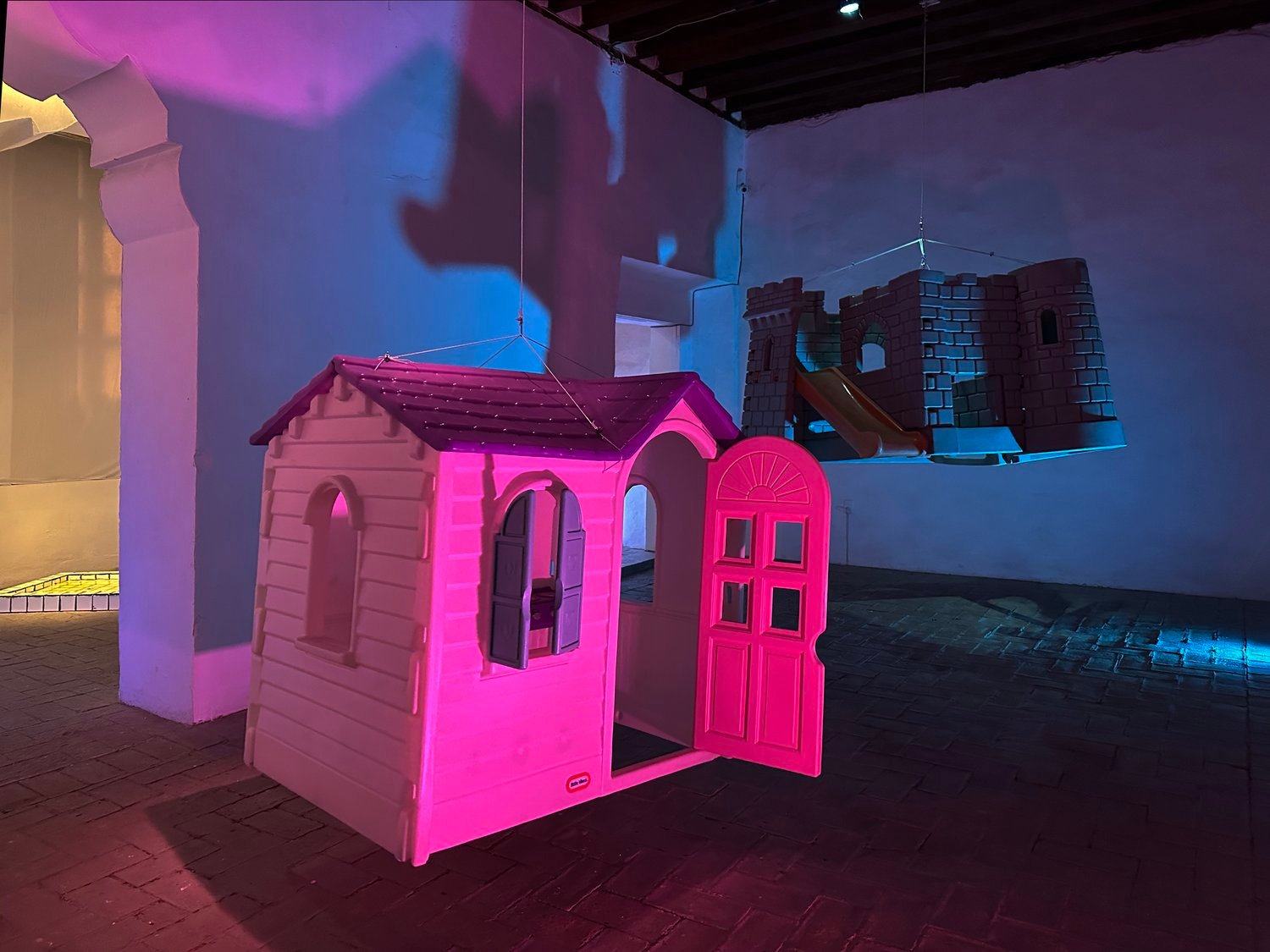
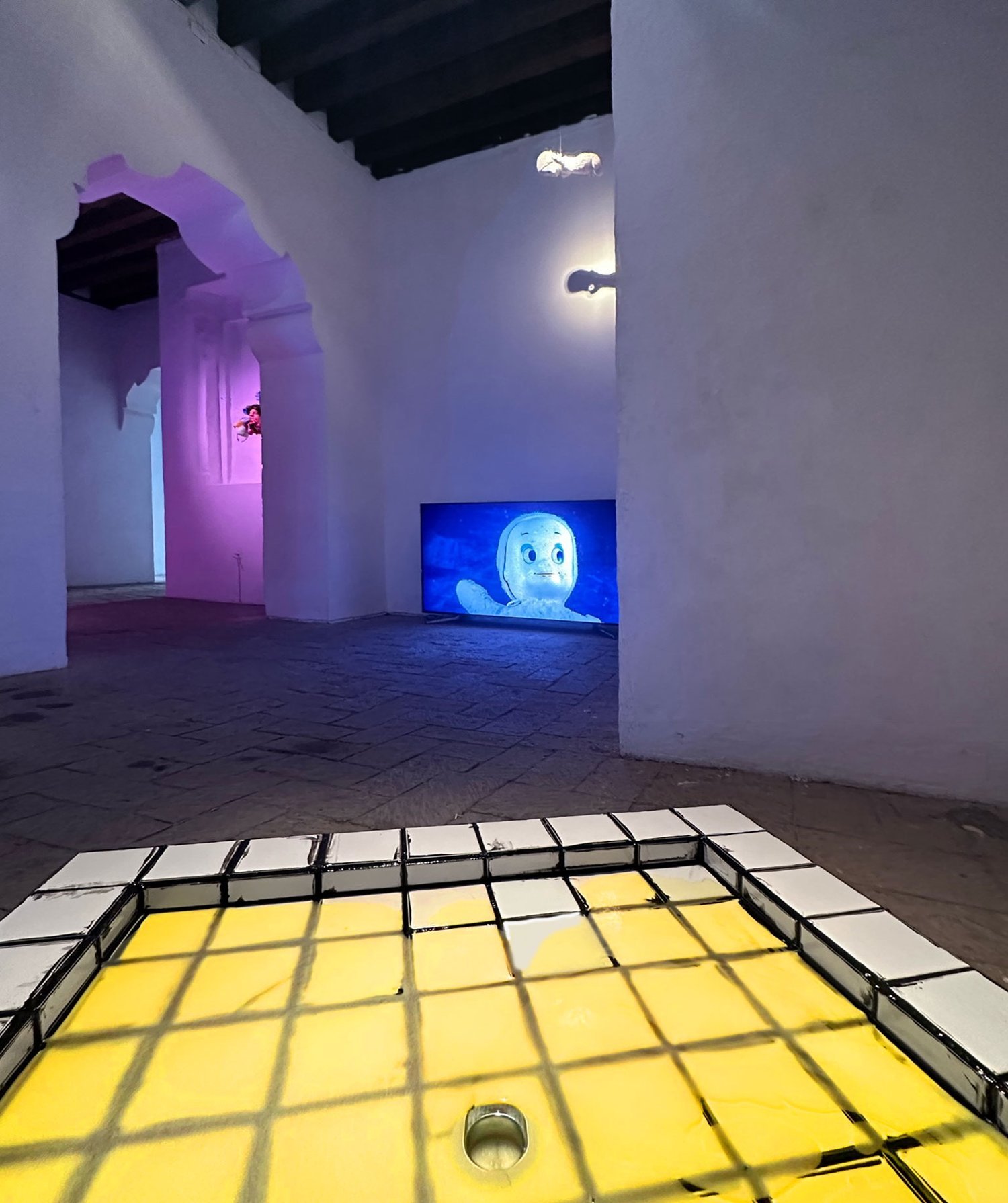
Zac’s Haunted House copia el título de la novela de gifs de Dennis Cooper y la Haunted house de Louise Bourgeois y Robert Gober. Terrores de la masculinidad, del capitalismo y del cuerpo que se repiten, atacando en espiral. Esculturas que también son sistemas, gifs, loops, boomerangs. Ciclos y péndulos para cruzar el umbral de lo que inconscientemente o por voluntad reprimimos, a partir del too much information y de ser la conversación incómoda que no esperábamos tener tan temprano, sobrios, en martes.

Coladeras, abismos y cloacas – ese sistema de reproducción de aves y probablemente dinosaurios en que al final del tracto digestivo, abierta al exterior hay una cavidad donde confluyen los conductos finales de los aparatos urinario y reproductor. También la cavidad de algunos moluscos, usada para alejar con su tinta a depredadores. Todas las cavidades, como fuente inagotable de miedo y deseo.

Otros miedos que atacan por generación, como tener rostro instagrameable. El miedo se comparte de muchas maneras. El hombre no es el niño sino todos los hombres antes de él, dice Philip K Dick. Ser los hombres que vinieron antes de los hombres de los que venimos: ahí hay mil miedos.

Zac Efron es el protagonista que se muere en la primera sala. Si sus músculos son insuficientes, sus venas delgadas y su mandíbula débil, ¿qué posibilidades tenemos? Hacer un recorrido por la infancia, con sus juegos y juguetes divididos por género. Las referencias a la niñez se perciben como trabajo autobiográfico, pero ¿hay diferencia entre la información codificada de la propia biografía y la que viene del consumo de cultura popular?

Verlo por marcas: Starbucks, Balenciaga, Nike, manmatters: Ubik, el extraño producto, también de Philip K. Dick, infiltrado en todas las interacciones posibles dentro de un mundo distópico. El futuro Dios en forma de un producto para cada necesidad.

La adolescencia y su ansiedad primaria, la sexualidad y el fetiche. El cuerpo como anagrama, como una oración que puede reescribirse una y otra vez en miembros por siempre atados a comportamientos y rituales. La experiencia desplazada en la manita que se cae. La represión y el estereotipo. El pelo que también se cae.

El miedo más grande, al fondo, es el tiempo y la muerte. Buscar los escapes de la ciencia ficción y el arte, aunque siempre tendremos la artesanía reprimiendo al arte, la conducta reprimiendo el deseo, los códigos del arte contemporáneo reprimiendo estas ideas.

Olga Rodríguez Montemayor.

ENG:

A ghost is a disturbing presence that only some can see. Others believe from ghostly effects: a glass that falls, a rope that moves, a persistent stain. Some, even then, choose not to believe. Ghosts are power structures, discriminations, the pharmaceutical, pornographic, fashion, and soccer industries. Paul B.Preciado’s petrosexoracial capitalism and the binary categories that have organized life so far.

Zac’s Haunted House takes its title from the gif novel by Dennis Cooper (2015) and the Haunted house installation by Louise Bourgeois and Robert Gober (2015). Terrors of masculinity, capitalism and the body that repeat themselves, attacking in spiral. Sculptures that are also systems, gifs, loops, boomerangs. Cycles and pendulums to cross the threshold of our unconscious or voluntarily repressions, by being too much information, the uncomfortable conversation that we did not expect to have so early, sober and on a Tuesday.

Drains, strains, abysses, sewers and cloaca – that system of reproduction of birds and probably dinosaurs in which at the end of the digestive tract there is a cavity, open to the outside, where the final ducts of the urinary and reproductive systems converge. Also the cavity that some mollusks use to ward off predators with their ink. All cavities are an inexhaustible source of fear and desire.

Some other fears attack by generation, such as having an Instagrammable face. Fear is shared in many ways. The man is not the boy but all the men who came before him, says Philip K. Dick, the American science fiction writer. Being the men who came before the men from whom we come: there’s over a thousand fears on that idea.

Zac Efron is the protagonist in the exhibition who dies in the first act. If his muscles are insufficient, his veins thin and his jawline weak, what chance do we have? Then there’s a tour through childhood, with its games and toys divided by gender. References to childhood are perceived as autobiographical work, but is there any difference between the information encoded in one’s own biography and that which comes from the consumption of popular culture

See it by brands: Starbucks, Balenciaga, Nike, manmatters: Ubik, the strange product, also from Philip K. Dick, infiltrated into all possible interactions within a dystopian world. The God of the future taking the form of a product for every need.

Adolescence and its primal anxiety, molding our sexuality and fetishes. The body as anagram, as a phrase that can be rewritten over and over again in body parts forever linked to behaviors and rituals. The displaced experience in the hand that falls queerly into an incorrect position. Repressions and stereotypes. Hair also falling out.

The greatest fear, deep down, is time and death. We look for outlets in science fiction and art, forever doomed to the uselessness of it all, since we will always have craftsmanship repressing art, behavior repressing desire, the codes of contemporary art repressing these ideas.

Olga Rodríguez Montemayor.

Wendy Cabrera Rubio – La Transmutación del deduccionismo: Alfonso Herrera y la invocación del Espirítu.

La transmutación del deduccionismo: Alfonso Herrera y la invocación del Espíritu

de Wendy Cabrera Rubio

Diciembre 9, 2023.

curaduría de Pablo Arredondo Vera.

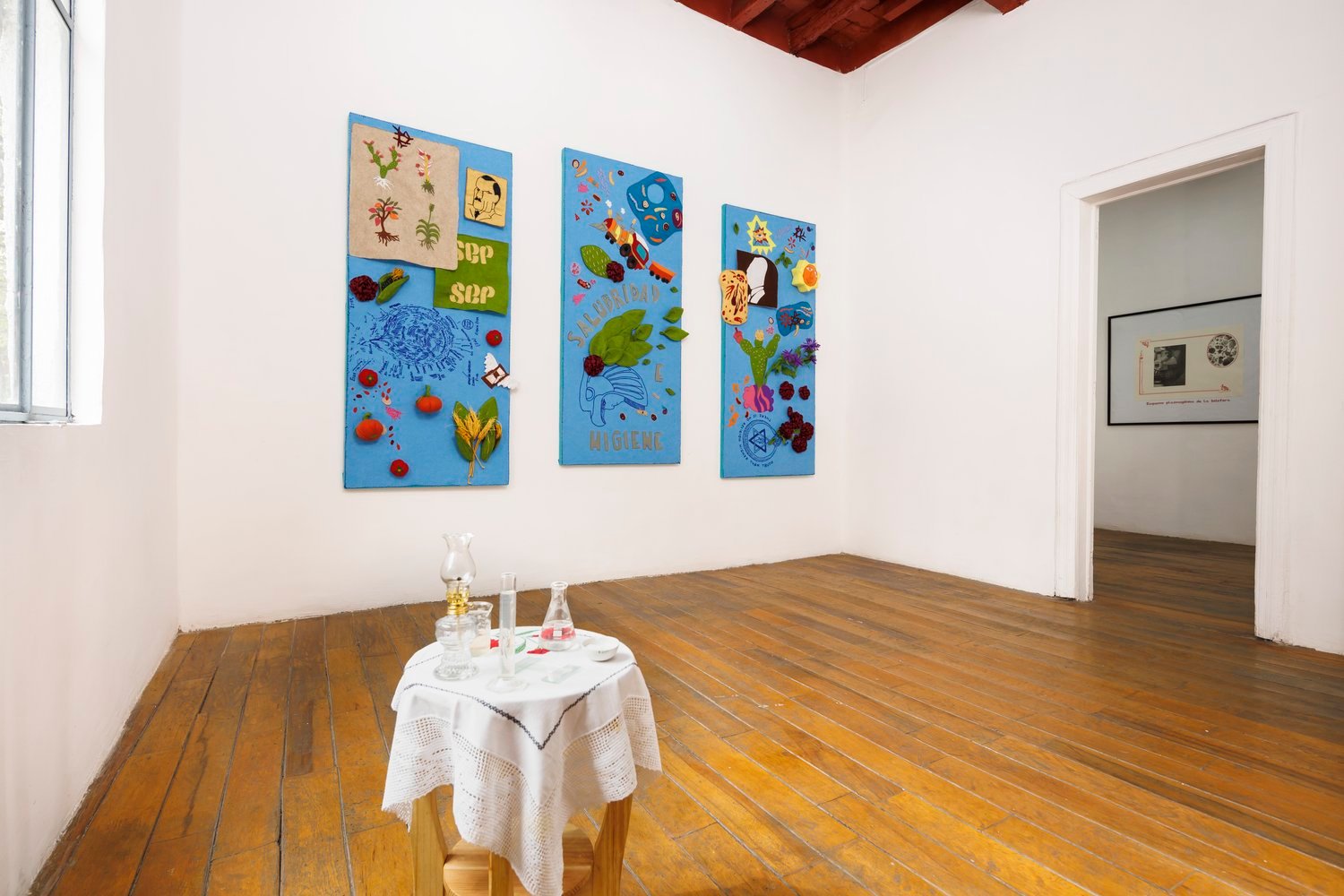
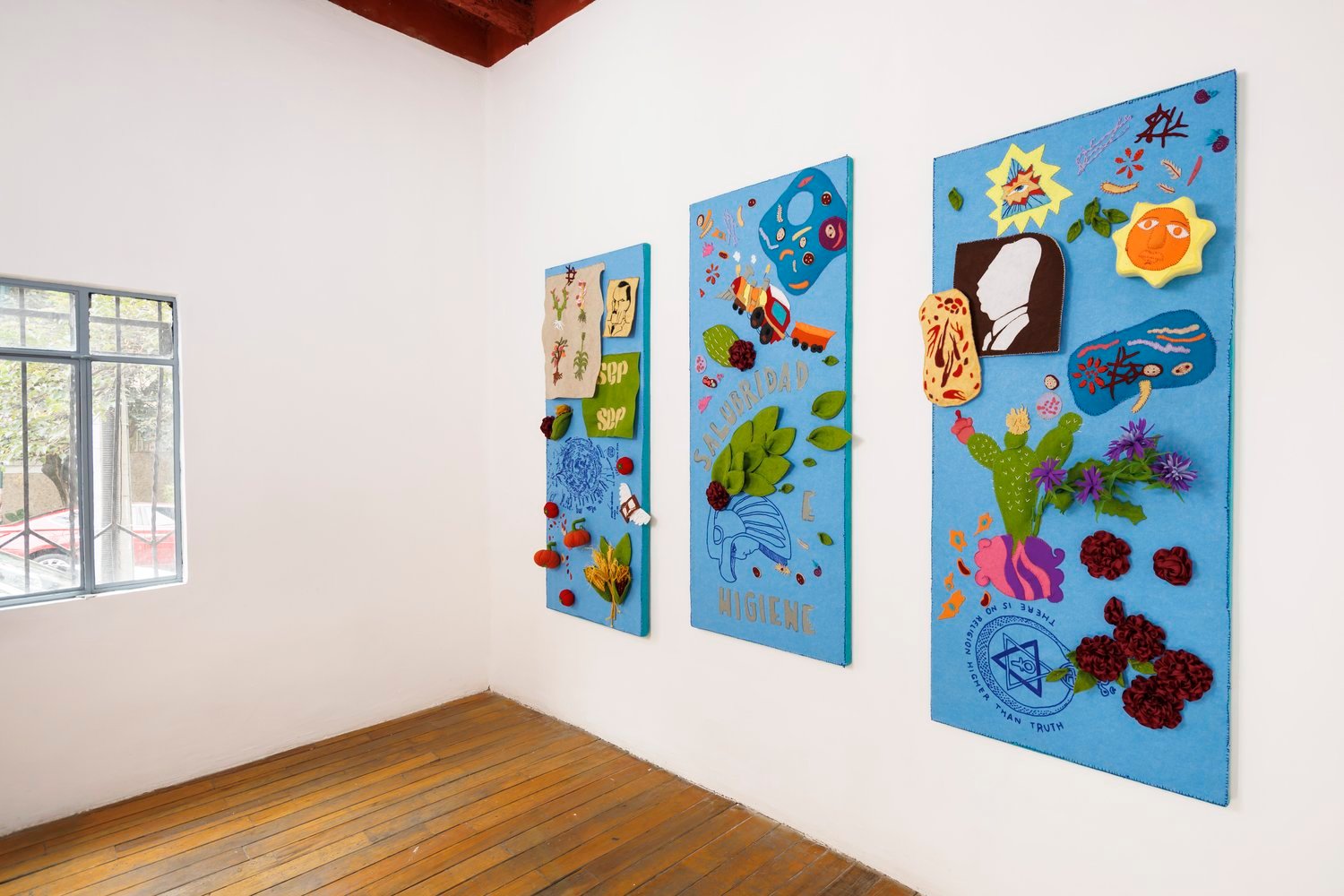
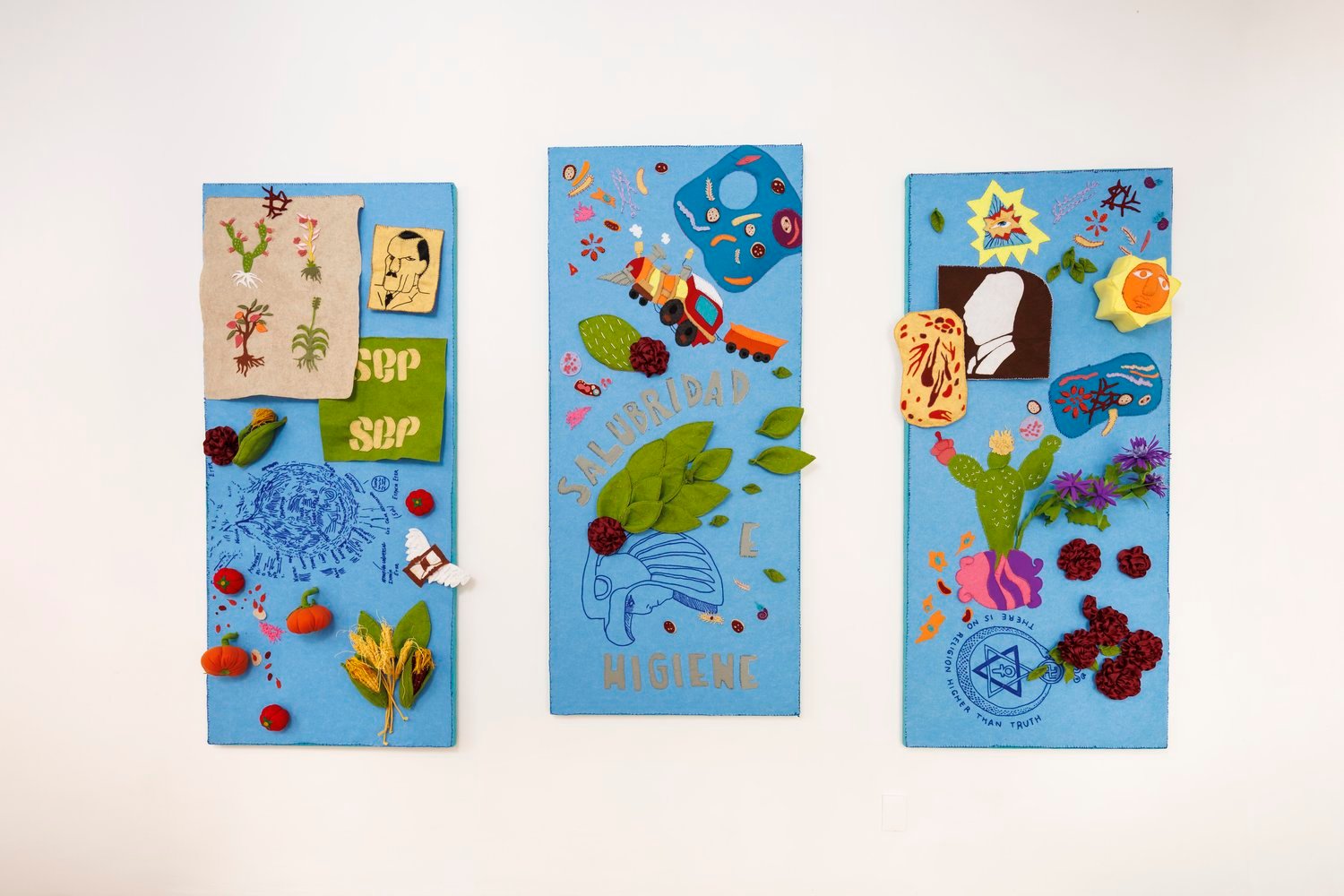
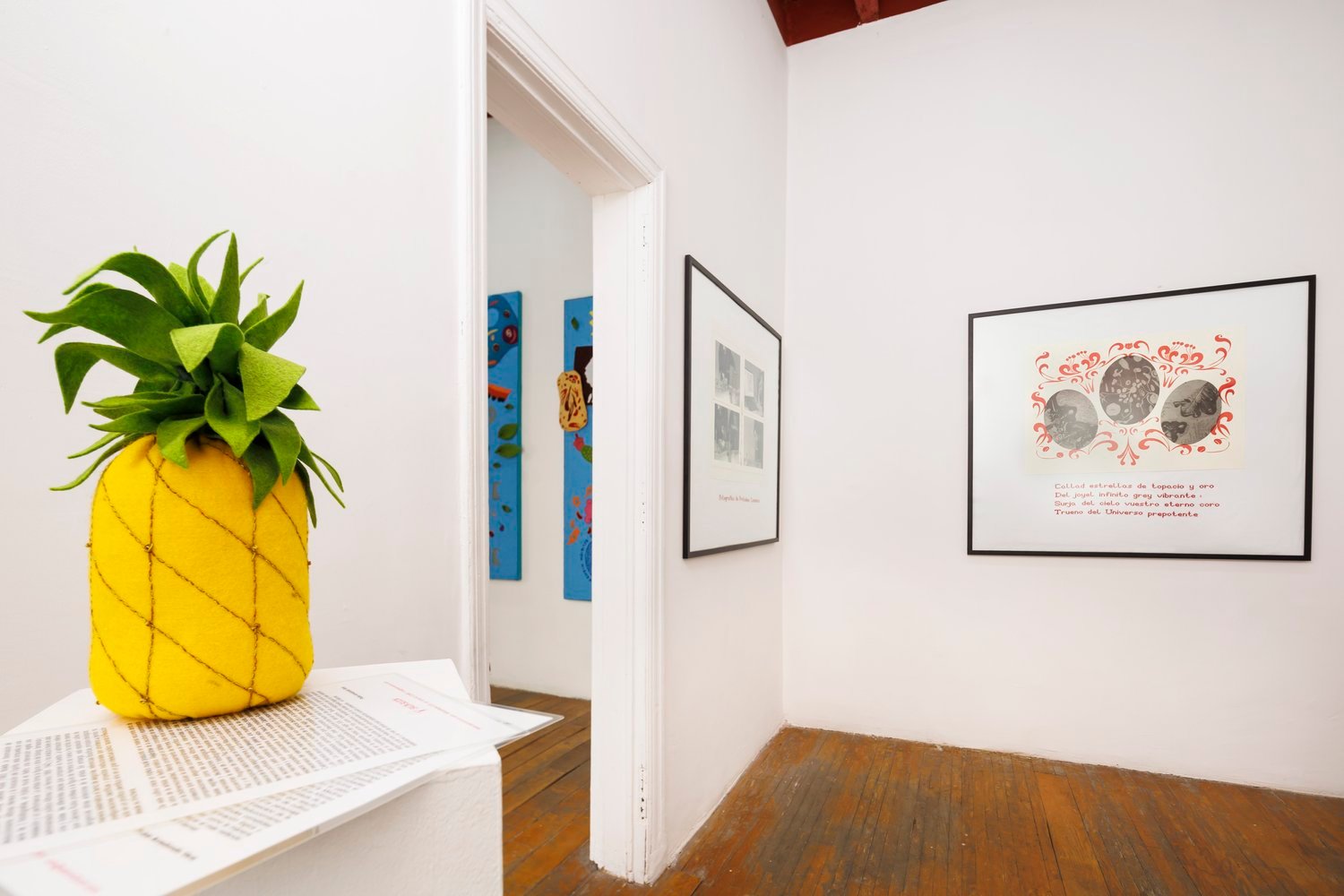
La exposición de Wendy Cabrera Rubio (1993) titulada La transmutación del deduccionismo: Alfonso Herrera y la invocación del Espíritu, esta compuesta por una serie de 3 fotolitografías, un tríptico mural en fieltro, una intervención vegetal, una instalación y un performance. La artista toma la figura y obra del biólogo, farmaceuta y administrador público Alfonso Luis Herrera (1868 – 1942) y los analiza a través de cada una y todas las diferentes piezas que componen la muestra. Le admiración millenial que Cabrera Rubio profesa a la figura de Herrera no es nueva y ha nutrido de manera tangencial obras anteriores de la artista. Sin embargo, está exposición cultiva de manera sistemática el tamiz de alegorías, referencias filosóficas, principios ideológicos, prefiguraciones científicas y proyectos institucionales que convirtieron a Herrera, no sólo en un prolífico científico sino en un gran intelectual público: haciendo la Revolución desde su trinchera.

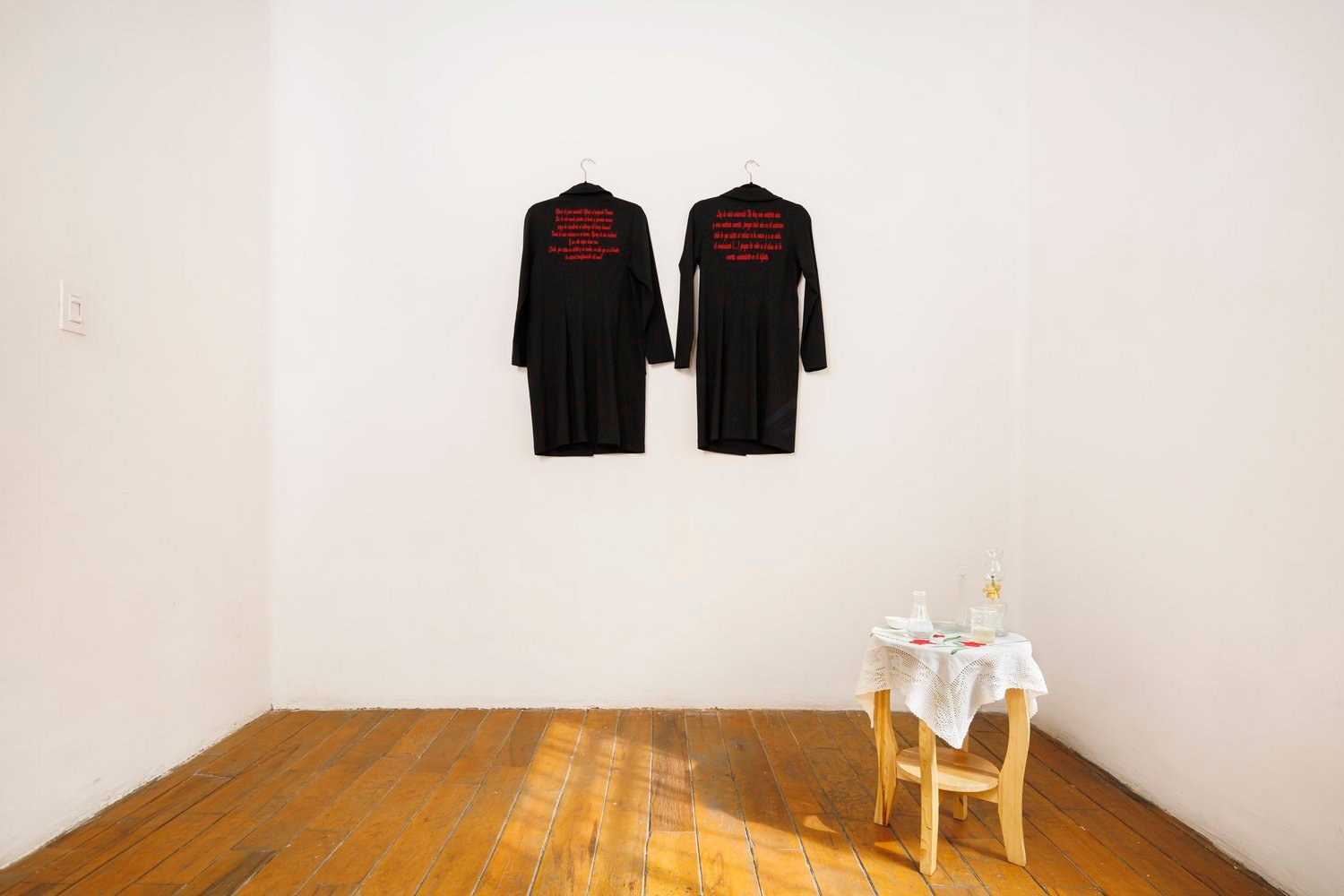
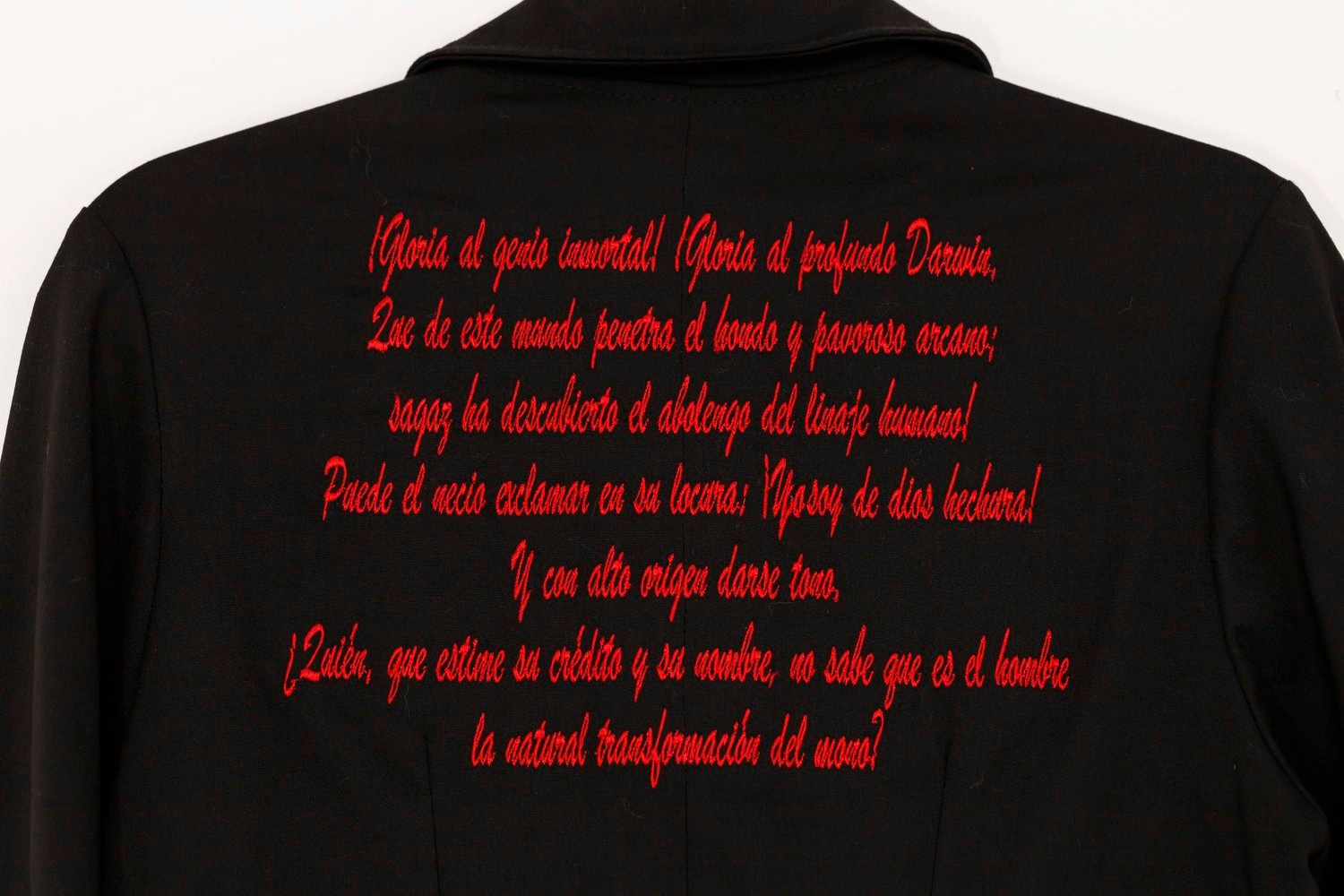
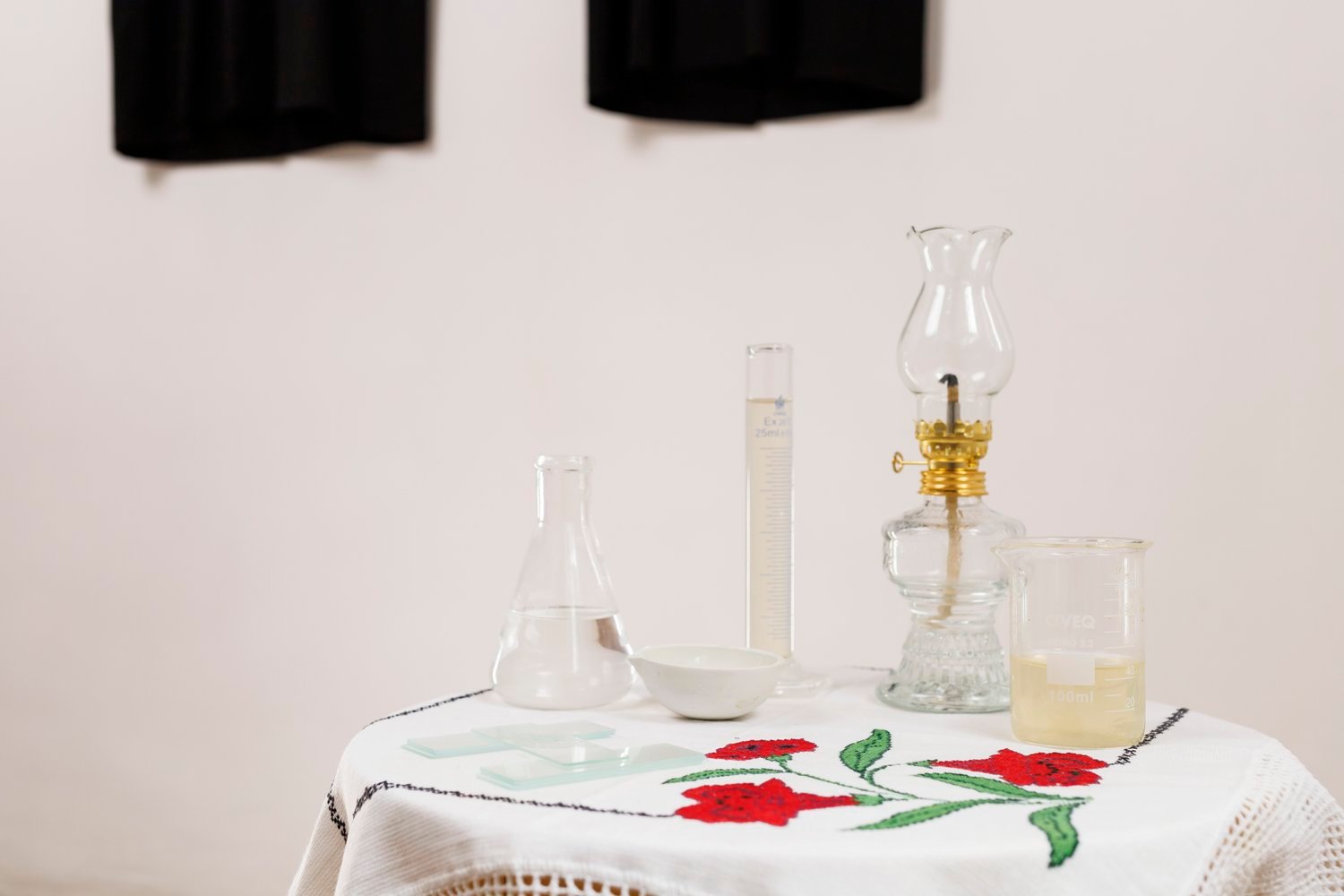
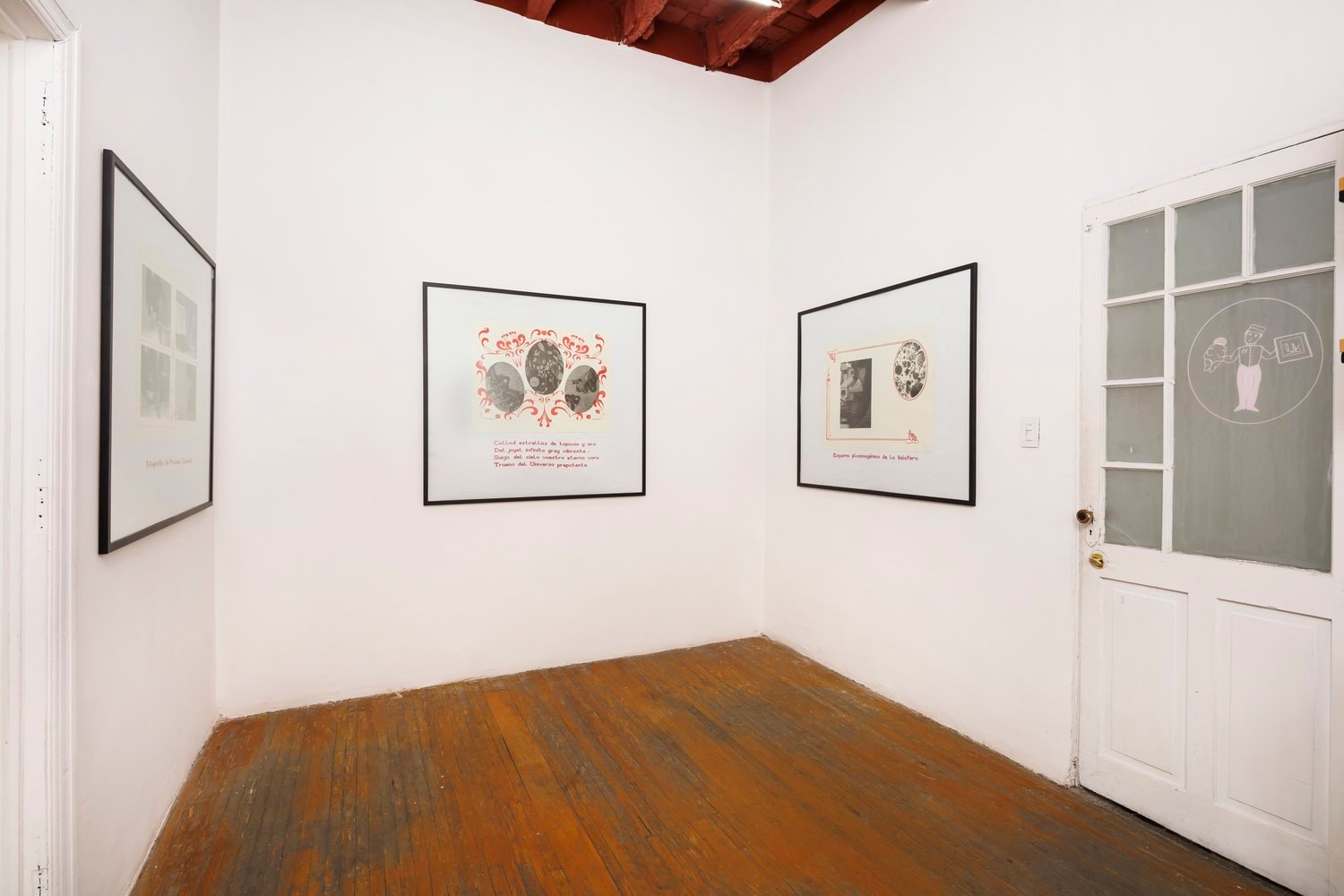
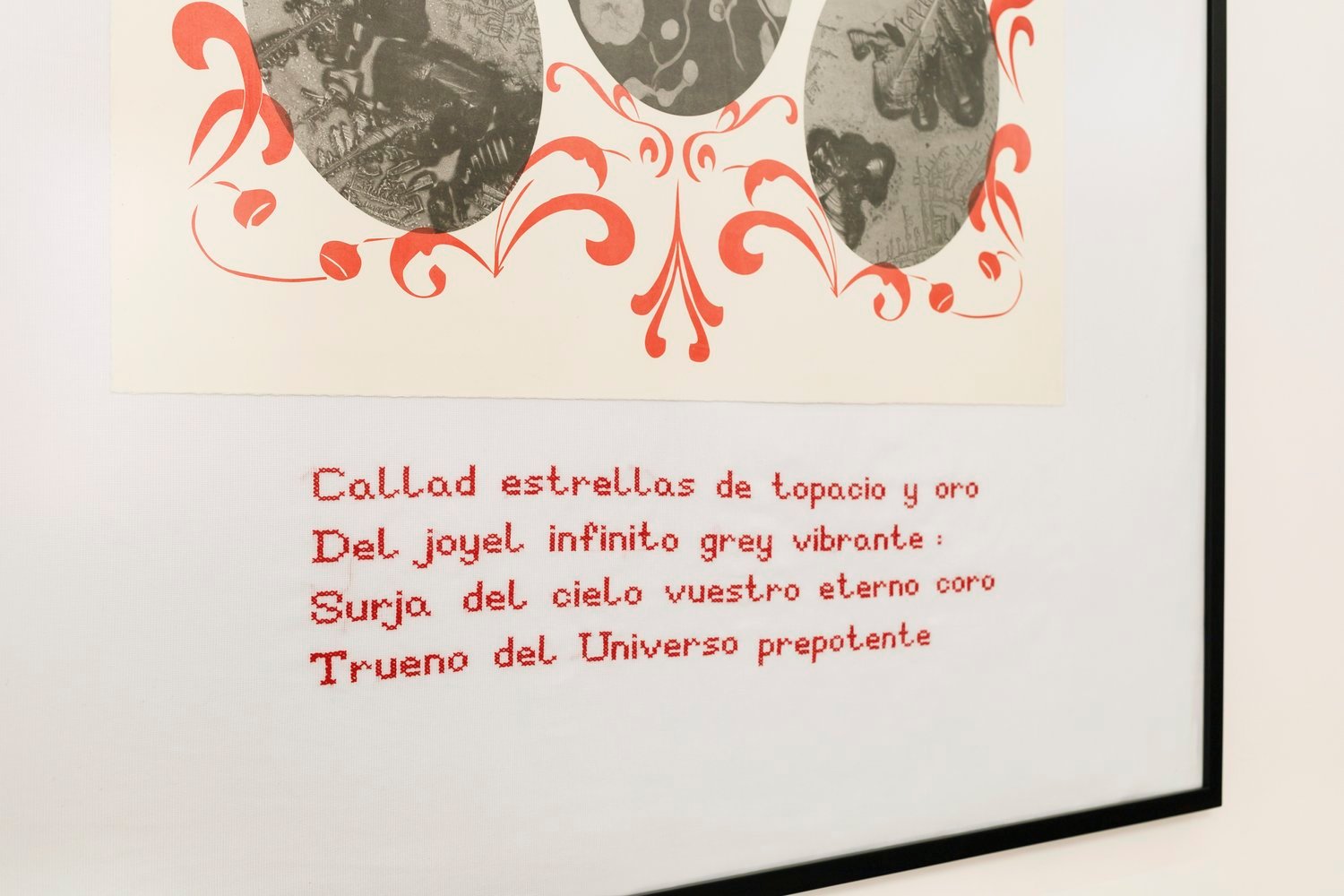
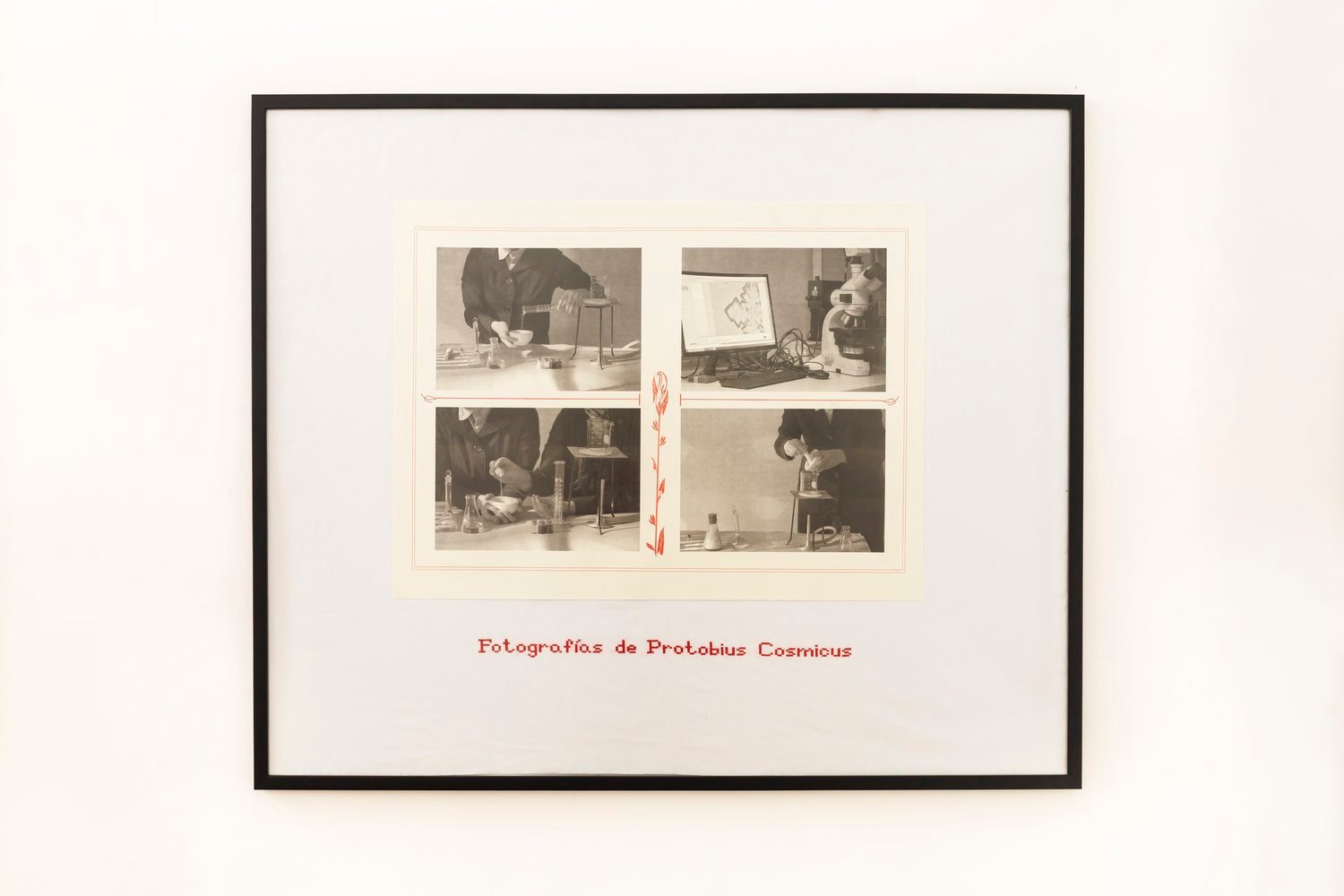
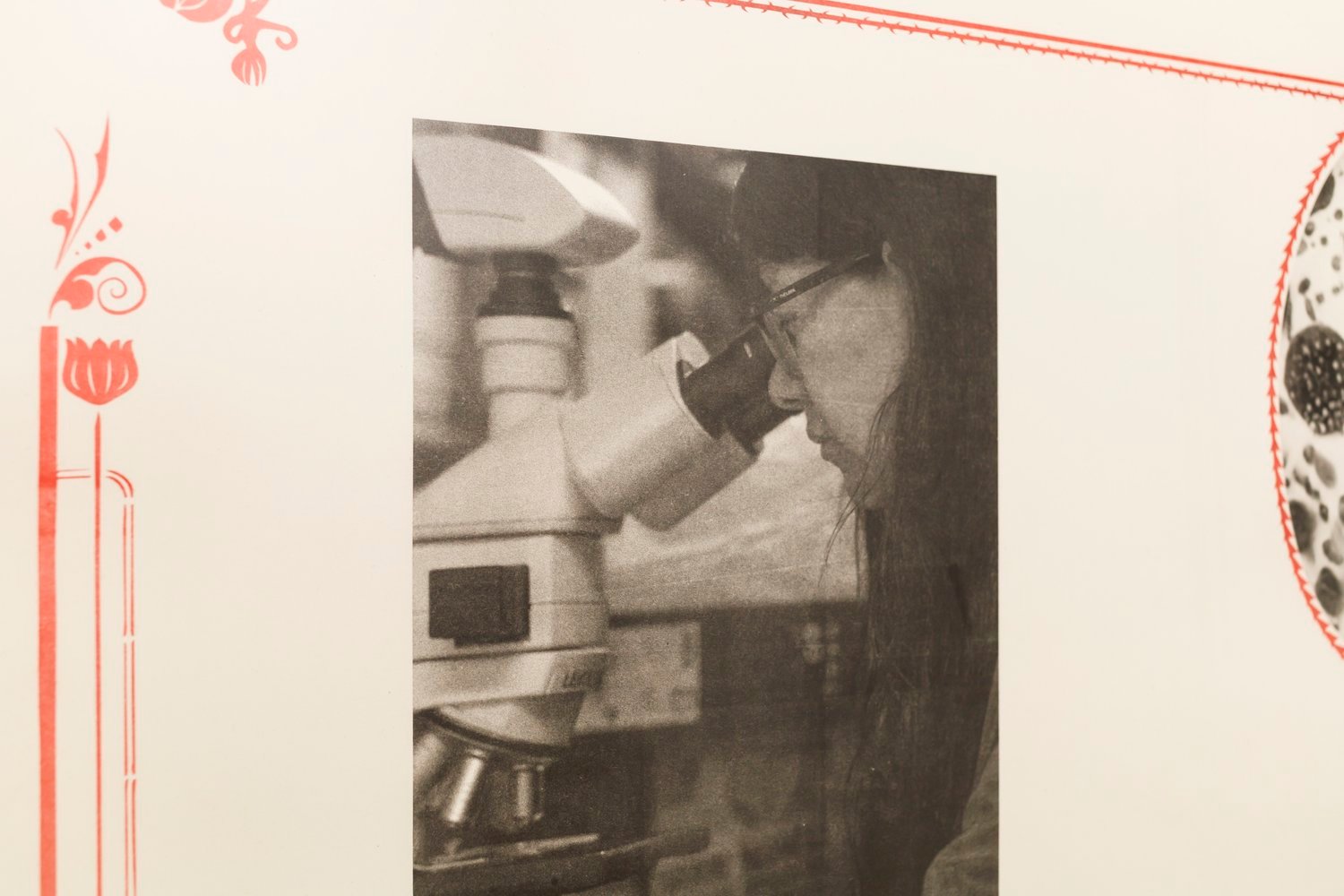
De este cultivo crece un tríptico mural producido en el material recurrente dentro de la obra de la artista: el fieltro sintético. Alejándose de la escultura y experimentando con la bidimensionalidad, Wendy construye un tableau cronológico de las referencias y contextos que sitúan la obra y pensamiento de Herrera. Este mural suavecito incorpora composiciones y alegorías contemporáneas al científico. La sala se completa con dos batas negras, como las que usaba Alfonso Luis, intervenidas con citas de poemas darwinistas y declaraciones ontológicas del propio personaje. En la sala contigua se encuentran la serie de 3 fotolitografías basadas compositivamente en el Álbum de la Paz y el Progreso de Ireneo Paz publicado en 1910. La serie contiene 10 fotografías microscópicas capturadas por el fotógrafo Mauricio Guillén de los sulfobios, la estructura básica de la vida según Herrera, y se completan con trabajo en punto de cruz, pasatiempo femenino porfirista, que transcribe pasajes del trabajo teórico del personaje. En el pasillo de acceso y patio posterior de la galería, una muestra de las cactáceas estudiadas por Herrera y sus contemporáneos, entre ellos Helia Bravo Hollis, marca y aglutina el espacio expositivo, conduciendo al visitante hacia la instalación científica en el patio: el escenario del elemento performático de la muestra. Cabrera Rubio y Karla Medina Cabrera recrearán de manera verídica y verosímil uno de los experimentos que Alfonso Luis Herrera anotó como prueba de sus deatribas sobre el origen y la naturaleza de la Vida. La muestra toma su nombre de la ciencia deduccionista y apriorista que resultó de los estrepitosos cambios materiales del siglo XIX y el burbujeante caldo de cultivo intelectual, esotérico y político que los acompañó. Herrera, junto con otra personaje favorito de Cabrera Rubio, José Vasconcelos, es un perfecto ejemplo mexicano de la pseudociencia ideologizada que pululó el orbe hace más de un siglo. Este deduccionismo inicia en la segunda mitad del siglo XIX, deriva en las peores atrocidades cometidas por el hombre y se encuentra hoy entre nosotros. Tanto como la operación lógica y argumentativa favorita de los extremismos y fanatismos religiosos así como la manera en la cual nos relacionamos individualmente con la Verdad hasta llegar al más nefando relativismo y al mar de doxa que caracteriza nuestro presente… el Internet.

Pablo Arredondo Vera

ENG:

Wendy Cabrera Rubio (1993) solo show entitled La transmutación del deduccionismo: Alfonso Herrera y la invocación del Espíritu, is componed of 3 photolitographies, a three piece mural on felt, a green intervention, an installation and a performance. The artist took the figure and career of the biologist, pharmacologist and public servant Alfonso Luis Herrera (1868 – 1942) and analiced them in all and each one of the different works in the show. The Millenial fandom Cabrera Rubio professes to Herrera’s persona is not new and has nourished previous art pieces. None the less, this is her first exhibit devoted to him entirely and that systematically cultivates the different allegories, philosophical references, ideological principles, prescientific nuances and institutional projects that turned Herrera into a great scientist but also a public one: making the Revolution from his own perspective: science.

From this primordial soup a mural triptych grows in the characteristic material of Cabrera Rubio’s work: synthetic felt. Stepping away from sculpture and experimenting with the realm of two dimensions, she builds a chronological tableau with all the references than place and contextualize the work and thought of Herrera. This soft mural images, icons, and designs popular during Herrera’s lifetime. This room is completed by two black lab coats, like the once Herrera used, embroidered at the back with quotes form the scientist or Darwin themed songs. On the next room hangs a series of three photolitographies composed in the way of the Album de la Paz y el Progreso by Ireneo Paz and published in 1910. The series contains 10 photographies by Mauricio Guillén, of Cabrera Rubio recreating the experiment Herrera used as material base for his theories along with images of the results themselves. A selection of cacti based on the specimens Herrera and his contemporary discovered and experimented with guides you to the back courtyard where the scientific installation sits as the stage for the performative part of the exhibit. The artist and Karla Medina Cabrera will recreate said experiment live in front of an audience and will create sulfobios out of gasoline and coconut fat among other things. The name of the show comes from the deductionist logic and pseudo science of the late XIX century and the early XXth. Rapid industrialization and the ideological and philosophical mayhem that came with it brought this sophism to the masses and humanity to commit the worsts crimes in history. Deductionst logic is still well with us, empowering extremists arguments and nurturing the present relativism and the ocean of opinions we live in… the Internet.

Pablo Arredondo Vera.

Fotografías de Weima Art Photography
John R. Thompson – Abstract Painting: NYC–CDMX (1986 – 2023)

Abstract Painting: NYC – Mexico City (1986 - 2023)

de John R. Thompson

Octubre 14, 2023.

curaduría de Carlos E. Palacios.

Abstract Painting:

New York City – Mexico City (1986 – 2023)

John R. Thompson (Schenectady, New York, 1947) es un artista que ha producido una obra excéntrica en el amplio sentido de esta palabra. Desde hace 18 años reside entre Mérida y la Ciudad de México. De manera discreta pero consistente, ha desarrollado igualmente una labor creativa que combina la curaduria y el coleccionismo. Un trabajo que ha mostrado en su espacio de proyectos llamado “108ag_projects”, ubicado en la Colonia Juárez de la capital mexicana.

Aún cuando esta última faceta le ha dado una discreta y permanente visibilidad a su trabajo, su obra puede entenderse como deciamos antes, desde una condición excéntrica; esto es: su trabajo está “fuera del” centro. Es una propuesta ajena a cualquier genealogía del arte en México y podría decirse, lejana a cualquier constelación de obras y artistas de la escena local del arte contemporáneo. Al igual que su trabajo, Thompson no se prodiga en círculos artisticos ni sociales

y en este sentido él mismo goza de una cierta ex-centricidad. Thompson vive concentrado en su particular obra, a la que se dedica con la febril disposición de un artista “outsider”, sin ser realmente un creador determinado por ésta condición.

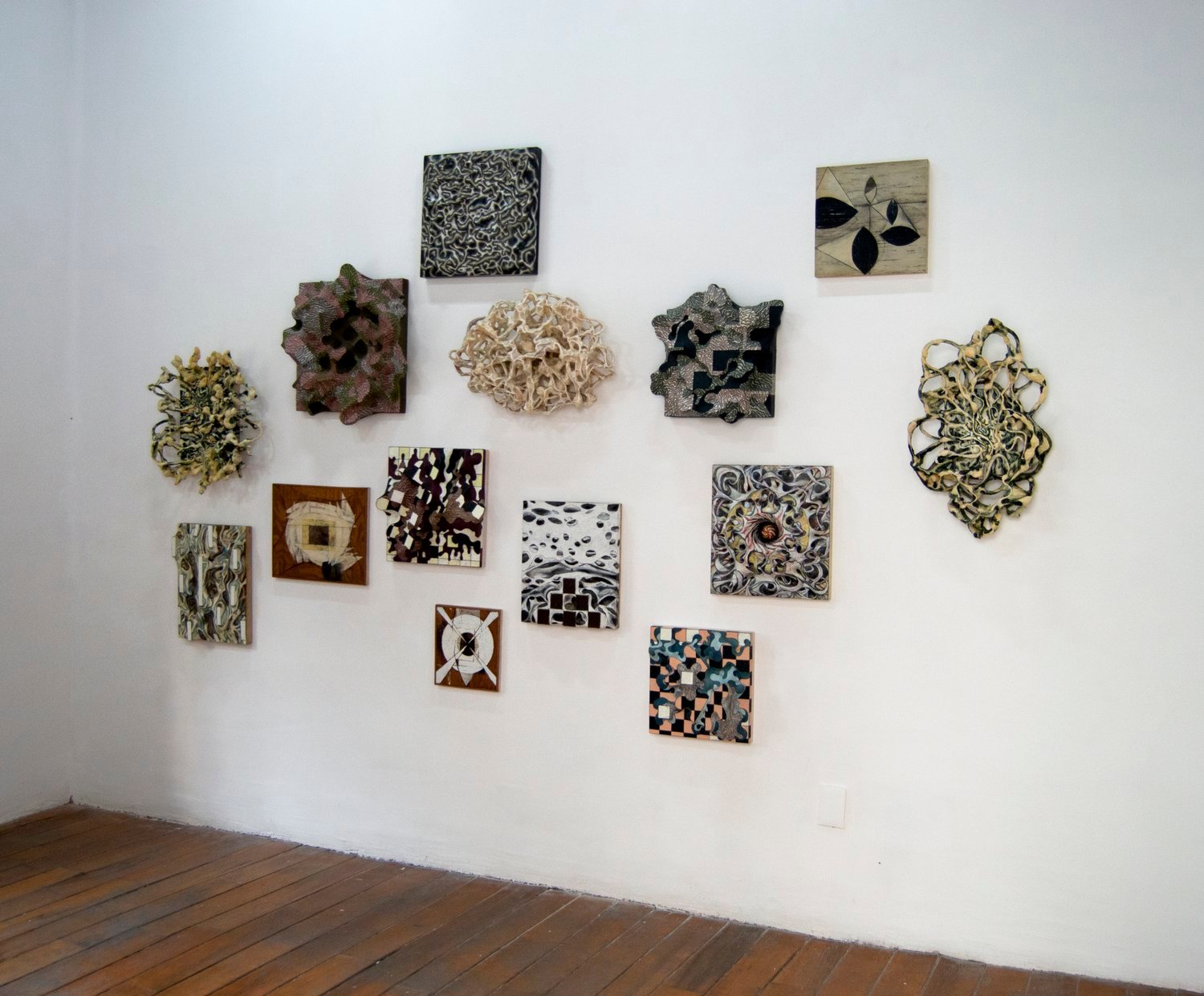
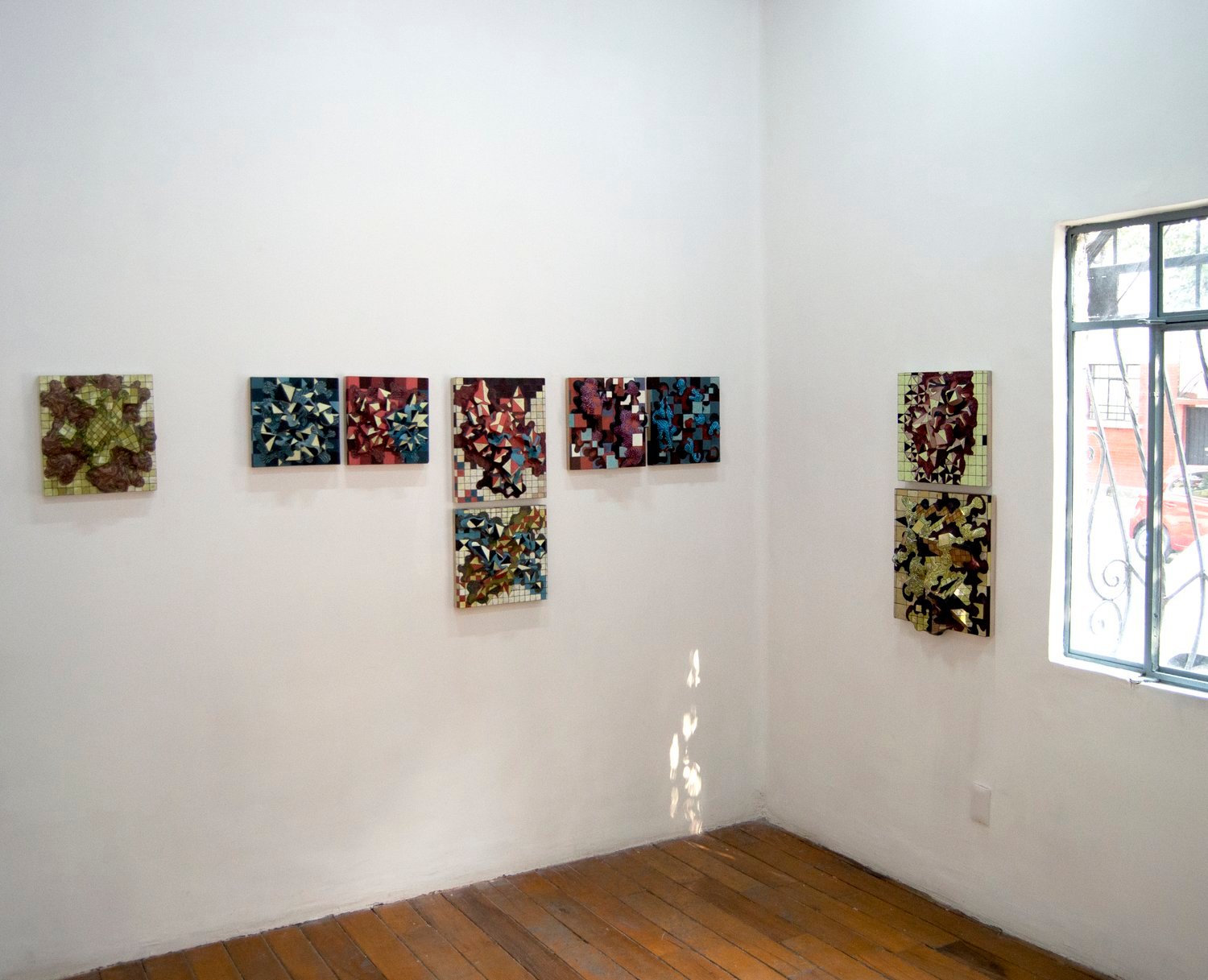
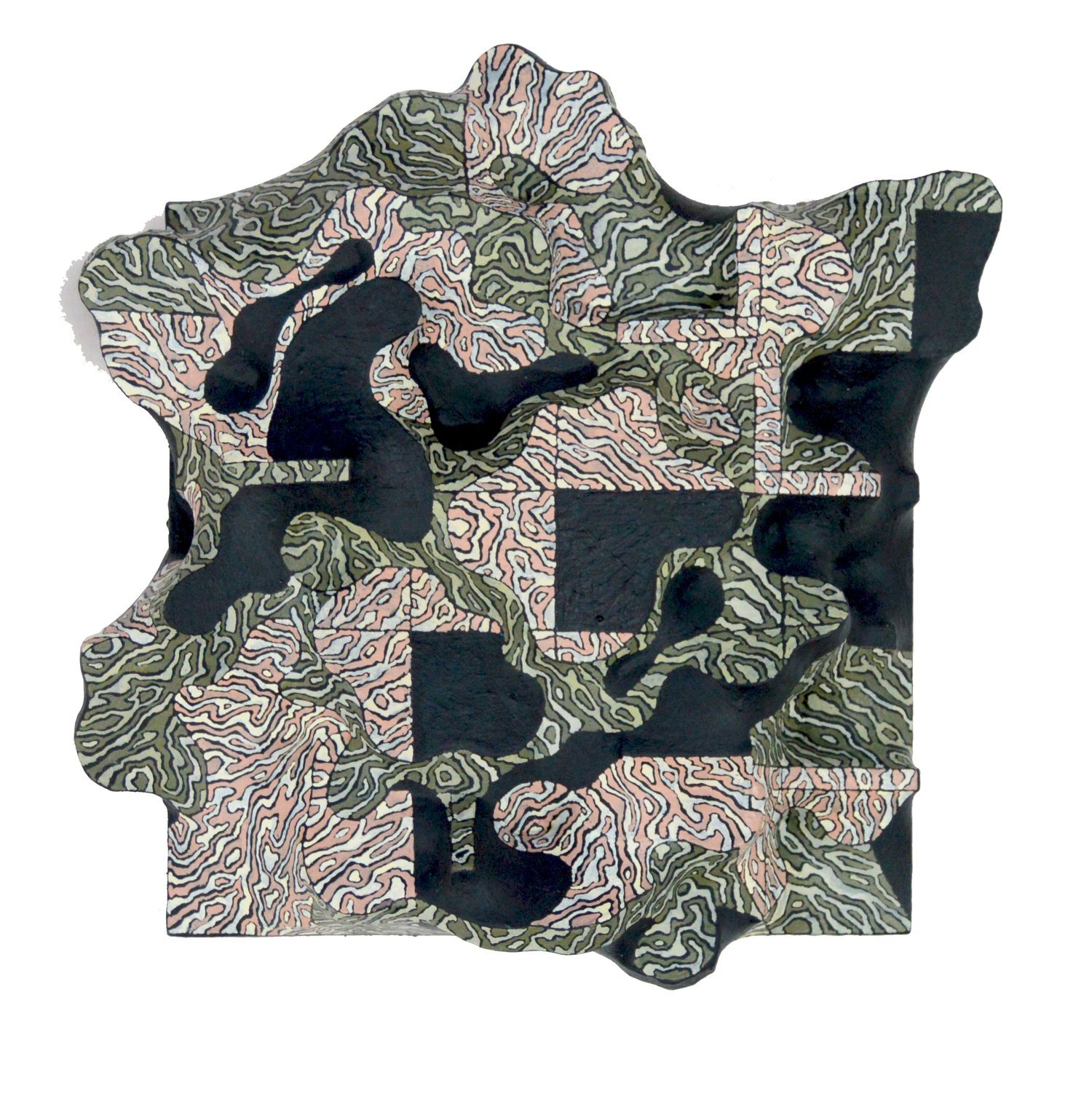
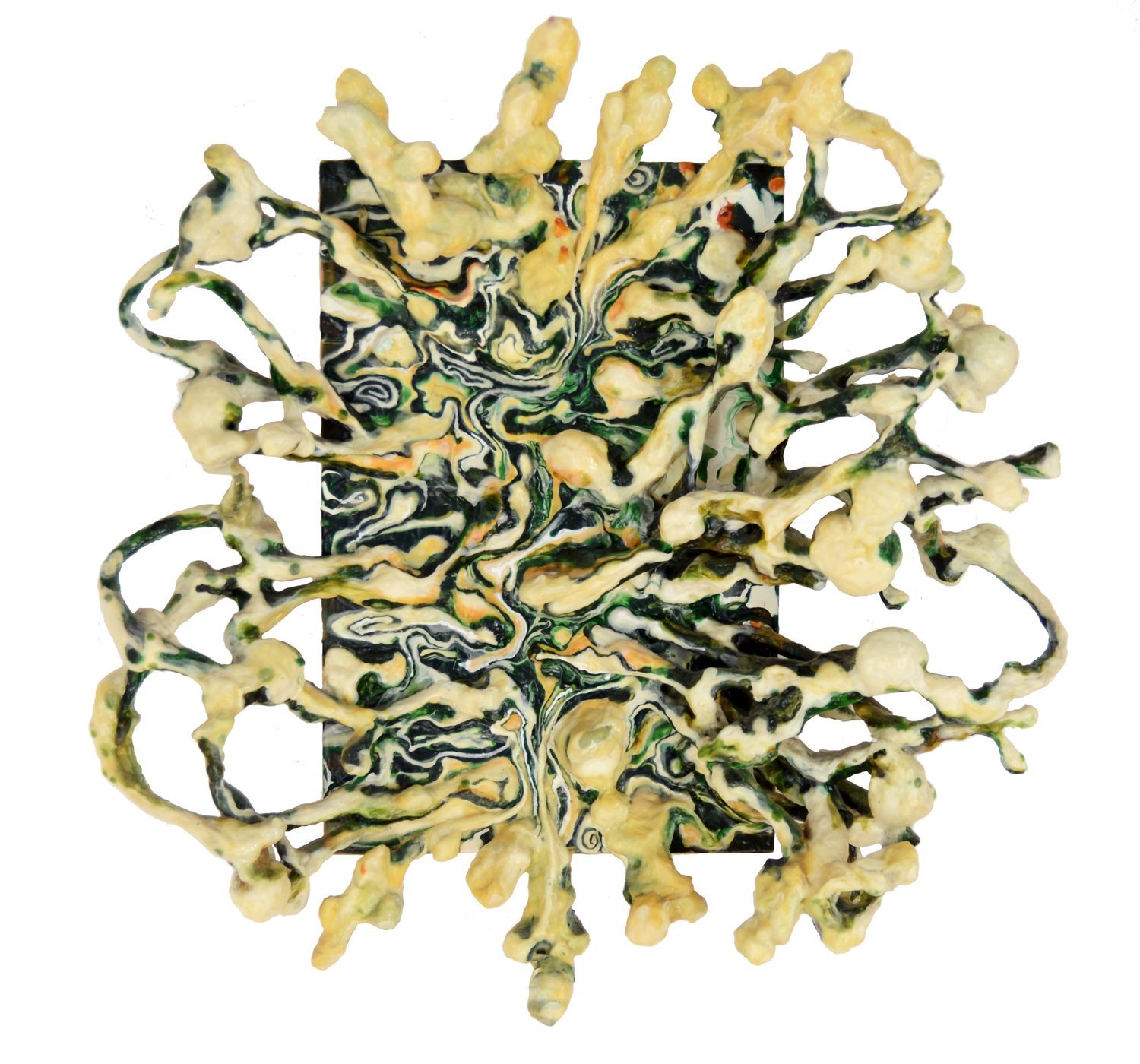
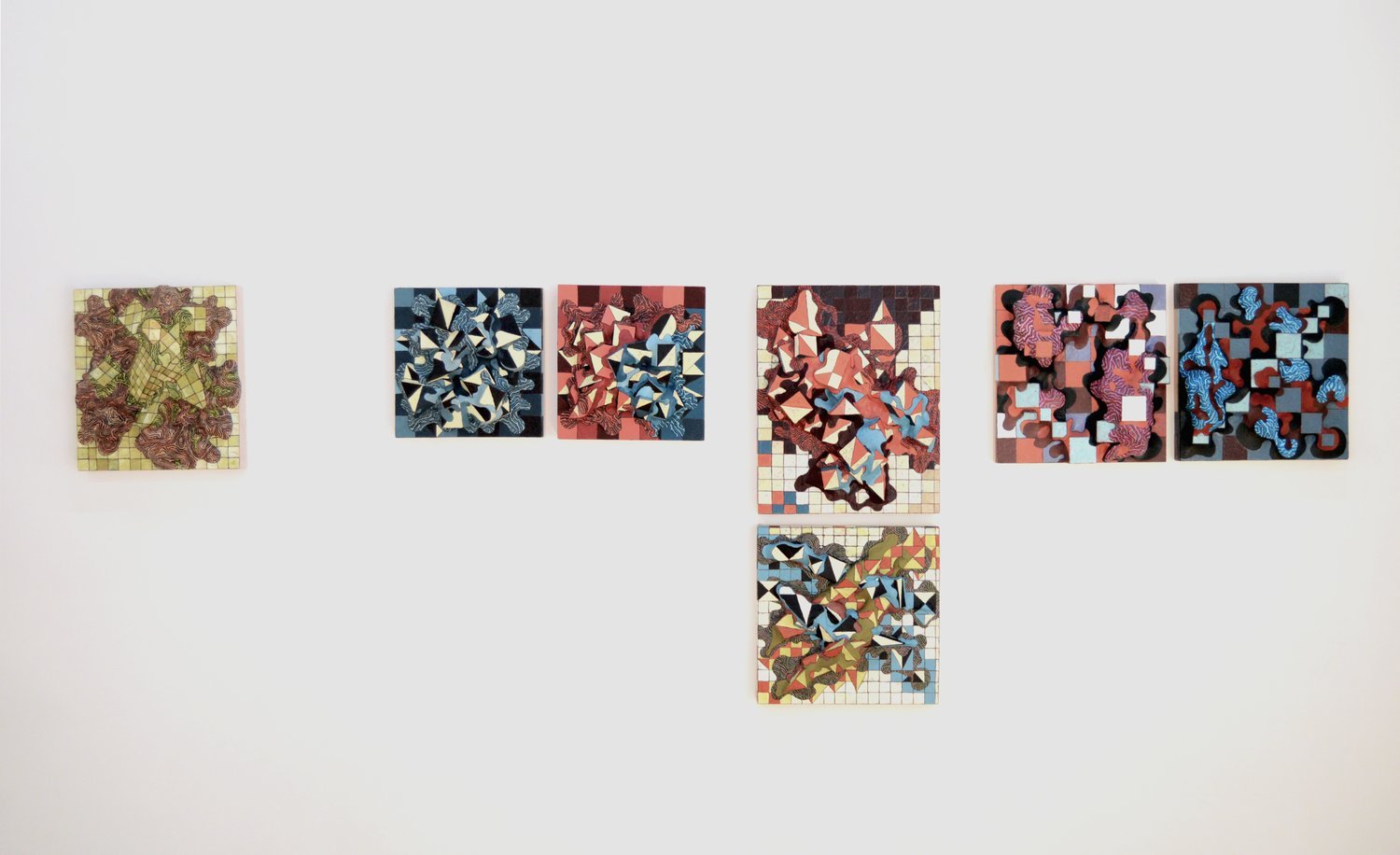
Claramente inspirado en las tramas ortogonales desde donde nace el arte geométrico, Thompson transforma la rigidez racionalista de la geometría en unas formas orgánicas, como protuberancias o bultos que invalidan, desde su condicion corporal y táctil, toda la pulida asepsia de la tradicion abstracto-geométrica. La materialidad bulbosa de sus relieves escultóricos y las obsesivas, intensas, repeticiones pictóricas que las recubren, le otorgan a estas obras un lugar completamente inédito en la tradición del arte geométrico. En cierto modo, sus obras encarnan -nunca mejor dicho- una geometria carnal y carnosa: faceta verdaderamente extravangante -excéntrica, decíamos antes- asociada al inmaculado lenguaje de la abstracción.

Carlos E. Palacios,

Ensenada, Agosto de 2023

ENG:

Abstract Painting:

New York City – Mexico City (1986 – 2023)

John R. Thompson (Schenectady, New York, 1947) is an artist who has produced an eccentric body of work in the broadest sense of the term. For the past 18 years, he has been residing between Mérida and Mexico City. Discreetly yet consistently, he has developed a creative practice that combines curating and collecting. This work has been showcased in his project space called “108ag_projects,” located in the Juarez neighborhood of the Mexican capital.

Even though this latter aspect has given his work discerning and enduring visibility, his oeuvre can be understood, as mentioned before, from an eccentric condition; that is, his work is “outside of” the center. It is a proposal unrelated to any genealogy of art in Mexico and, one could say, distant from any constellation of works and artists within the local contemporary art scene. Much like his work, Thompson doesn’t engage extensively in artistic or social circles, and in this sense, he himself embodies a certain eccentricity. Thompson lives focused on his unique work, which he dedicates himself to with the fervent disposition of an “outsider” artist, yet without being strictly defined by this condition.

Clearly inspired by orthogonal patterns from which geometric art originates, Thompson transforms the rational rigidity of geometry into organic forms, like protuberances or bulges that undermine, from their bodily and tactile nature, the polished asepsis of the abstract-geometric tradition. The bulbous materiality of his sculptural reliefs and the obsessive, intense pictorial repetitions that cover them bestow upon these works a completely unprecedented place in the tradition of geometric art. In a certain sense, his works embodies – quite literally – a fleshy and corporeal geometry: a truly extravagant –or as mentioned earlier, eccentric–- facet associated with the immaculate language of abstraction.
Carlos E. Palacios,

Ensenada, august, 2023

Pink to Red

Daniel Hill, Dolores Masip, John Monti, John R. Thompson, Kinke Kooi, Karl Frías García, Luisa Restrepo, Manuel Mathar.

curaduría de John R. Thompson.

Bea Millón – Y los cántaros, cantan

Y los contáros, cantan

de Bea Millón

de Bea Millón

Would it were that our stories were the waters of the river. Would it were that they passed over the worn stones of our hearts and cleansed us, moving on to the mother sea in a forgiving embrace.

(Gloria Anzaldúa) ¹

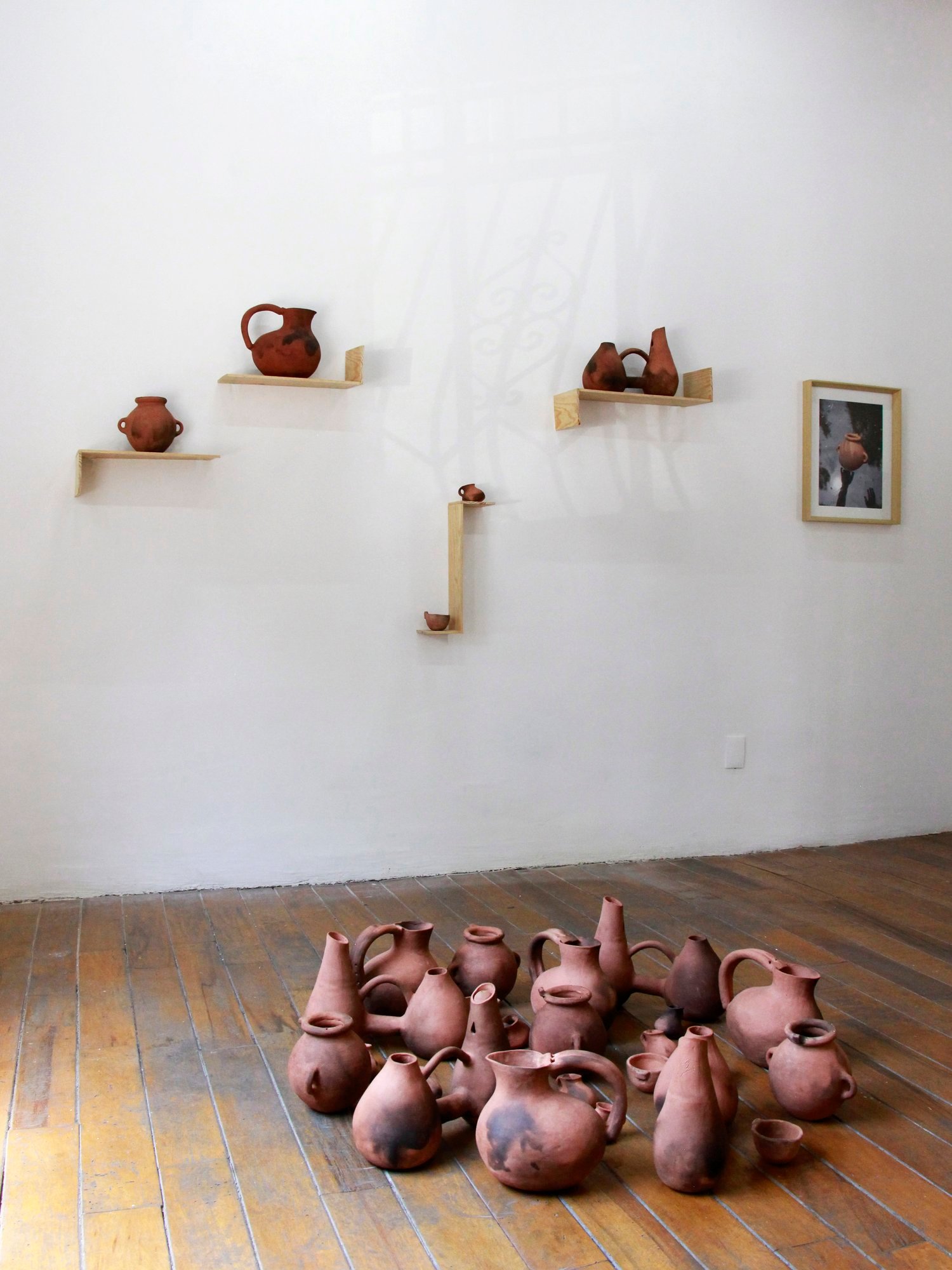
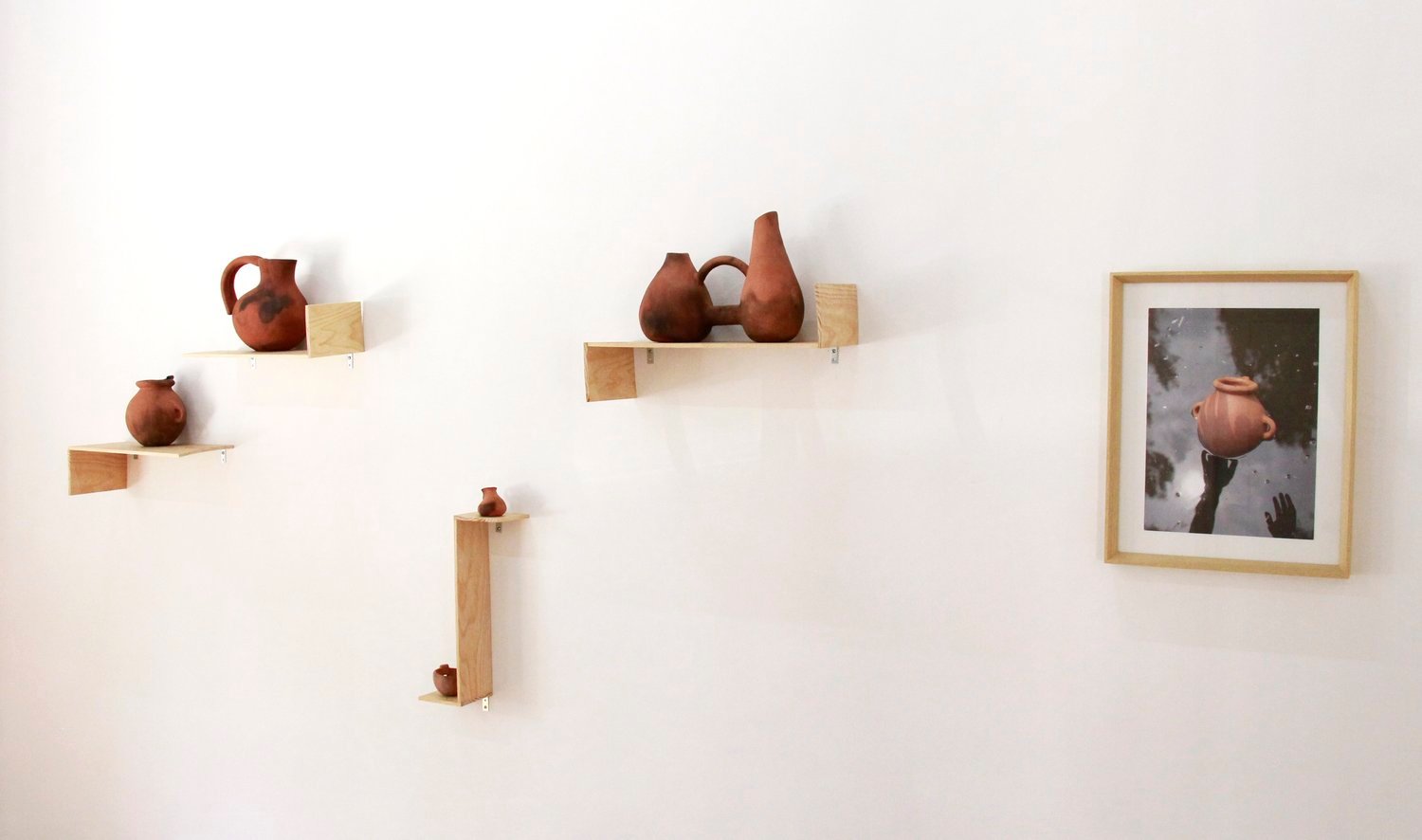
Con cada desaparición, con cada pérdida, con cada extinción, un mundo se rompe. Perdemos mundos cotidianamente: afectos, entornos, lenguas, creencias, paisajes, especies, saberes, países, certezas. Algunas de esas pérdidas son selectivamente infligidas por la fuerza. ¿Qué sobrevive a la pérdida de un mundo amado? Quizá, el deseo de persistir en las reparaciones, de trastocar aquello que ha sido dañado y ultrajado. También sobreviven las heridas y las memorias.

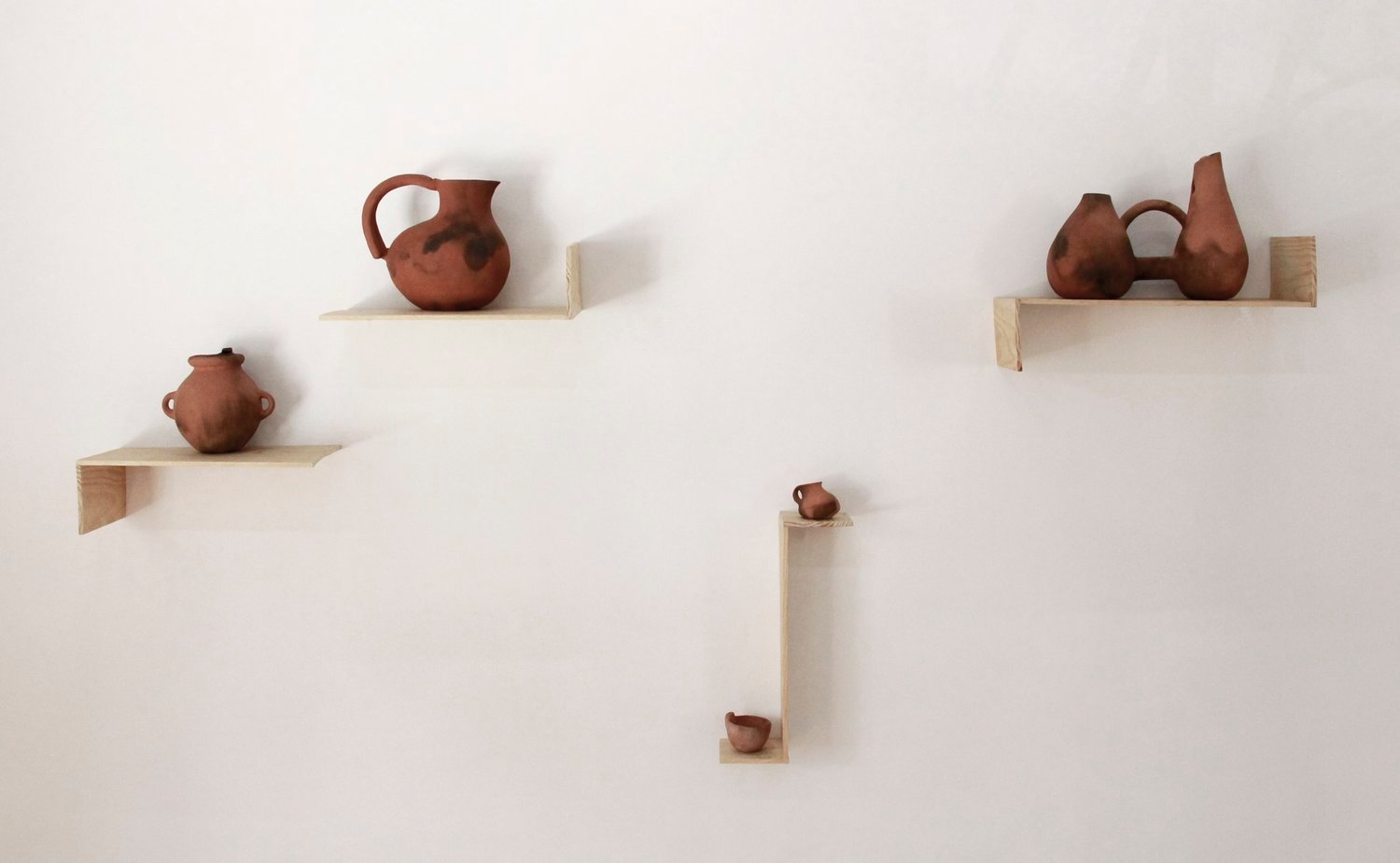
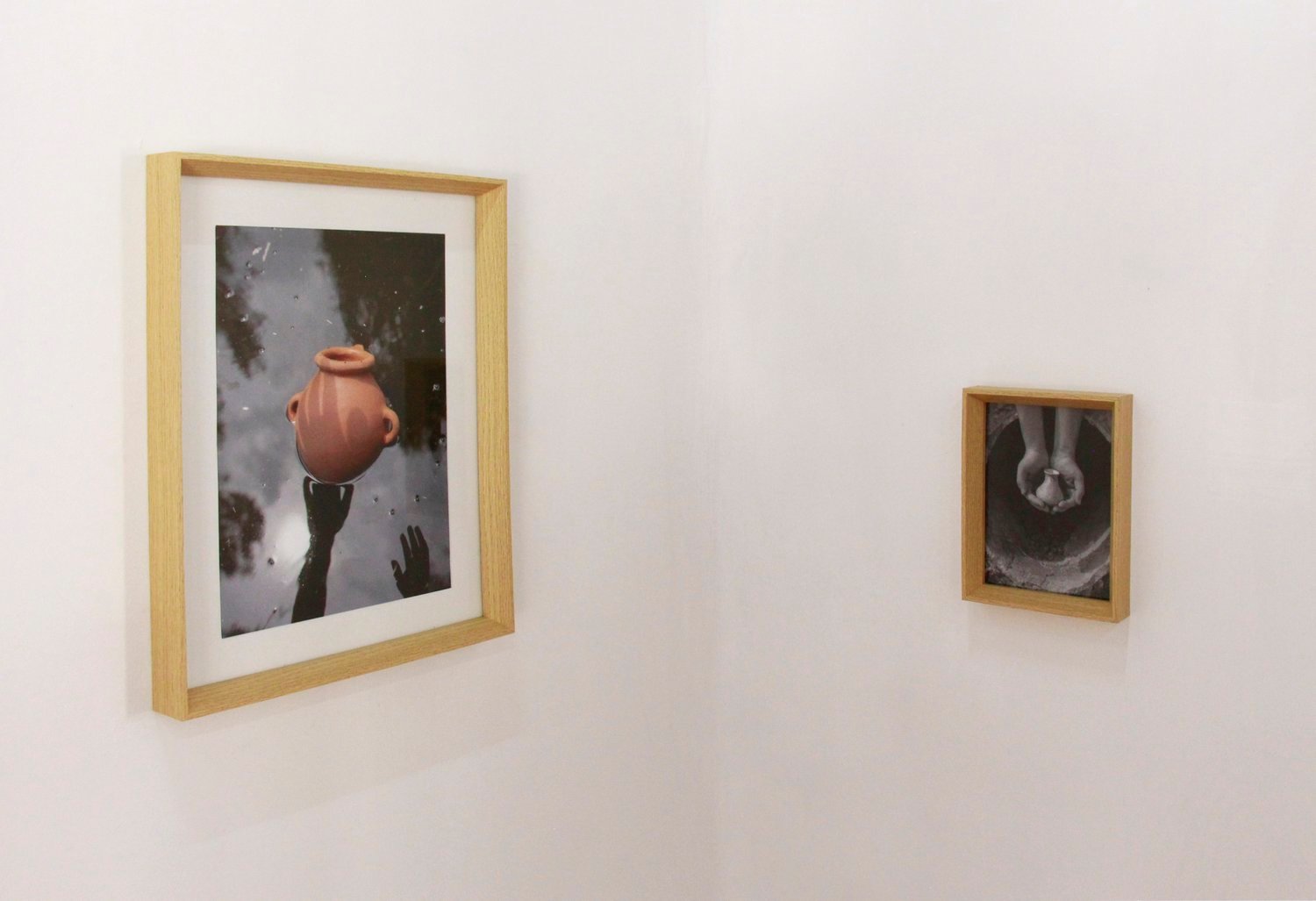
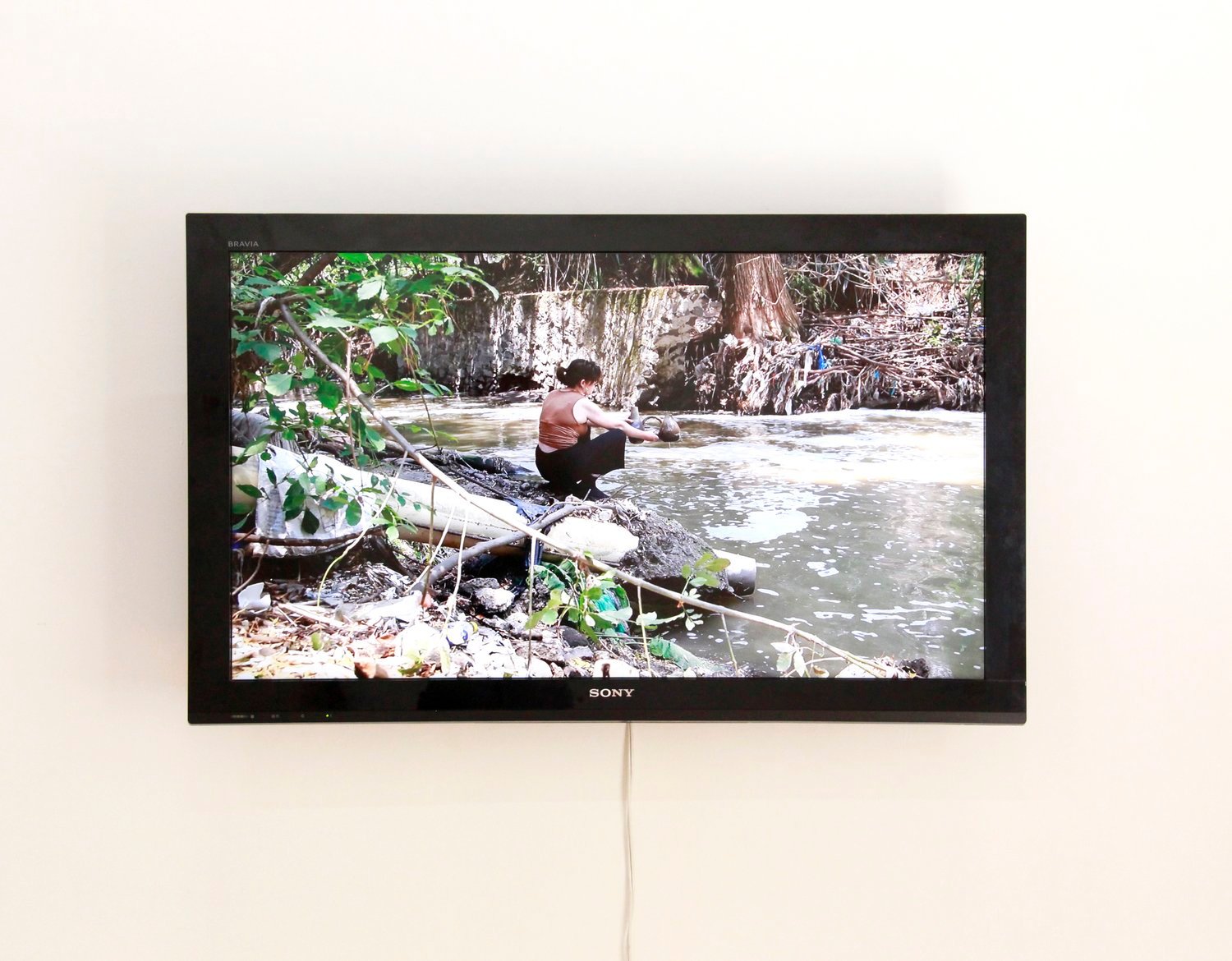
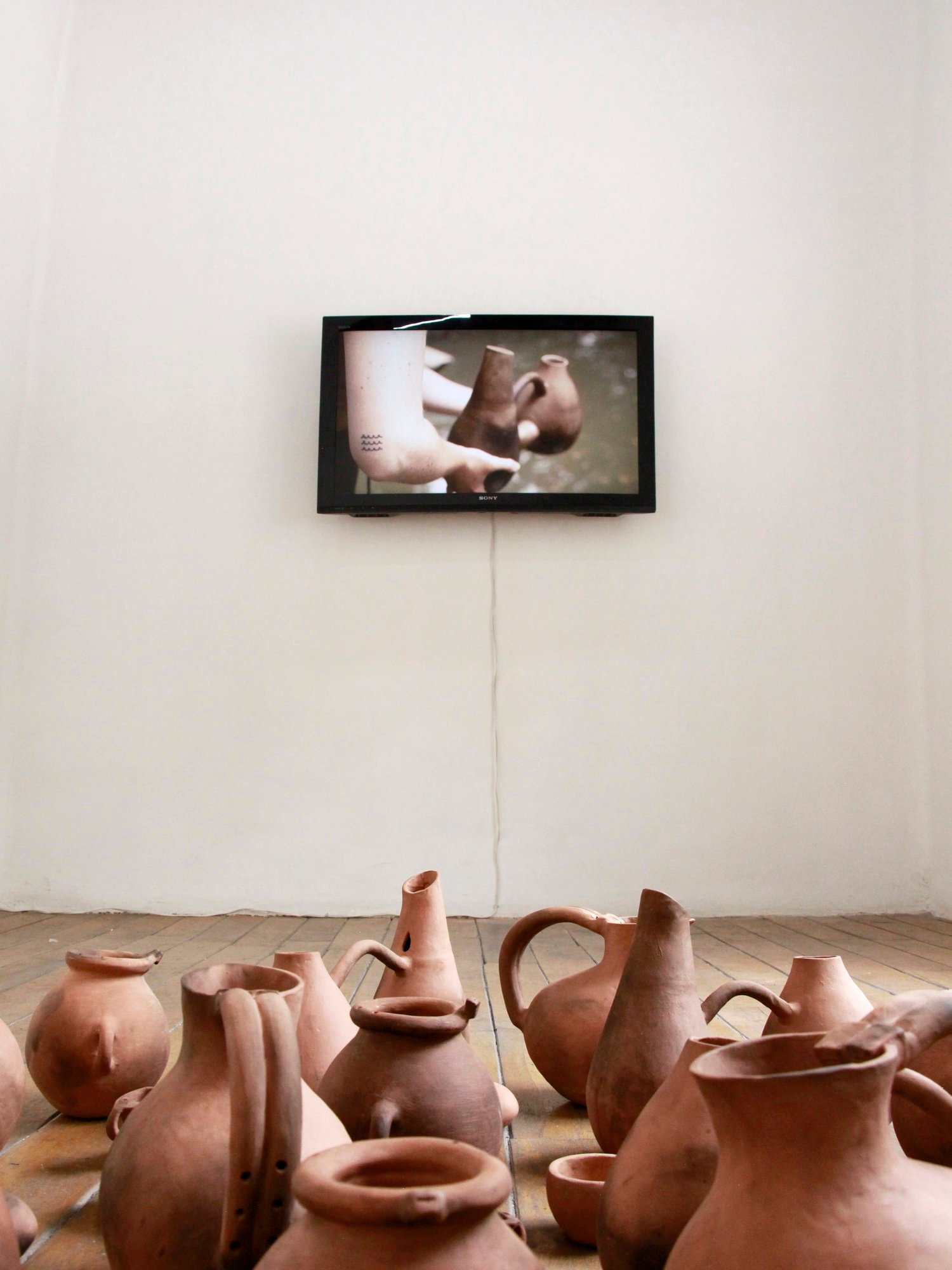
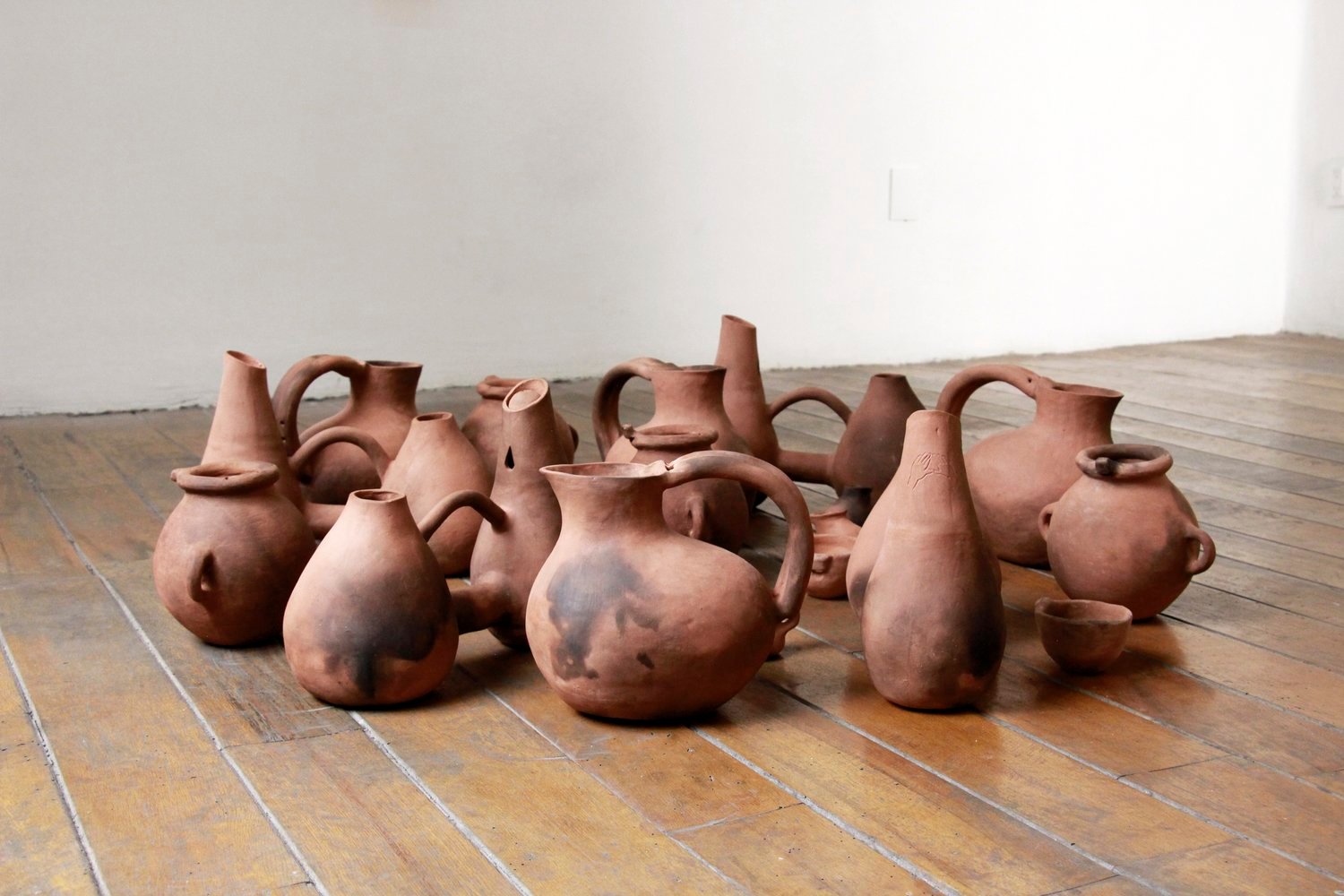
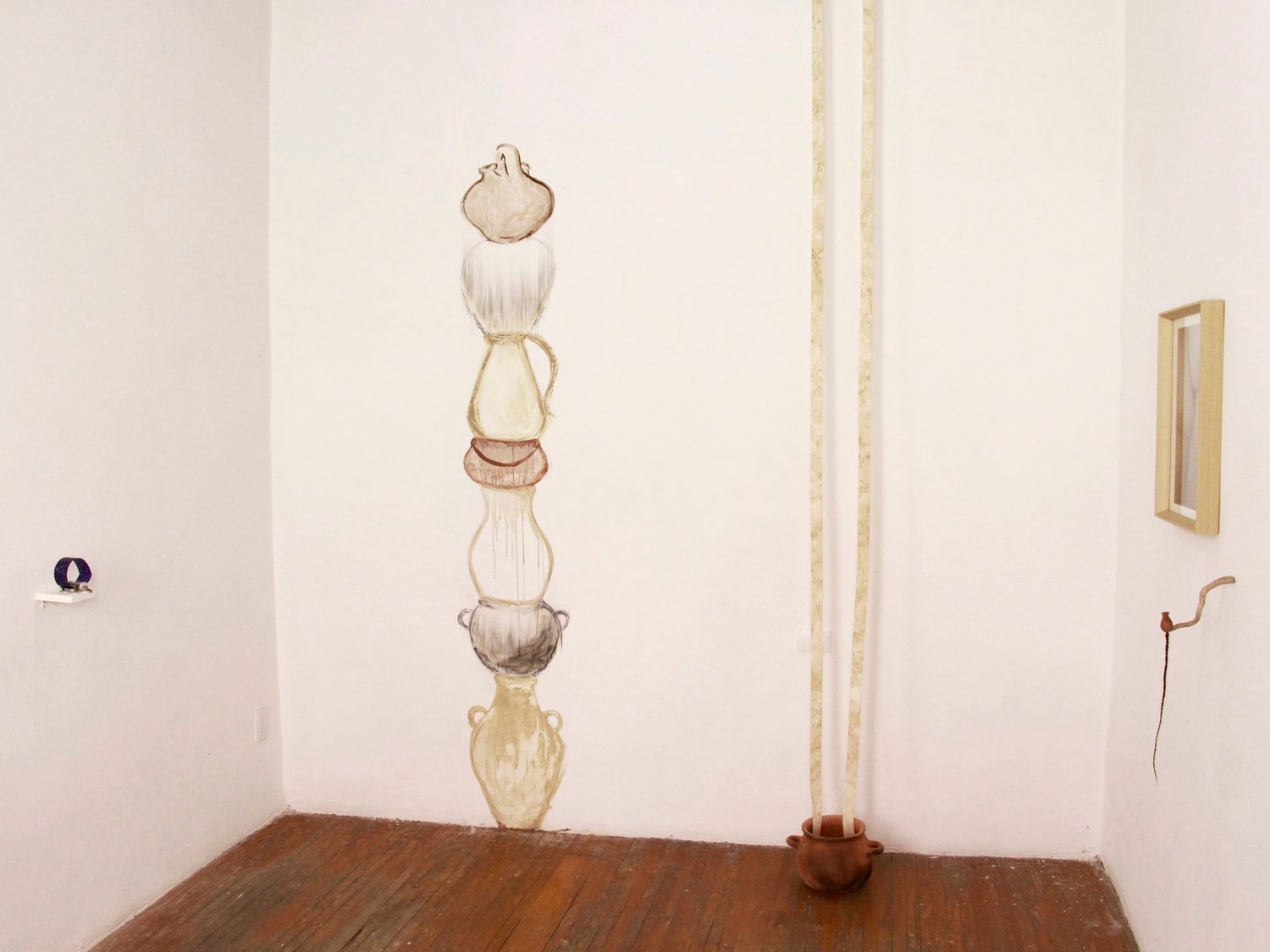
Bea Millón me cuenta que, tras un periodo de trabajo e investigación en sitios afectados por extractivismo minero -un tiempo acompañado de duelos-, anidó en ella el deseo de recorrer los ríos y acuíferos amenazados de la Ciudad de México, ciudad que ha elegido como lugar de vida. Sus cántaros materializan un momento de respiro, de refugio, de conectividad y de vinculación con lo pequeño. Dan cuenta también de un proceso de (auto)sanación tras las múltiples crisis intensificadas por la pandemia del Covid19. De un tiempo para acá, el colapso social y ecológico se acelera y expande su alcance horizontalmente. El sistema se desploma -cayendo también sobre nuestros cuerpos-, en un berrinche demencial que intenta reafirmar sus viejas estructuras heteropatriarcales, capitalistas, coloniales, autoritarias, extractivistas y militaristas. Este momento peligroso nos ha volcado la mirada hacia la importancia de nuestros vínculos con otros humanos y otros/más-que-humanos, la urgencia de propagar economías pequeñas, la centralidad del trabajo reproductivo, la necesidad de nutrir formas de autonomía y soberanía alimentaria, y nuestra interdependencia con la tierra y con el agua.

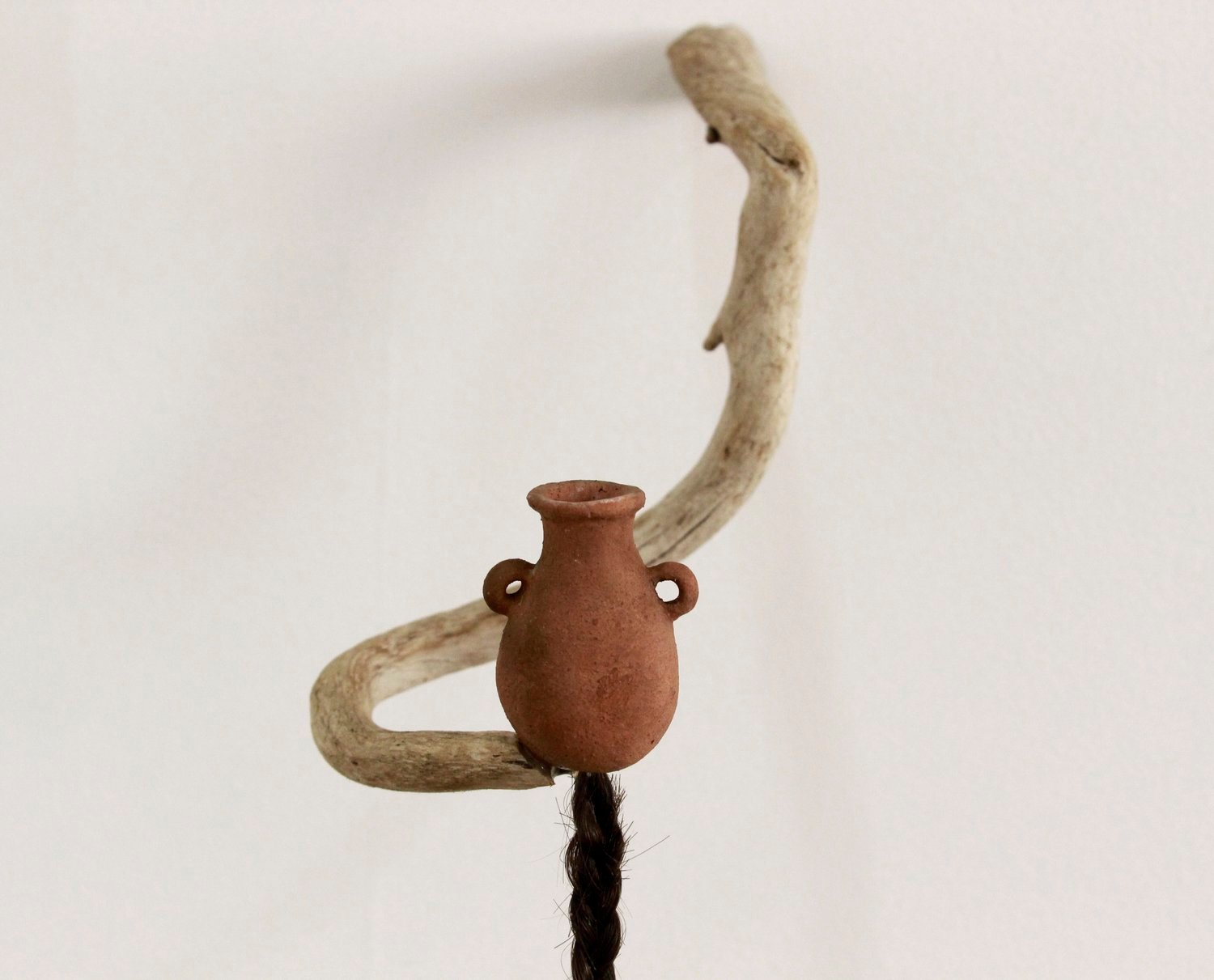
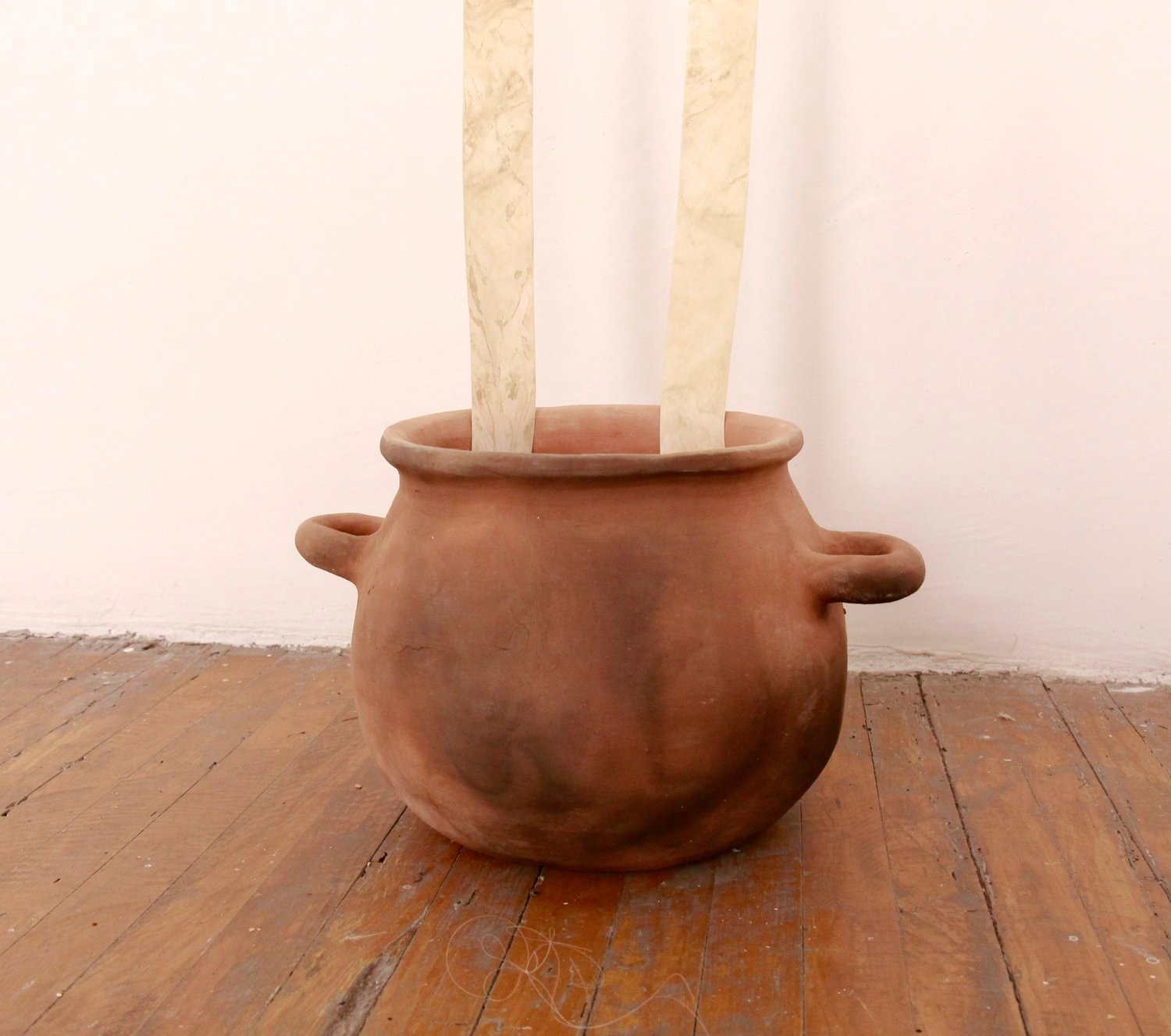
Los cántaros/chichis/panzas de barro de Bea, cantan cuando el viento sopla a través de sus orificios y cuando el agua se desplaza dentro de ellos. Haciendo resonar los cántaros, Bea persigue voces y gritos que han recorrido su cuerpo.
El amasamiento de tierra y agua, la quema y el aire que recorren las superficies huecas, responden a tecnologías tpre- coloniales, desarrolladas ampliamente por sociedades mesoamericanas y andinas para crear frecuencias sonoras que inducen estados de quietud animada, de contemplación y manifestación de otros estados de la conciencia, en una forma de habitar el tiempo de un modo no lineal, donde pasado, presente y futuro se sobreponen.

Desde Ayutla, Región Mixe, en el año de 2172, las Redes Comunales Mixes escriben “El arte, la literatura y las estéticas colectivas de la tierra”. En el texto narran que durante la era que llaman retrospectivamente La Gran Noche Capitalista, el camino hacia el colapso parecía ineludible, pero surgió una pequeña posibilidad de vida que ahora es una realidad, que ahora es la norma: una convivencia equilibrada entre la humanidad y la naturaleza, una humanidad que ahora se concibe como parte de ella ². Las Redes Comunales Mixes narran cómo se fueron formando archipiélagos comunales de resistencia ante la amenaza voraz de destrucción, y en esa oposición defensora de la vida, crearon múltiples manifestaciones llamadas estéticas de la tierra, cuyos soportes responden a ecosistemas naturales y estructuras socio- políticas minúsculas y multiculturales.

Los cántaros de Bea resuenan con ese tiempo pasado/futuro de las estéticas colectivas de la tierra, que todavía no está del todo aquí. Bea hace un pausa y se pregunta por la relación de estos procesos con su blanquitud, su migración con pasaporte europeo, por el posicionamiento que ocupa dentro de los ordenamientos simbólicos y materiales determinados por la colonialidad. Estamos inevitablemente determinades por ellos, y a pesar de ello, existe la posibilidad de exceder y disentir de esas lógicas que nos predeterminan. Bea apuesta por ese lugar del “a pesar de”, del exceso, asumiendo con fluidez, vitalidad y erotismo la posibilidad del fracaso.

Naomi Rincón Gallardo. Ciudad de México, agosto, 2023.

Colaboradorxs:

Génesis Nahum Landaverde Cruz, Ehecatl Emiliano Morales Valdelamar, Melanie Buntichai, Sebastián Terrones, Frida Toimil y Saúl Recinas.

¹ ¿Será que nuestras historias/ eran las aguas del río?/ ¿Será que pasaron por encima de las piedras gastadas/ de nuestros corazones y nos limpió,/ pasando a la madre mar/ en un abrazo clemente. Gloria Anzaldúa. En: Cherríe Moraga. A Xicana Codex of Changing Consciousness. Writings 2000-2020. Durham: Duke University Press, 2011

² Redes Comunales Mixes + Yásnaya Aguilar Gil. “El arte, la literatura y las estéticas colectivas de la tierra”. En: En una orilla brumosa. Cinco rutas para repensar los futuros de las artes visuales y la literatura. Varios autores. Edición y prólogo de Veronica Gerber. Mexico: Gris Tormenta, 2021

ENG:

Would it were that our stories were the waters of the river. Would it were that they passed over the worn stones of our hearts and cleansed us, moving on to the mother sea in a forgiving embrace.

(Gloria Anzaldúa) ¹

With every disappearance, every loss, every extinction, the world shatters. We lose worlds every day: affections, environments, languages, beliefs, landscapes, species, knowledge, countries, certainties. Some losses are selectively inflicted by force. What’s left when a beloved world disappears? Perhaps the desire to repair, to undo what has been damaged and violated. Wounds and memories also survive.

Bea Millón tells me that after a period of work and research in areas affected by extractivist mining – a time accompanied by mourning – the desire to explore the threatened rivers and aquifers of Mexico City, a city she has chosen as her place of life, took root in her. Her clay jars materialize a moment of respite, refuge, connectivity, and connection with the small. They also reflect a process of (self)healing after multiple crises intensified by the Covid19 pandemic. Social and ecological collapse seem to accelerate and expand horizontally. The system collapses – falling onto our bodies – in a frenzied tantrum that tries to reaffirm its old heteropatriarchal, capitalist, colonial, authoritarian, extractivist, and militaristic structures. This dangerous moment has turned our attention to the importance of our connections with others, human and other-than-hu- man, the urgency of spreading small economies, the centrality of reproductive work, the need to nurture forms of autonomy and food sovereignty, and our interdependence with land and water.

Bea’s clay jars/tits/bellies sing when the wind blows through them and when water moves within them. By making the jars resonate, Bea pursues voices and cries that have long traveled her body. The kneading of earth and water, the burning, the air, and the water that flow through the hollow surfaces respond to precolonial technologies developed extensively by Mesoamerican and Andean societies to create sound frequencies. These frequencies induce states of animated stillness, contemplation, and the manifestation of other states of consciousness, and a way of inhabiting time in a non-linear man- ner, where past, present, and future overlap.

From Ayutla, Mixe Region, in the year 2172, the Mixe Communal Networks write “Art, Literature, and Communal Aesthetics of the Earth.” In the text, they narrate that during the era they retrospectively call “The Great Capitalist Night”, the path to collapse seemed unavoidable, but a small possibility of life emerged that is now a reality, that is now the norm: a balanced coexistence between humanity and nature, a humanity that now conceives itself as part of it2. The Mixe Communal Networks narrate how communal archipelagos of resistance were formed in the face of the voracious threat of destruction, and in this life-defending opposition, they created multiple manifestations called “aesthetics of the earth,” whose supports respond to natural ecosystems and tiny, multicultural sociopolitical structures.

Bea’s jars resonate with that past/future time of communal aesthetics of the earth, which is not entirely here yet. Bea pauses and questions the relationship of these processes with her whiteness, her migration with a European passport, her position within the symbolic and material orders determined by coloniality. We are inevitably determined by them, and yet, there is the possibility of exceeding and dissenting from those logics that predetermine us. Bea embraces that place of “despite,” of excess, assuming the possibility of failure with fluidity, vitality, and erotism.

Naomi Rincón Gallardo. Mexico City, August 2023

Colaborators:

Génesis Nahum Landaverde Cruz, Ehecatl Emiliano Morales Valdelamar, Melanie Buntichai, Sebastián Terrones, Frida Toimil and Saúl Recinas.

¹ In: Cherríe Moraga. A Xicana Codex of Changing Consciousness. Writings 2000-2020. Durham: Duke University Press, 2011

² Redes Comunales Mixes + Yásnaya Aguilar Gil. “El arte, la literatura y las estéticas colectivas de la tierra”. In: En una orilla brumosa. Cinco rutas para repensar los futuros de las artes visuales y la literatura. Edition and prologue by Veronica Gerber. Mexico: Gris Tormenta, 2021

Jardín interior – Edgar García Ruíz en Aparador EDA

Jardín interior

de Edgar García Ruíz

Septiembre 7, 2023.

Aparador EDA: Cozumel 81, Roma Norte, CDMX

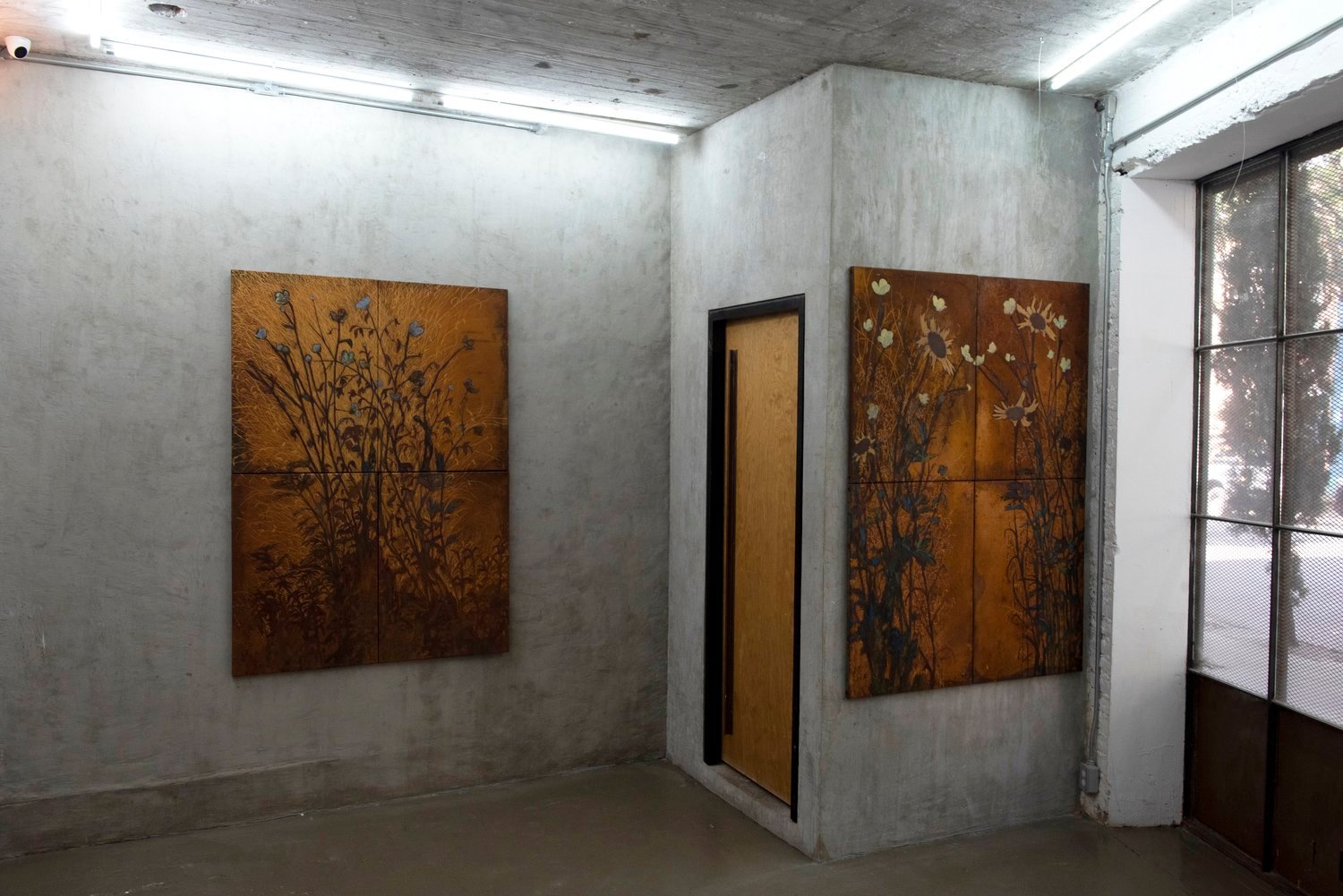
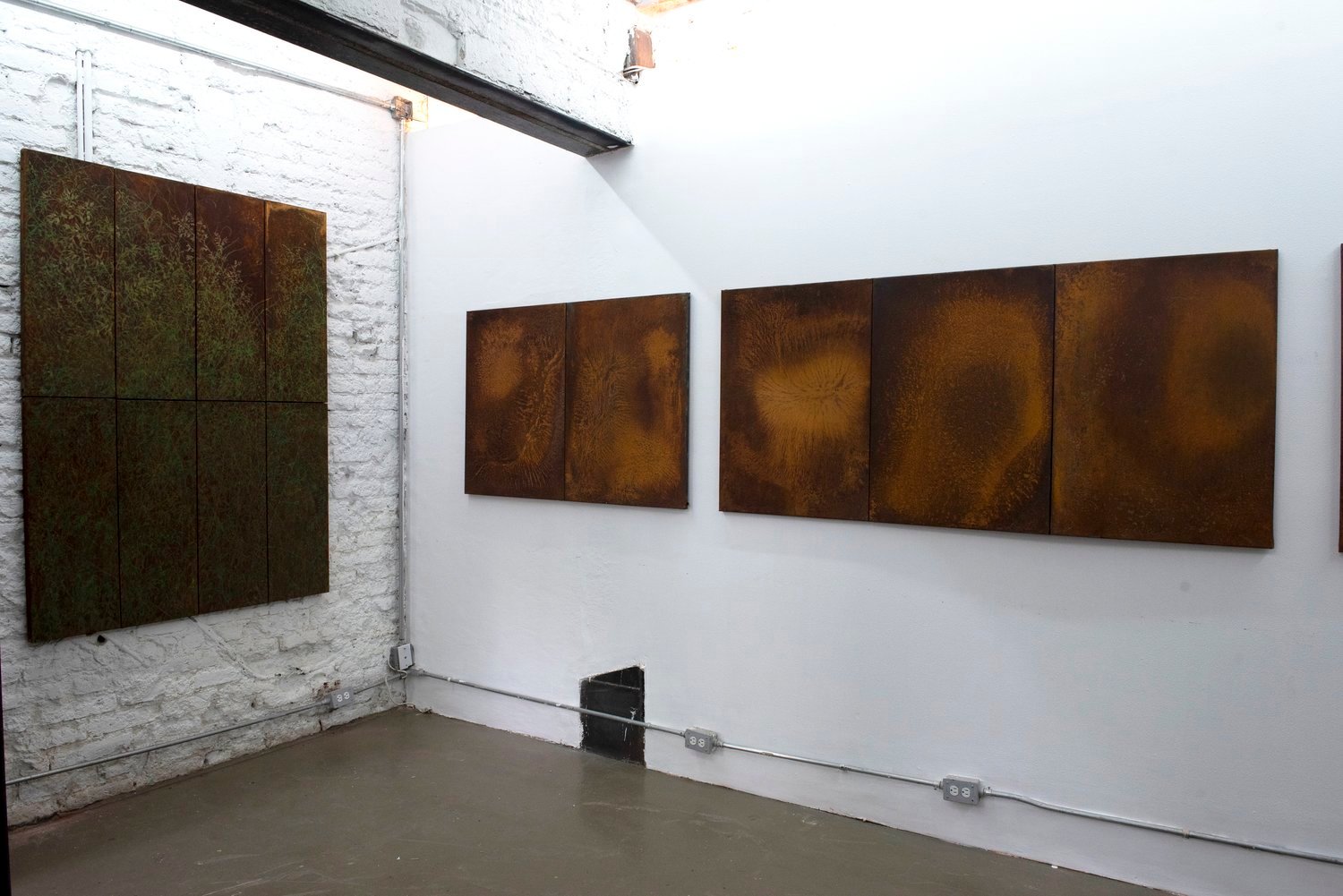
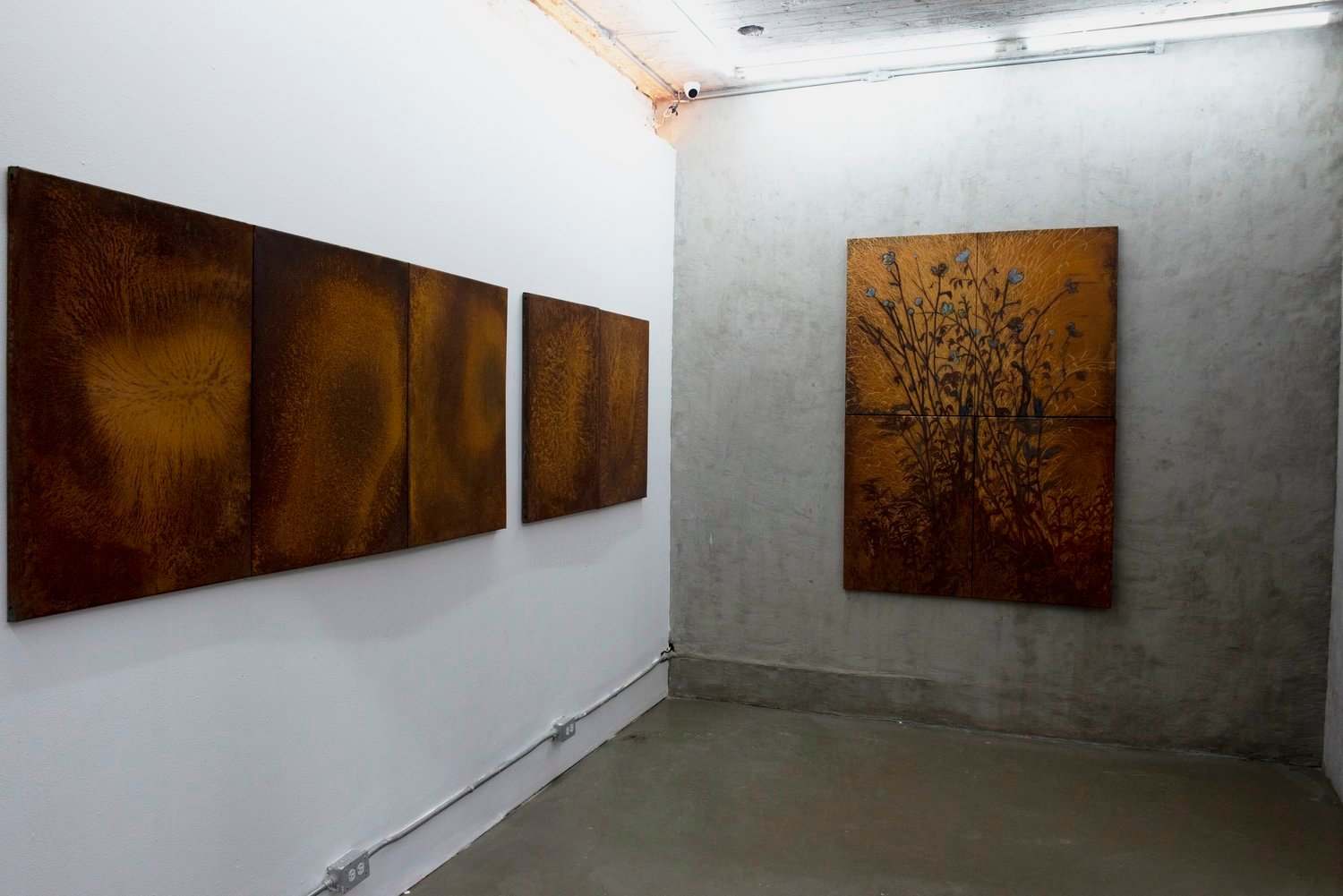
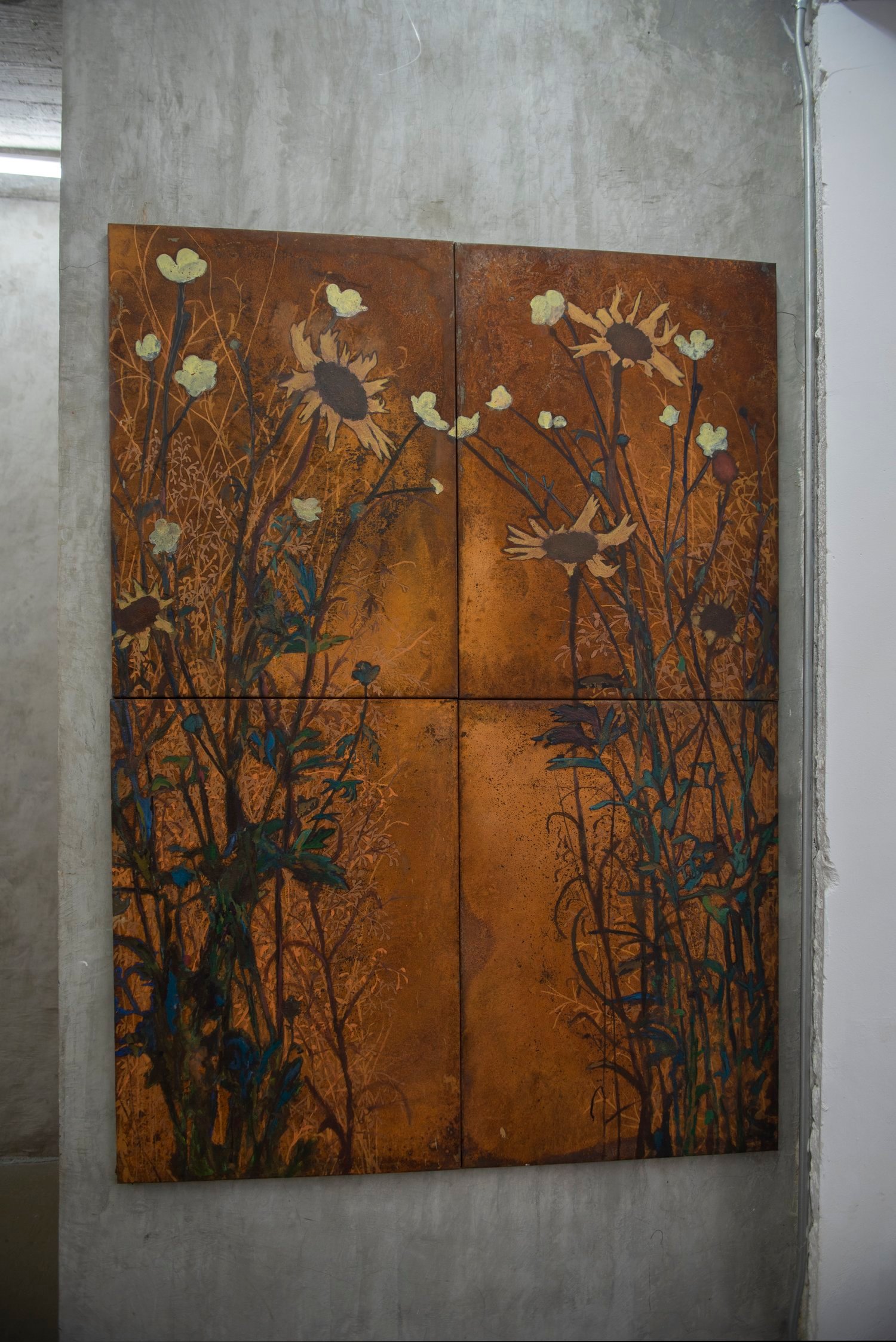
En un mundo obsesionado por el crecimiento, se acumulan los objetos y los materiales. Sólo en México se producen cerca de veinte millones de toneladas de acero anualmente, y se importa aún más. Mientras pasa el tiempo y los materiales recién producidos superan a los antiguos, ¿qué pasa con lo que se ha vuelto obsoleto

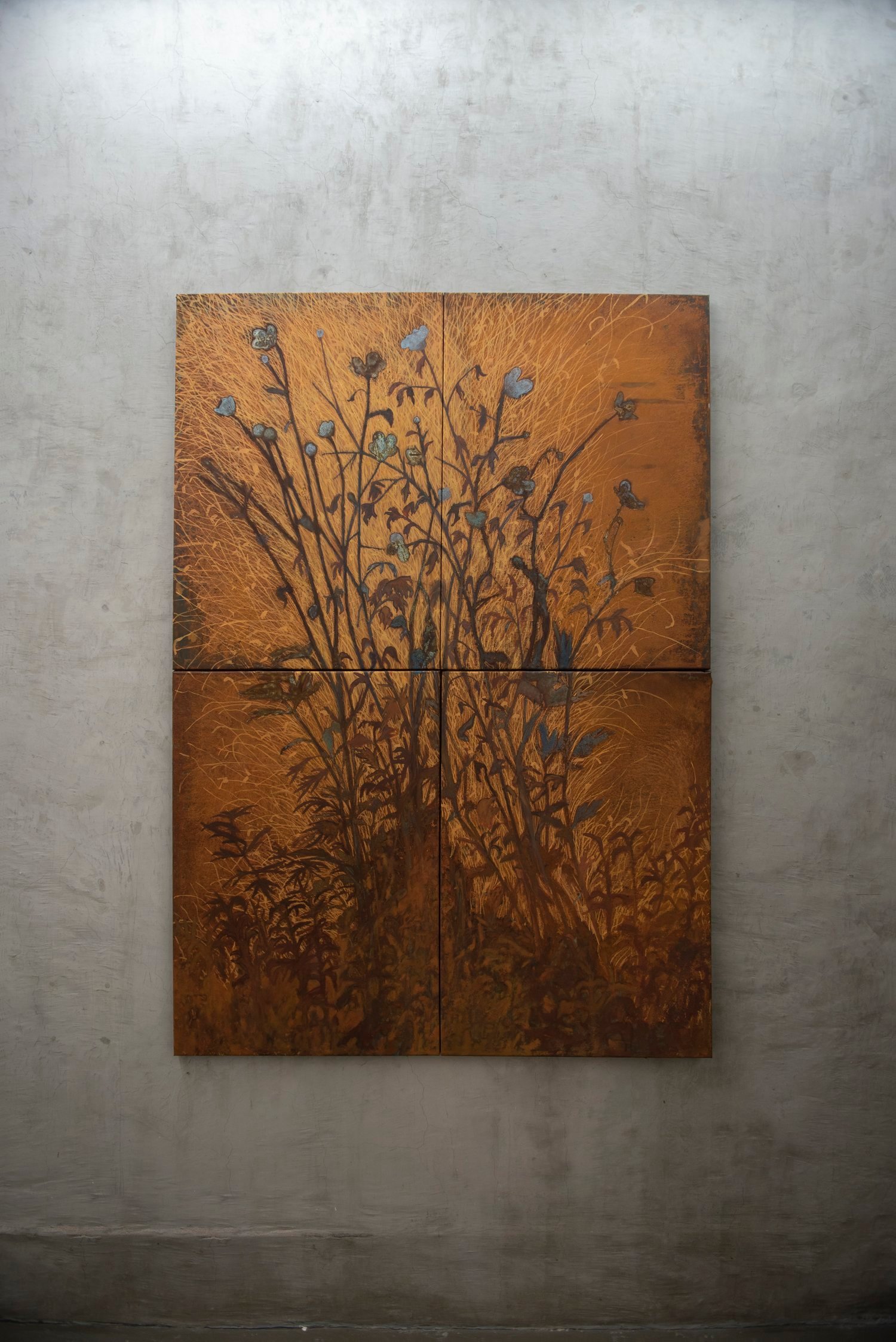
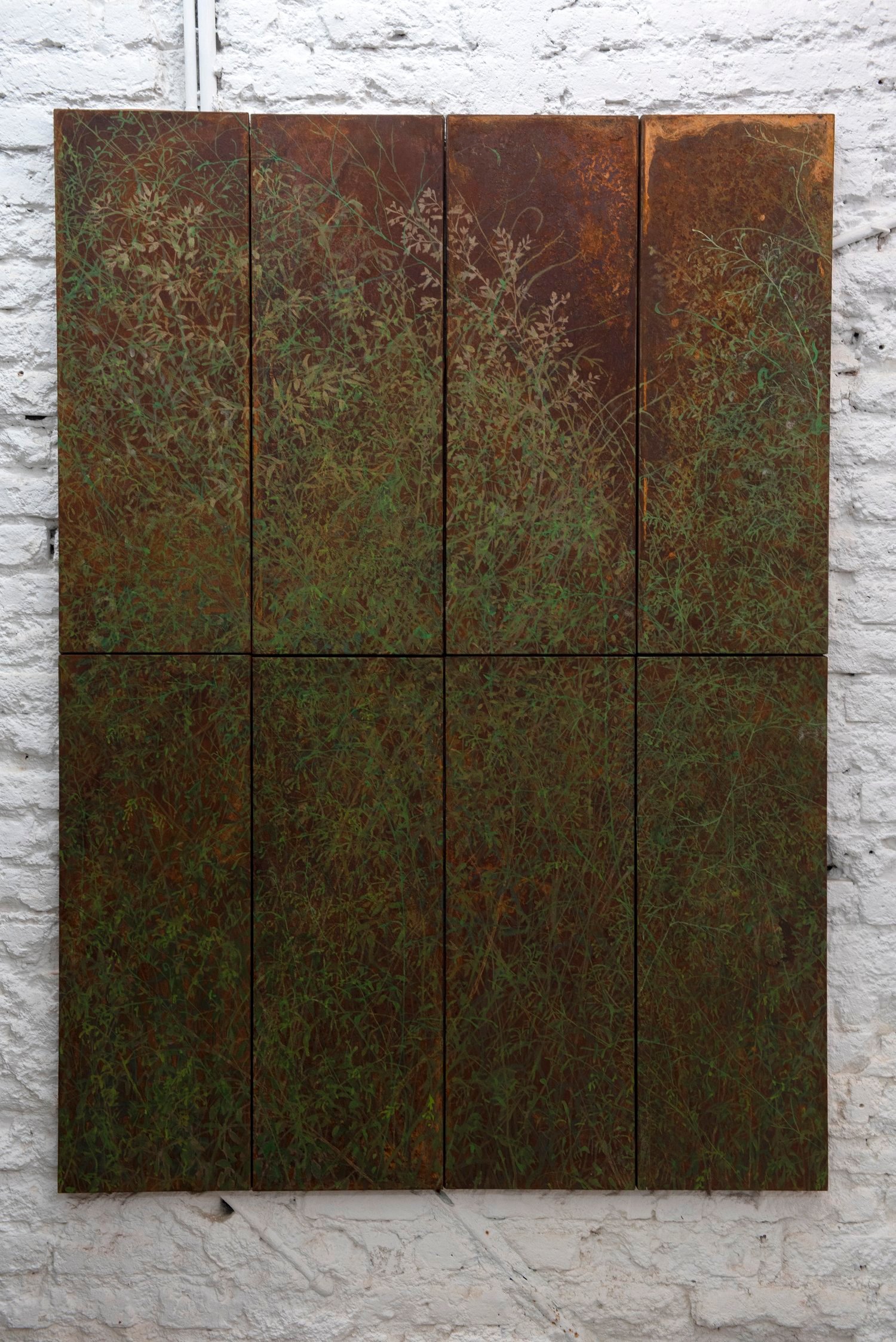
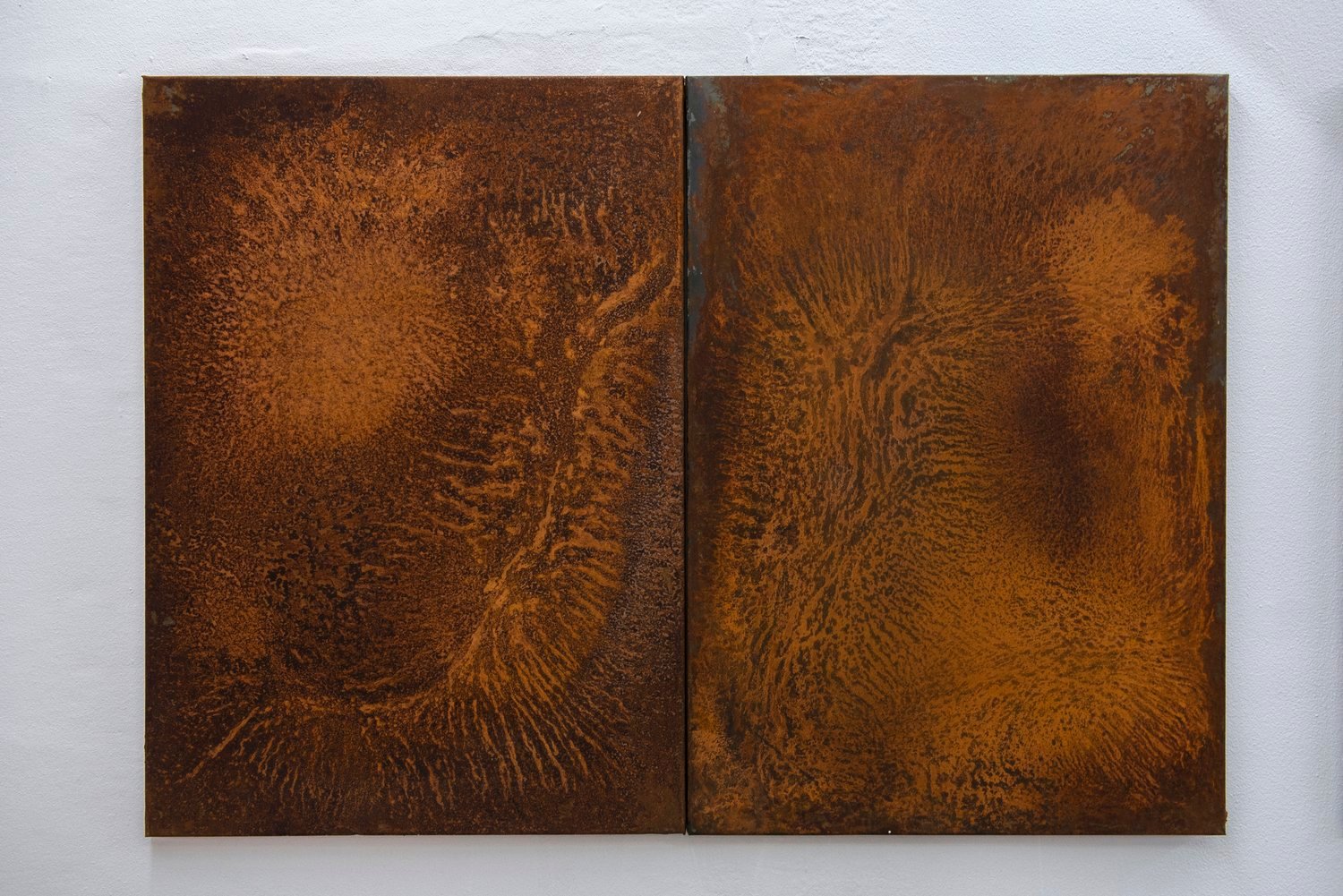
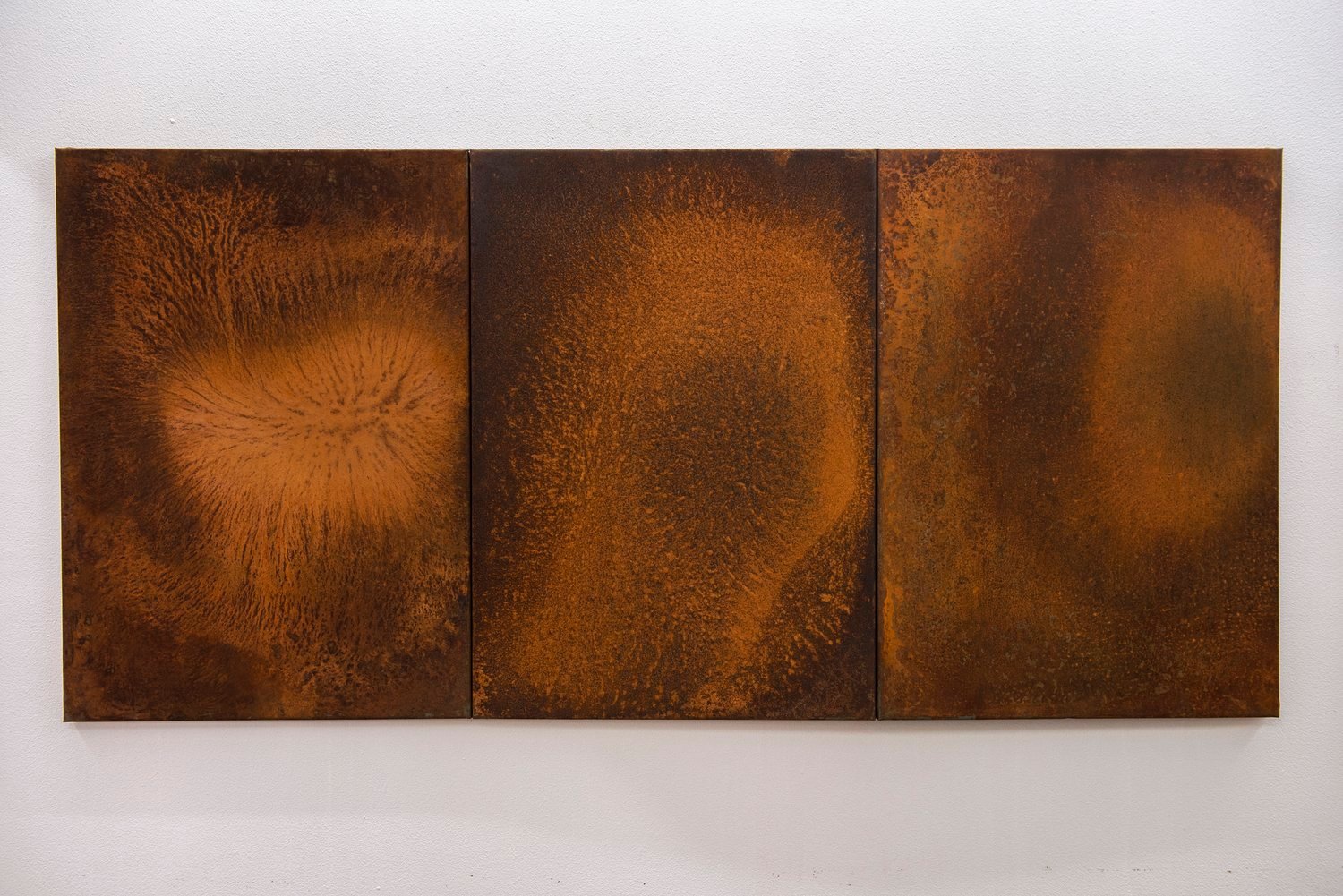
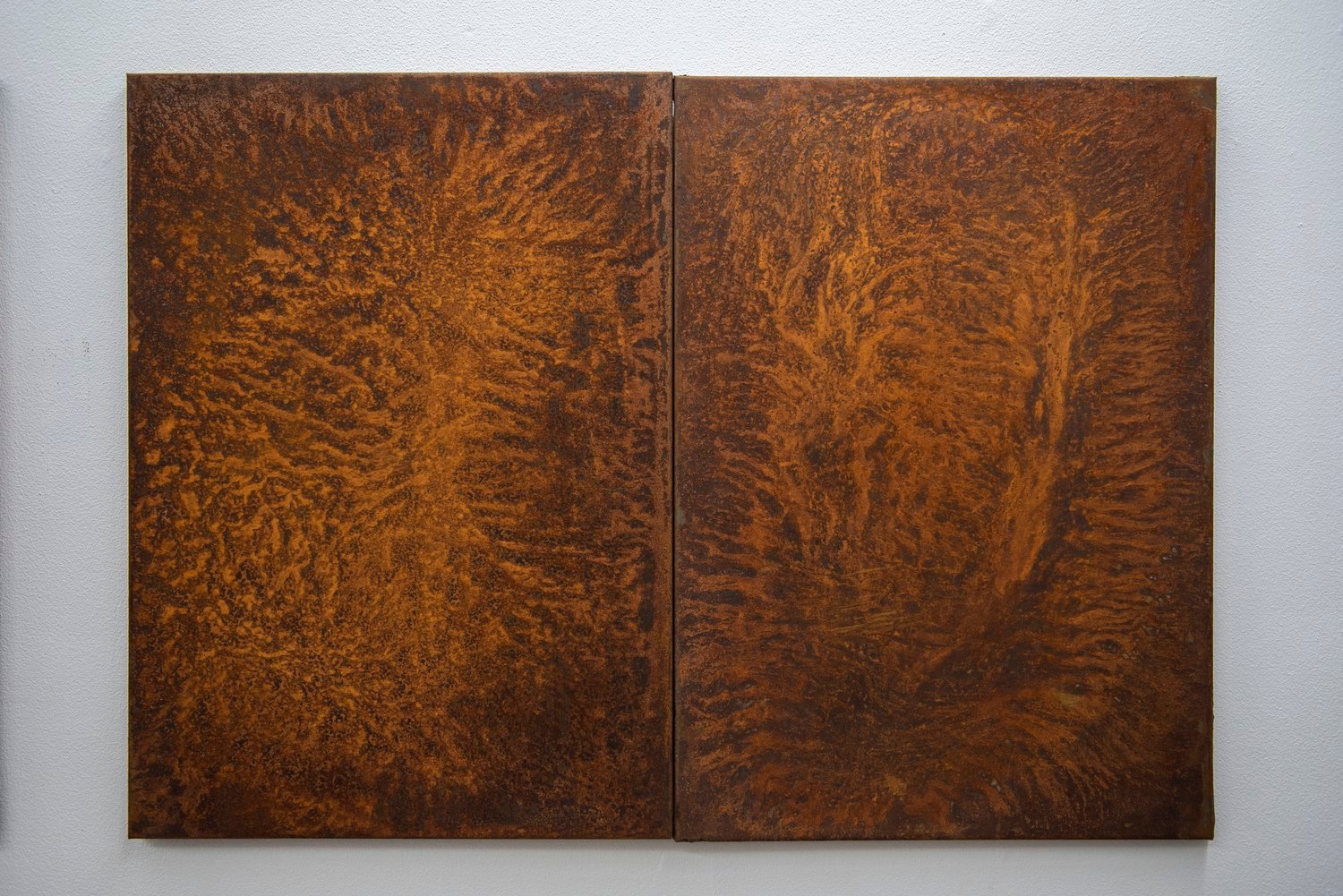
Las respuestas a esta pregunta emanan de la obra de Edgar García Ruíz, quien trabaja principalmente con materiales que otros consideran desecho. En los paneles de acero que componen Jardín interior García Ruíz explora el proceso de oxidación como un medio en si mismo. Sus grabados químicos, hechos por intervenir en el proceso con agua y pintura, reflejan el cielo, como si el acero degradante y su entorno se estuvieran presenciando mutuamente.

Tres de los paneles presentan flores. Mientras las flores tienden a ser ornamentales, compradas para decorar una mesa o un espacio, las de Edgar no son grandiosas o vistosas—son silvestres, las que florecen en sitios contaminados e intersticiales. En los paneles, García Ruíz busca entender cómo la vitalidad se regenera desde el abandono.

Las piezas de Jardín interior existen simultáneamente en dos y tres dimensiones, hechas de capas que, no importa que tan delgadas puedan ser, siempre hacen presente su materialidad. La obra es una interfaz entre lo delicado y lo sólido, y revela que lo sólido no puede asumir su esencia verdadera hasta que se deja deshacer.

Caroline Tracey

Aparador EDA en colaboración con Salón Silicón.

ENG:

In a world obsessed by growth, objects and material accumulate. Mexico produces around twenty million tons of steel every year, and imports even more. But as time passes and the freshly produced objects overtake the old, what happens to those that have become obsolete?

Answers to this question emanate from the work of Edgar García Ruíz, whose objects are nearly always crafted from materials considered by others to be trash. In the cast-off steel panels that comprise Indoor Garden García Ruíz explores steel’s process of oxidation as a medium in itself. His chemical etchings, made from intervening in the process with water and paint, reflect the sky, as though the degrading steel and its surroundings were mutually witnessing one another.

Three of the panels depict flowers. While flowers tend to be ornamental—objects purchased to decorate a table or a space—these aren’t grand or eye-catching: they are the wild flowers that flourish in polluted and interstitial spaces. In the panels, García Ruíz seeks to understand how vitality regenerates out of abandonment.

The panels exist simultaneously in two and three dimensions, made of layers that, no matter how thin they may be, always make their materiality present. The work is an interface between the delicate and the solid, and it reveals that the solid cannot take on its true form until it lets itself break down.

Caroline Tracey

Aparador EDA in colaboration with Salón Silicón.

Fotografías cortesía de Aparador EDA / Photos courtesy of Aparador EDA

MEXIQUE “Boutique de decoratión” – Pepx Romero

MEXIQUE “Boutique de décoration”

de Pepx Romero

Julio 15, 2023

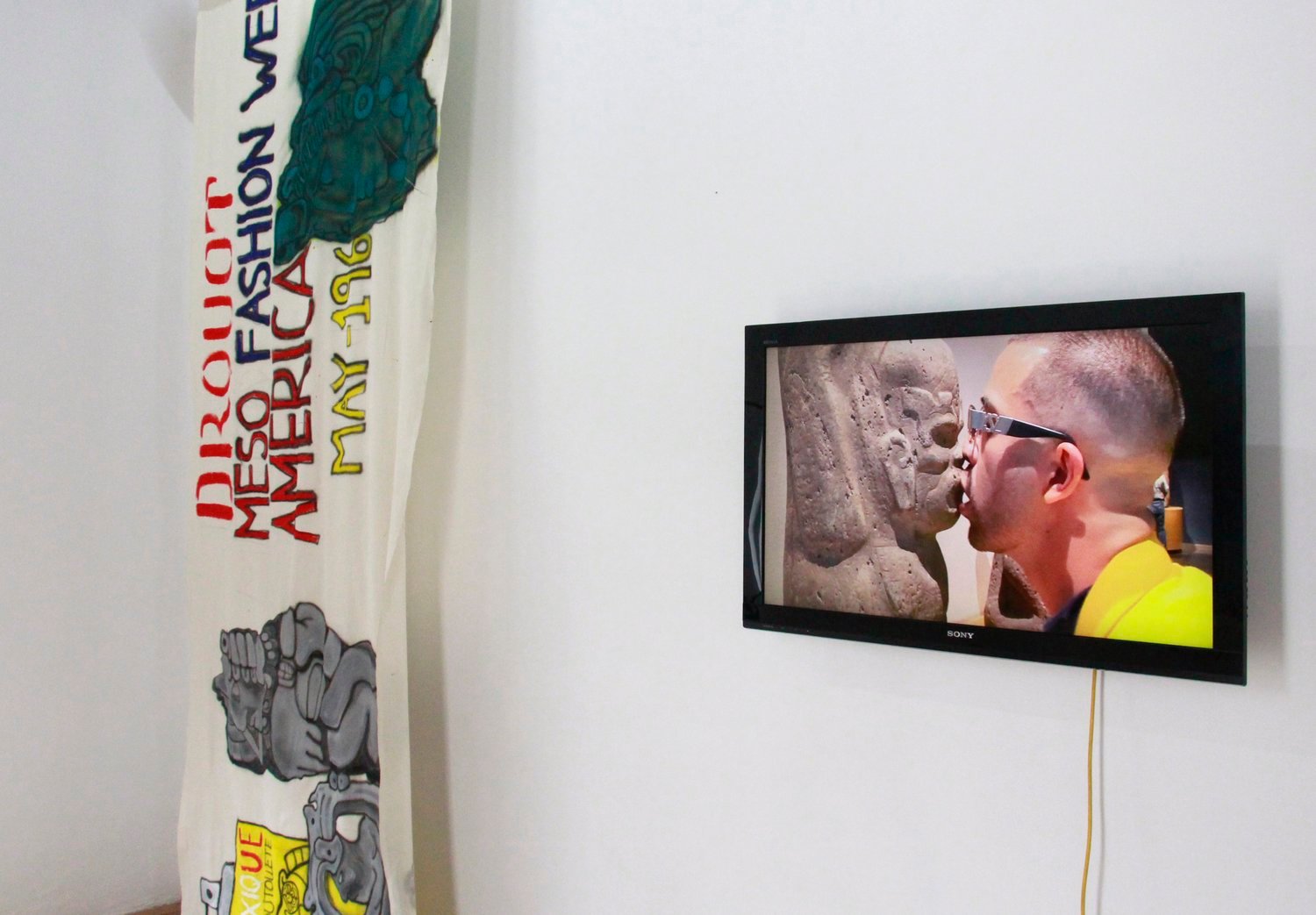
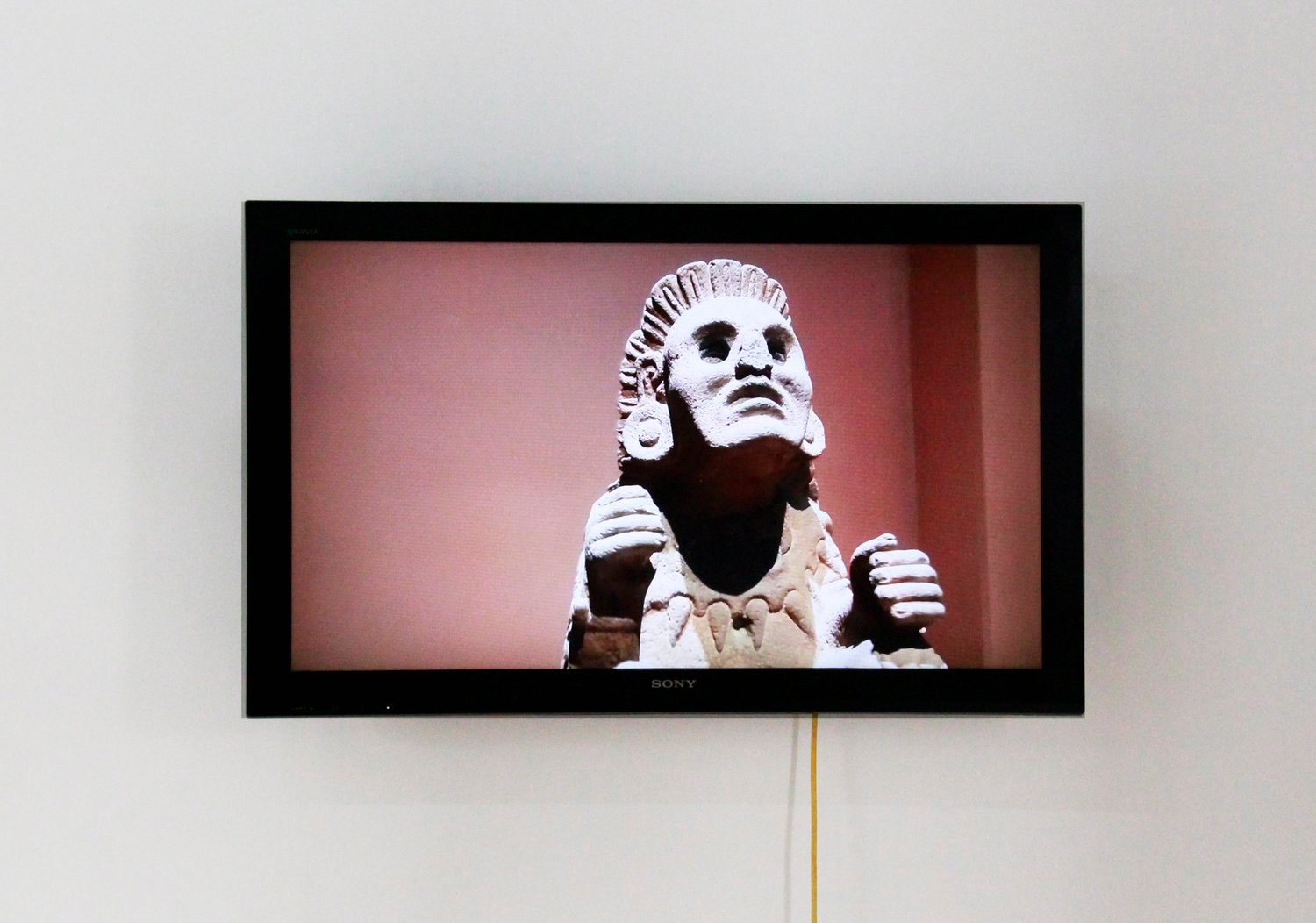
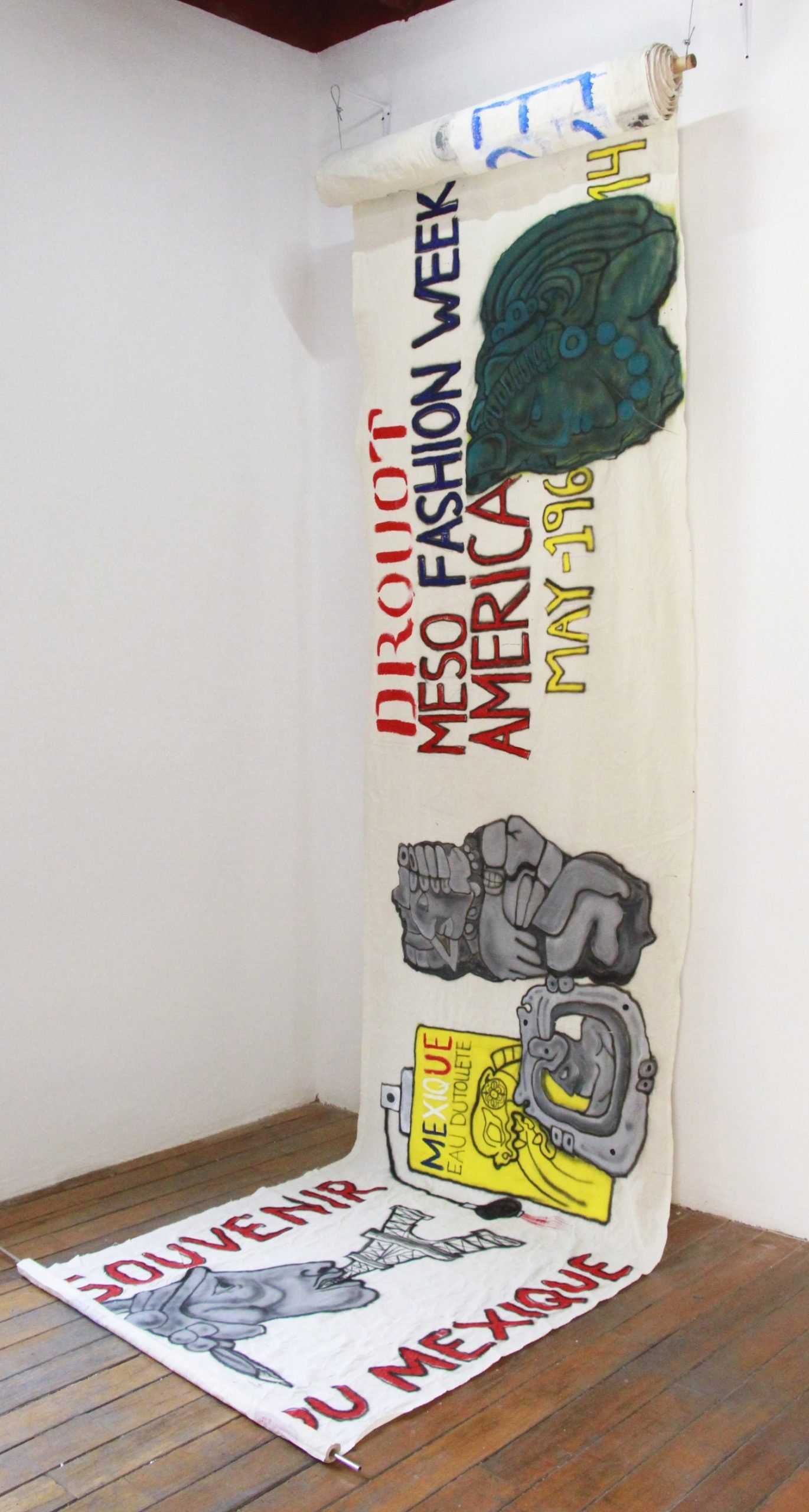
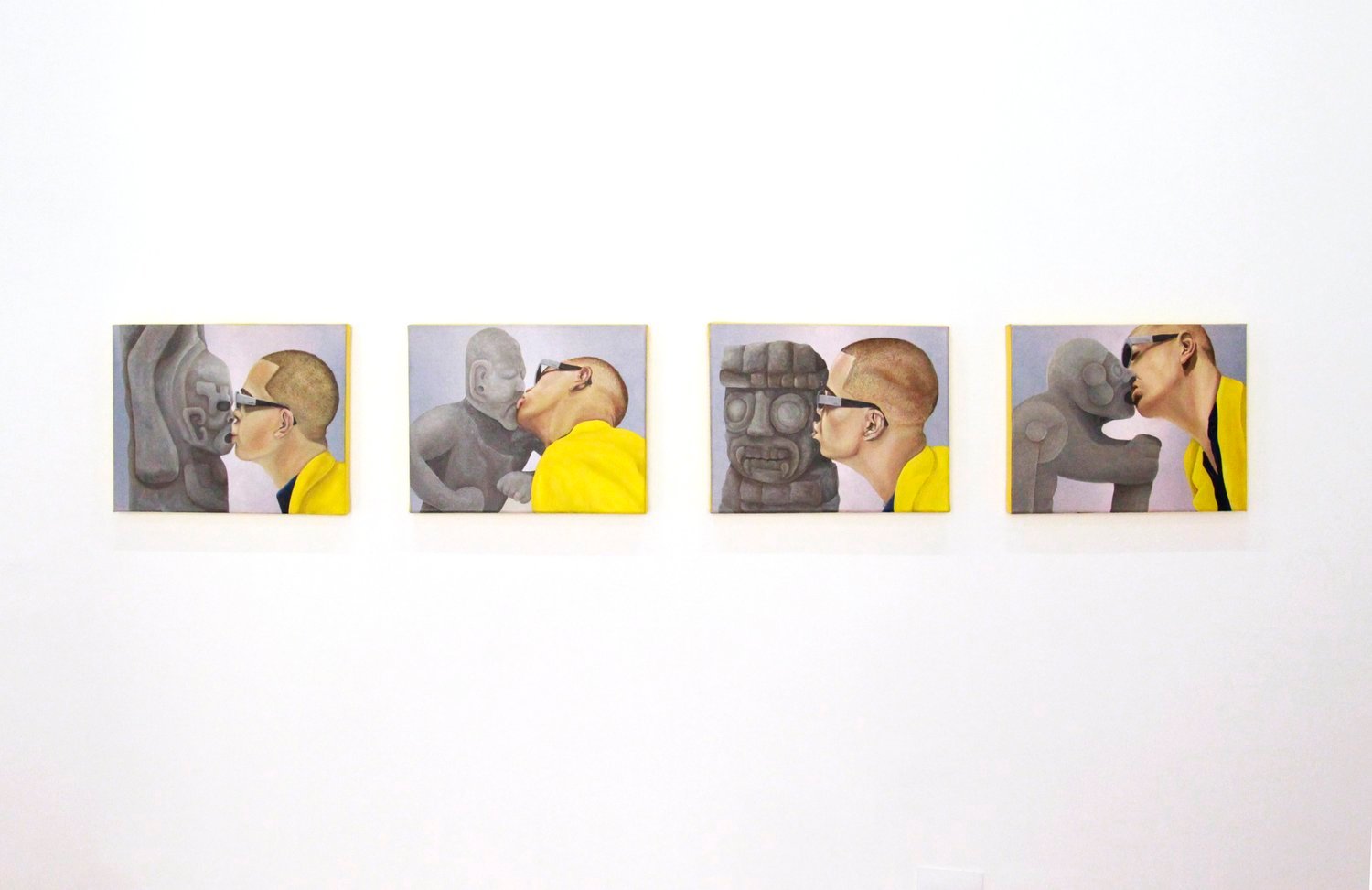
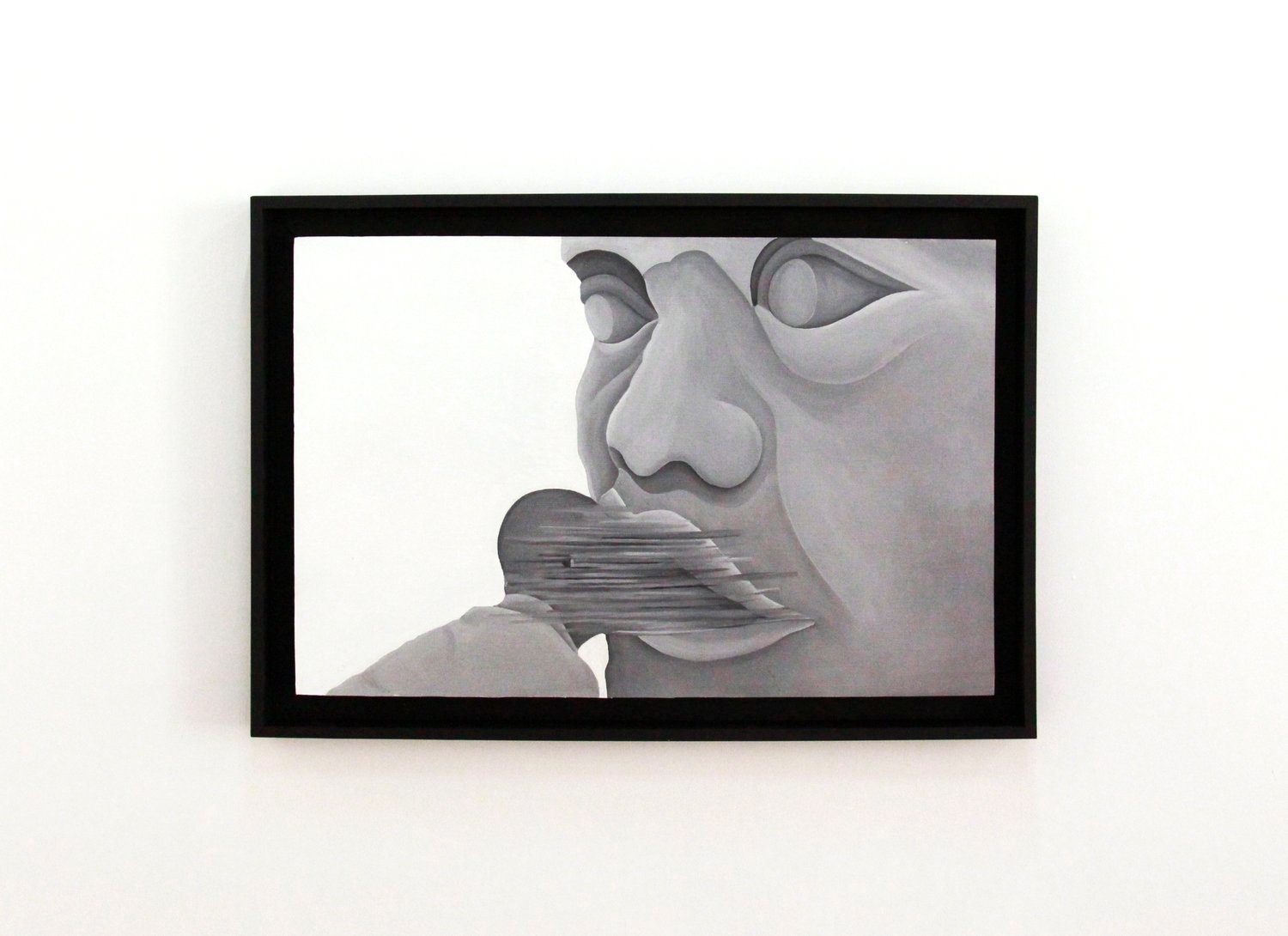
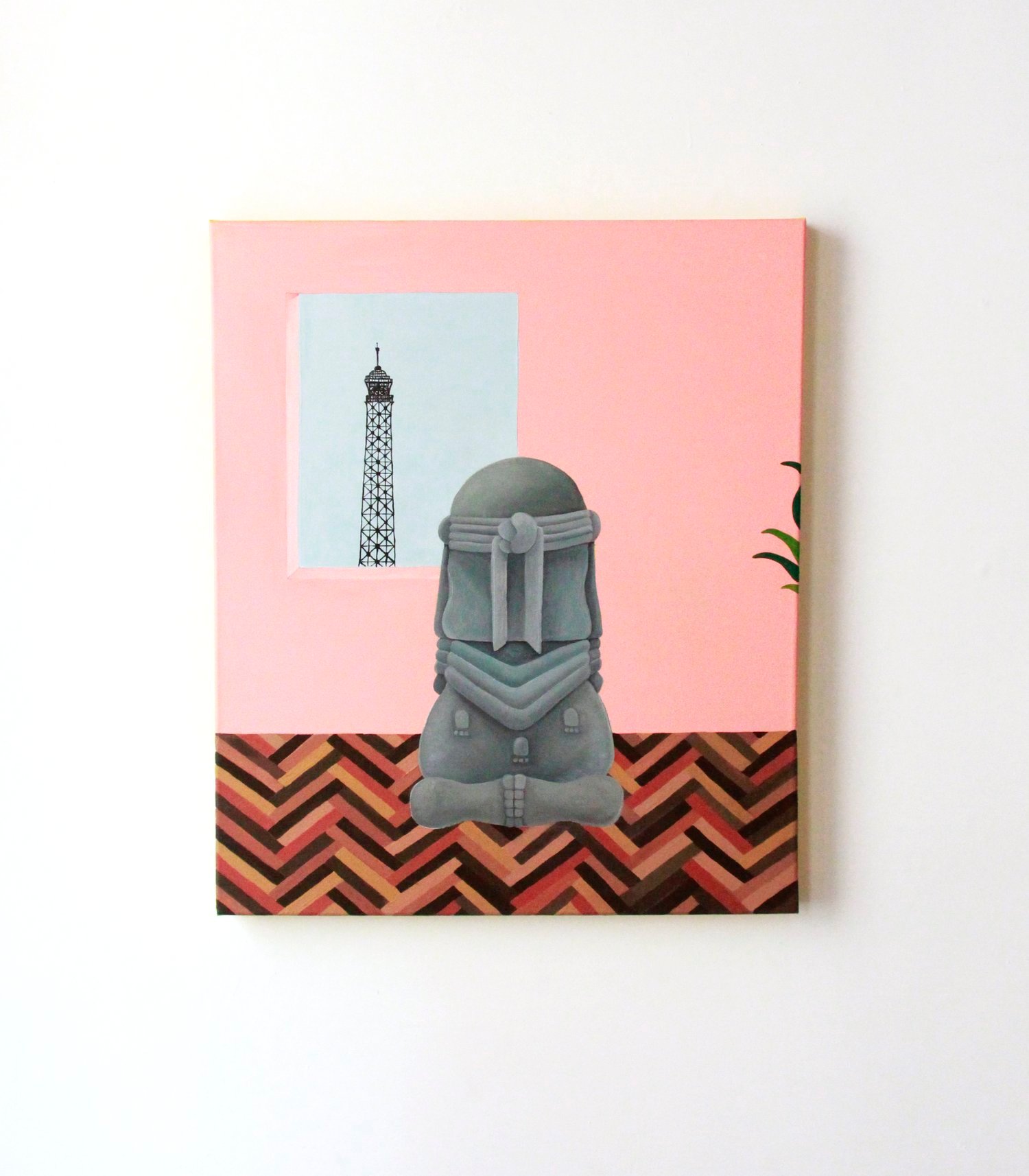
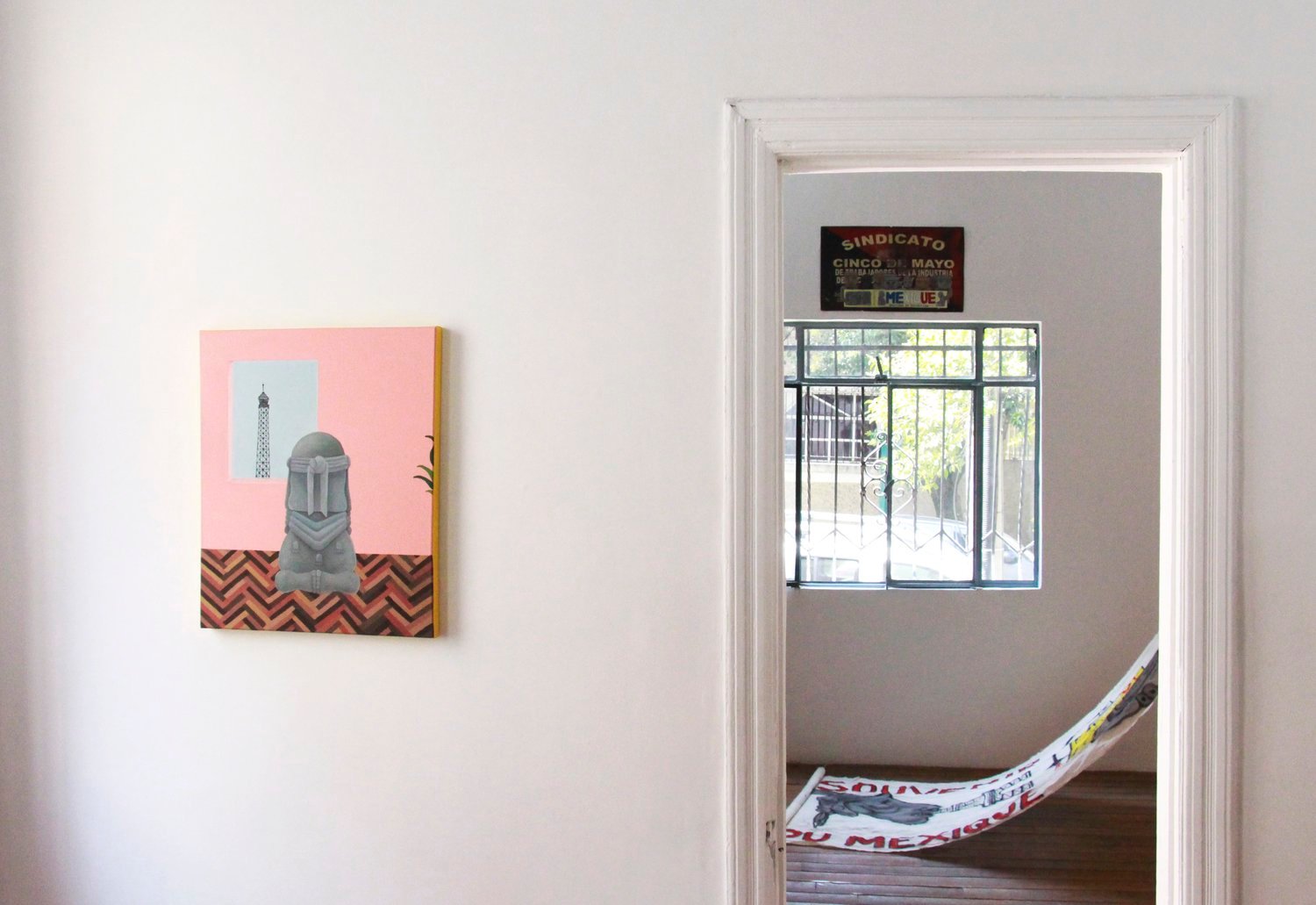
Un fragmento del video de Pepx Romero que formaba parte de un performance presentado en el festival Ceremonia en abril de 2022 provocó un enorme escándalo; en él se veía al artista vestido con saco amarillo y lentes oscuros besando y lamiendo piezas prehispánicas exhibidas en el Museo Nacional de Antropología e Historia de la Ciudad de México. Una voz como de robot denunciaba el despojo del patrimonio cultural de nuestro país por medio de la venta de piezas prehispánicas en las casas de subasta francesas. Al principio, el tema de la discusión en las redes sociales, donde se compartió el video, fue sobre las condiciones de resguardo de esas piezas en el museo, o sobre si habría algún tipo de acción penal sobre el artista, pero como la autoridad expresó estar de acuerdo con el fondo de la denuncia, se generó una confusión nueva. ¿Era el artista un vehículo más de una política pública? La acción de Pepx Romero terminó disparando más significados de los que el artista tenía previstos; es decir, tuvo un gran éxito.

En realidad, este proyecto Mexique “Boutique de décoration” comenzó en 2019 luego de una estancia de Pepx Romero en París, donde pudo percatarse de la venta de piezas prehispánicas, en el corazón del país que defiende como ningún otro su patrimonio histórico. El proyecto ha sido motivo de otro performance en la galería La retaguardia del arte, donde el artista mostró una Torre Eiffel miniatura expuesta dentro del ano del performer María Perkances, luego vino el acto en el festival Ceremonia, siguió la presentación de un fragmento de una ópera prehispánica llamada Atlacoya, y finalmente se continúa en esta exposición.

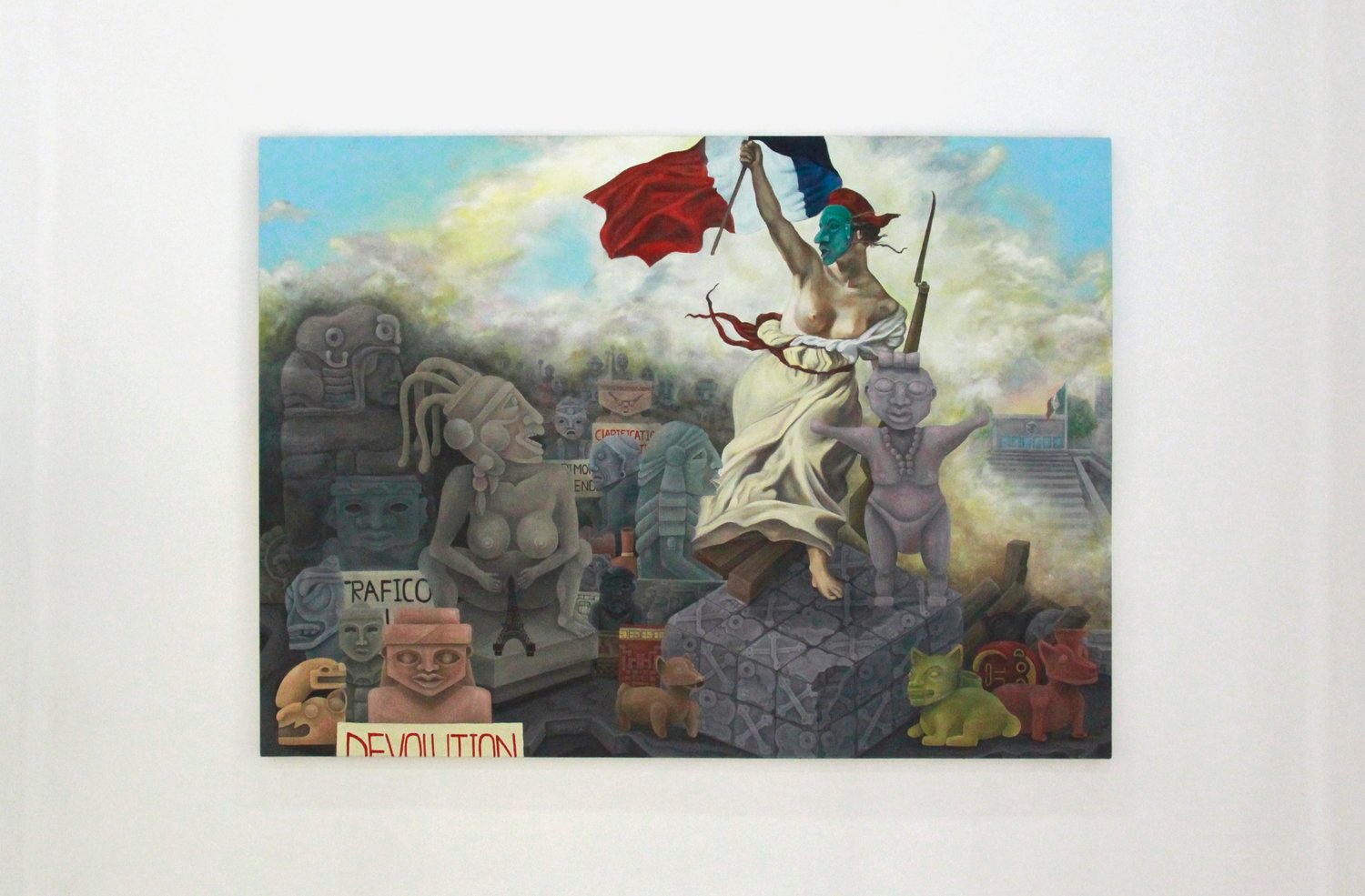
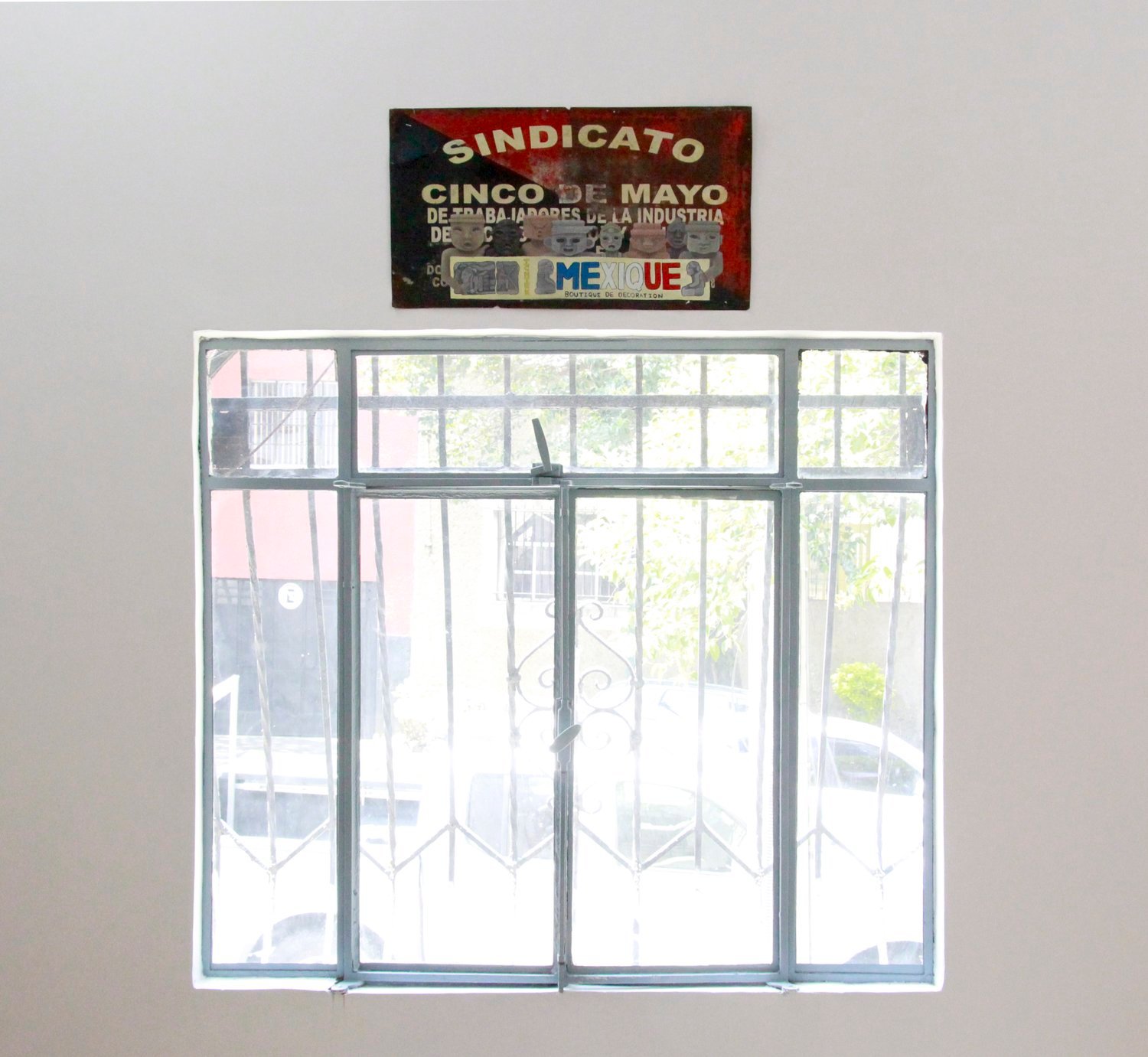
Se trata de cuadros al óleo que funcionan tanto como un registro del performance, como una ampliación de la crítica al expolio del arte prehispánico, como se puede ver en la pieza central de esta exposición, la reinterpretación del cuadro de Eugéne Delacroix La Libertad guiando al pueblo. A los cuadros los rodea otra acción que se anuncia por medio de los carteles: el artista ofrece ir a lamer y besar piezas prehispánicas en casa de los coleccionistas privados, para entregar el registro de la acción como una nueva obra, a cambio de que se devuelvan las piezas al Estado.

Pepx Romero es un artista conocido por su investigación sobre el performance ligado al teatro, por hacernos mirar las fiestas como una forma de performance y por insistir en la fluidez del género en la expresión artística. Menos público es que ha pintado al óleo desde muy joven. Esta es la primera vez que expone sus cuadros, que entran en una tensión inevitable con el carácter efímero y contestatario del performance. Exhibir una pieza dentro del cuerpo de una persona o lamer una cabeza olmeca es la operación opuesta a pintar un cuadro que se va a colocar en la estancia de una casa. ¿Se ha traicionado? ¿Ha sucumbido a las fuerzas del mercado? Yo creo que sus cuadros son un pequeño abandono de un ideal imposible, pero también añaden una dimensión más rica a su obra.

Guillermo Osorno

A fragment of a video by Pepx Romero that was part of a performance at Ceremonia music festival in April 2022 caused a huge scandal. In it you could see the artist, dressed in a yellow jacket and dark glasses, kissing and licking Prehispanic pieces exhibited at the National Museum of Anthropology in Mexico City. A robot-like voice denounced the dispossession of our country’s cultural heritage through the sale of Preispanic pieces in French auction houses. At first, the topic of discussion on social networks, where the video was shared, was about the safety conditions of the pieces in the museum, or about whether there would be some type of legal action against the artist. Since the substance of the complaint was supported by the authorities, a new confusion emerged. Was the artist just another vehicle for public policy? Pepx Romero’s action ended up triggering more meanings than the artist had anticipated; that is, it was a great success.

The Mexique “Boutique de decoration” project actually began in 2019 after a stay in Paris, where the artist noticed the sale of Prehispanic pieces in the heart of the country that most defends its historical heritage. The project has been the subject of another performance in the gallery La retaguardia del arte, where the artist exhibited a miniature Eiffel Tower inside the ass of the performer María Perkances. Later came the act at the Ceremonia music festival, followed by the presentation of a Prehispanic inspired opera called Atlacoya, and finally, this exhibition.

These oil paintings work both as a record of the performance and as an extension of the criticism of the plundering of Prehispanic art, as can be seen in the central piece of this exhibition, a reinterpretation of Eugéne Delacroix’s painting Liberty Leading the People. The paintings are surrounded by another action that is announced through posters: the artist offers to go lick and kiss pre-Hispanic pieces at the private collectors’ homes, and to give them the documentation of the action as a new work, in exchange for returning the pieces to the Mexican State.

Pepx Romero is an artist known for his research of performance linked to theater, for making us look at parties as a form of performance, and for insisting on the fluidity of gender as artistic expression. Less known is that he has been painting in oil since he was very young. This is the first time that he shows his paintings, entering into an inevitable tension with the ephemeral and rebellious character of performance art. Exhibiting a piece inside a person’s body or licking an Olmec head is the opposite of having a painting that is going to be placed in the room of a house. Has he betrayed himself? Has he succumbed to market forces? I think his paintings are a small abandonment of an impossible ideal, but they also add a richer dimension to his work.

Guillermo Osorno

Extremadamente superficial, increíblemente doloroso – Santiago Mora

Extremadamente superficial, Increíblemente doloroso

de Santiago Mora

Mayo 27, 2023

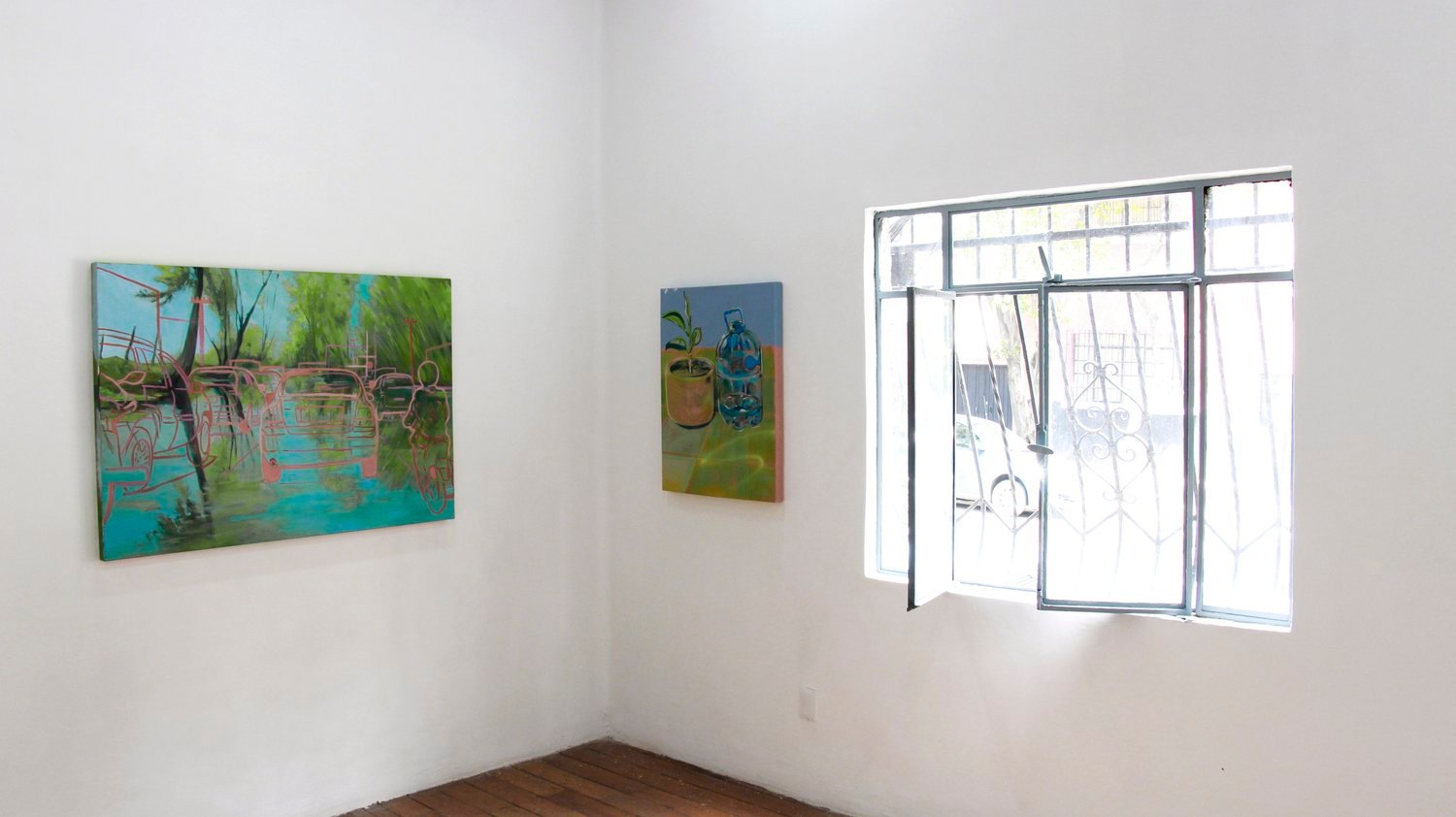
En Extremadamente superficial, increíblemente doloroso, Santiago Mora presenta una observación de lo cotidiano y los momentos que pasan desapercibidos porque la rutina o el capitalismo los ha vuelto invisibles¹. Las obras consisten en bodegones construidos con objetos domésticos, vasos, botellas, flores y electrónicos de diferentes orígenes pero con un mismo destino: el basurero. A partir de la segunda mitad del Siglo XX, los polímeros se hicieron fundamentales en nuestra vida, sus aplicaciones no tienen limites y su uso y consumo es irremediable en prácticamente toda actividad humana. Su huella es innegable, los micro-residuos plásticos se encuentran en muchas especies animales (incluyendo al humano), y su durabilidad hace imposible su degradación en el ambiente.

Mora reflexiona sobre este consumo desde lo sensible, su obra no es una critica ecológica sino metafísica. Para el artista, los objetos destinados a utilizarse una sola vez, se vuelven la alegoría perfecta de nuestra socialización, donde el consumo constante y único se traslada a otros seres humanos. Pareciera que los peores hábitos de consumo se replican en cómo nos relacionamos les unes con les otres.

Santiago indaga en la relación que tenemos con la satisfacción momentánea y fugaz, moneda de cambio para una vida aparentemente cómoda pero hundida en el desasosiego, la impertinencia de nuestras interacciones y el uso y abuso del que somos cómplices contra nosotres mismes. Las obras, hechas con pintura acrílica sobre superficies plásticas, muestran escenas mundanas, siempre con la presencia humanizada de un algo: una botella de agua con rostro, o la silla de jardín, que es un “personaje” recurrente en la obra de Mora, objeto que para el artista representa al individuo y su existir, desgaste y resistencia ante las inclemencias del allá afuera.

La obra de Santiago reimagina estos momentos íntimos; más que lamentar el estar sumidos en el capitalismo y su dinámica de consumo desmedido (de recursos y de personas), construye un espacio para la melancolía, una potencial resiliencia y la transformación de nuestro andar por el mundo.

Laos Salazar

¹ Sylviere Lotringer en conversación con Chris Kraus: “…Olvidamos que el capitalismo existe, se ha vuelto invisible porque no hay nada más que mirar.”

ENG:

Extremely Superficial, Incredibly Painful is Santiago Mora’s observation of everyday life and the moments that go unnoticed because we are stuck on our routine or because capitalism has made them invisible¹. Still lifes built with domestic objects, glasses, bottles, flowers and electronic devices from different origins but with the same destination: the garbage dump. From the second half of the 20th century, polymers have become fundamental to our lives. Their applications have no limits and their use and consumption is irremediable in all human activity. Its footprint is undeniable: plastic micro-waste has been found in many animal species (including humans), its durability making it impossible for it to degrade in the environment.

Mora reflects on this consumption from the senses, his work is not an ecological critique but a metaphysical inquiry. For the artist, single-use objects become the perfect allegory of our socialization, where constant and unique consumption is transferred to other human beings. It seems that the worst consumer habits are replicated in how we relate to each other.

Santiago inquiries into the relationships we have with momentary and fleeting satisfaction, a bargaining chip for an apparently comfortable life that is sunk in restlessness. The impertinence of our interactions and abuse, of which we are complicit against ourselves. The paintings, made with acrylic paint on plastic surface, show mundane scenes, always with the humanized presence of something: a bottle of water with a face, or the garden chair, which is a recurring “character” in Mora’s work, an object that represents the individual and his existence, wear and tear, and resistance to outside elements.

Santiago’s work reimagines these intimate moments; More than lamenting being submerged in capitalism and its excessive consumption dynamics (of resources and people), it builds a space for melancholy, a potential resilience and the transformation of our journey through the world.

Laos Salazar.

¹ Sylviere Lotringer in conversation with Chris Kraus: “…We forgot that capitalism even exists. it has become invisible because there's nothing else to see.”

Hi-tecuhtli: La materialidad del monstruo fértil, que habiendo sido muerto explota de vida – Ileana Moreno

Hi-tecuhtli: La materialidad del monstruo fértil que habiendo sido muerto, explota de vida

de Ileana Moreno

Curaduría Wendy Cabrera Rubio

Mar 30 – May 13, 2023

HI - TEC.UHTLI.
LA MATERIALIDAD DEL MONSTRUO FÉRTIL QUE HABIENDO SIDO
MUERTO, EXPLOTA DE VIDA.

Aquel 28 de febrero de 1978 sentí pleno y redondo el poder: podía por mi voluntad, transformar la realidad que encubría raíces fundamentales de mi México precisamente en el centro original de su historia… Poner, junto a la plaza donde está el templo del crucificado, el de la descuartizada…Abrir el espacio de nuestra conciencia de Nación excepcional. Y pude hacerlo. Simplemente dije: exprópiese las casas. Derríbense. Y descúbrase, para el día y la noche, el Templo Mayor de los aztecas.

José López Portillo, Presidente de la República (1976-1982)

En 1978, en un sexenio favorecido por la repentina prosperidad petrolera, se encontró de manera fortuita en el centro de la Ciudad de México a unos metros de la plaza principal, un inmenso monolito. Este suceso dio pie, bajo la orden de José López Portillo, a que se iniciara el Proyecto Arqueológico del Templo Mayor, uno de los más grandes de la historia de la arqueología en México el cual desemboca en el museo construido por el mismo arquitecto del de Antropología, Pedro Ramírez Vázquez

Este hallazgo fortuito permitió establecer, más allá de toda duda, el sitio donde se encontraba la pirámide princi- pal de la capital azteca de México-Tenochtitlan, sobre cuyas ruinas se construyó la colonial ciudad novohispana y posteriormente la moderna capital mexicana. Este hecho fue aprovechado para continuar con la vieja narrativa centralizadora que presenta a los aztecas como la culminación del pasado indígena, dando como resultado un museo con una marcada teatralidad en su discurso, con una atmósfera de oscuridad dominante que envuelve sorpresivamente al visitante, la luz está dirigida hacia los objetos y las gráficas grabadas sobre vidrio biselado de una manera tan tenue que se pueden admirar cómo una escultura.

        En una entrevista a Guillermo Ahua en 1995 el jefe de curaduría afirmó:

       ¿Para qué hacerla gris y aburrida como en tantos museos?, por qué no competir con Peri- sur, con Hollywood?

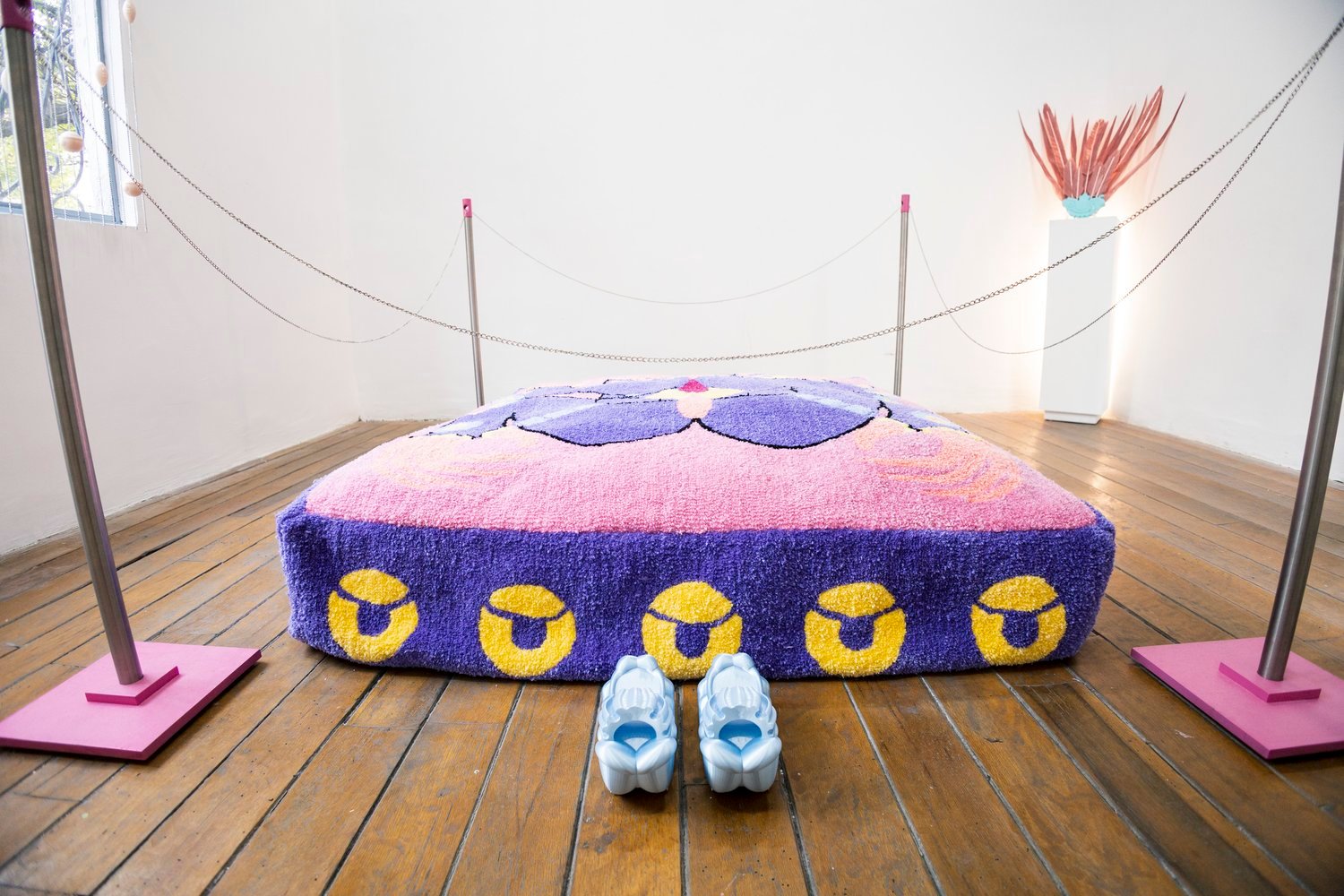
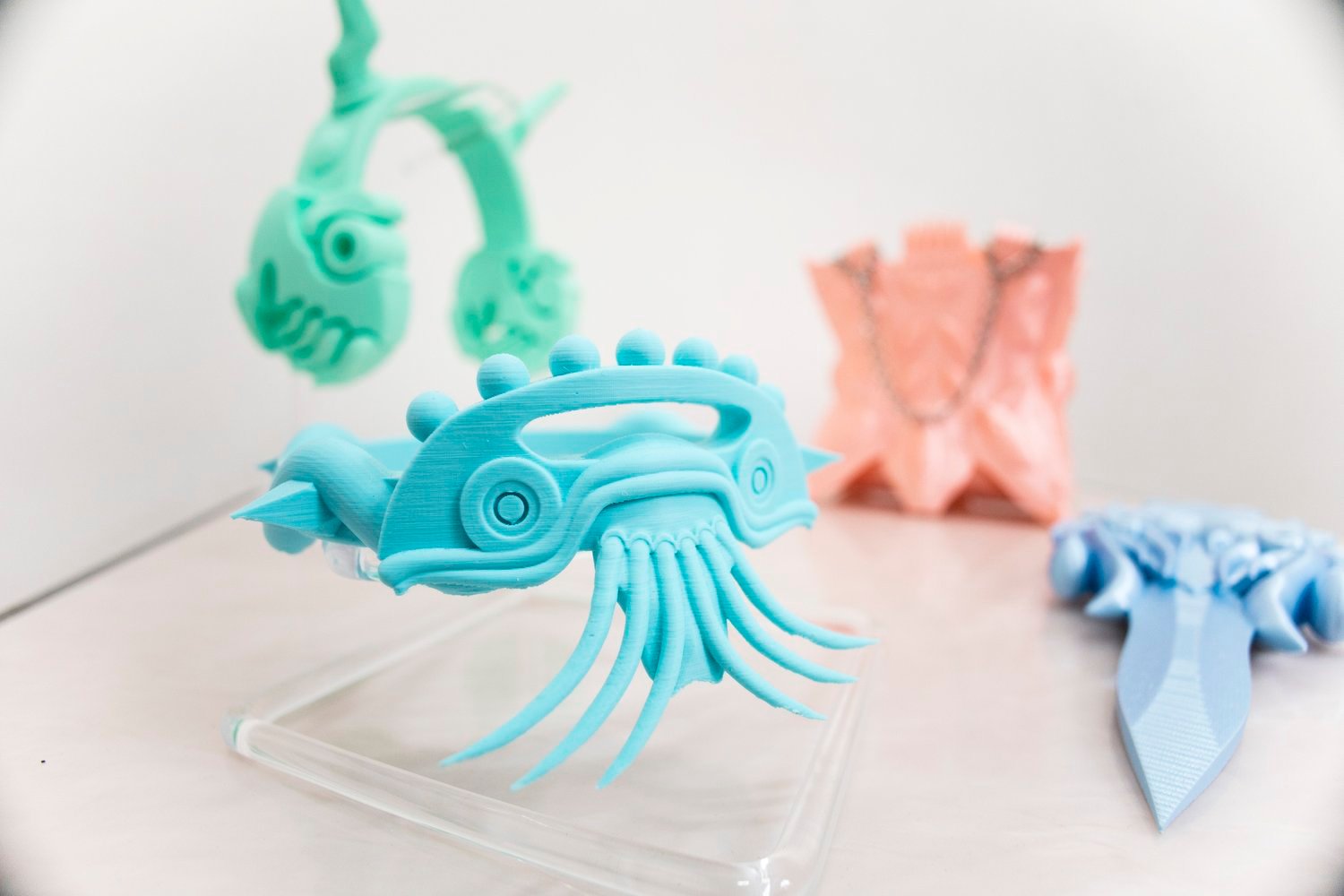
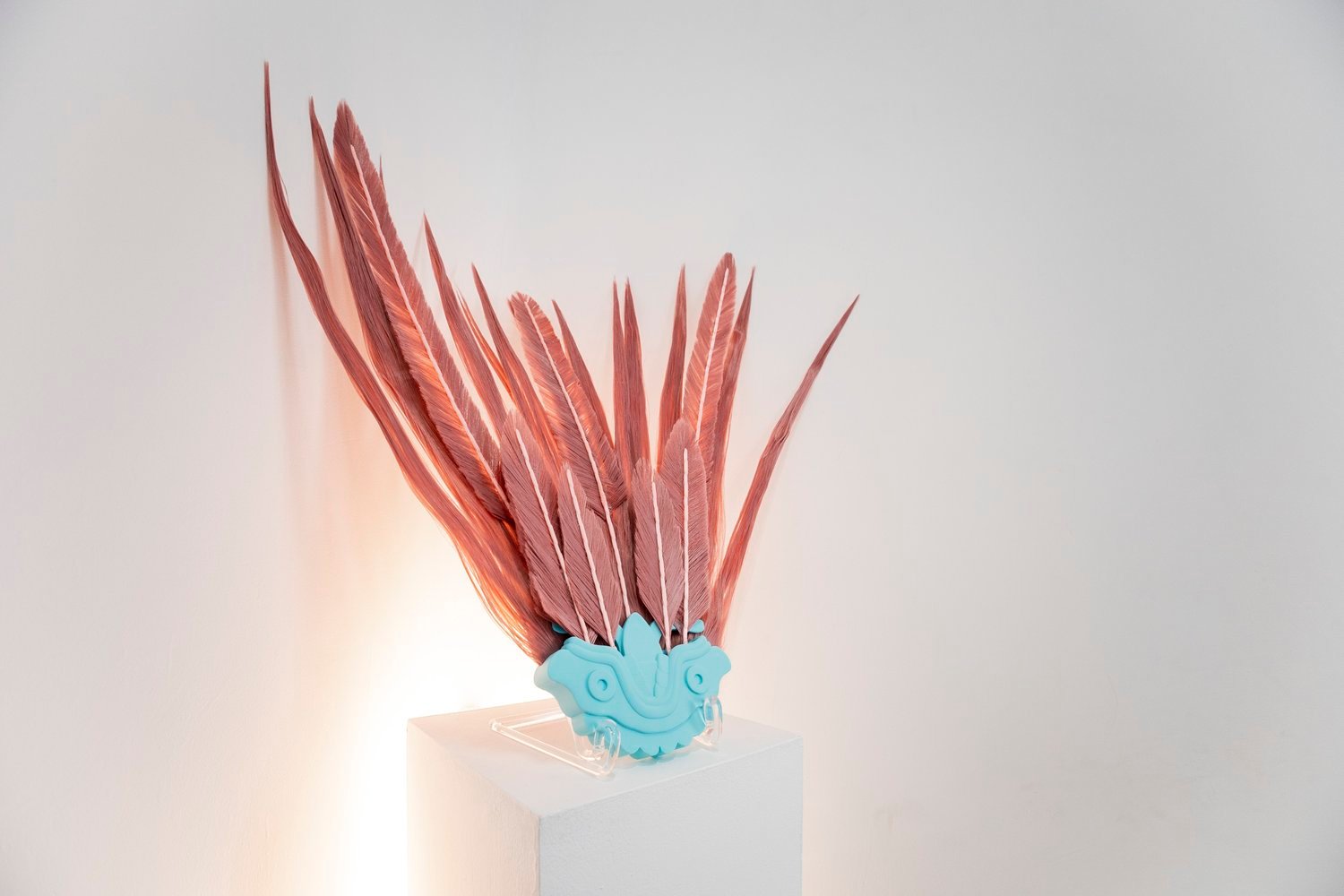
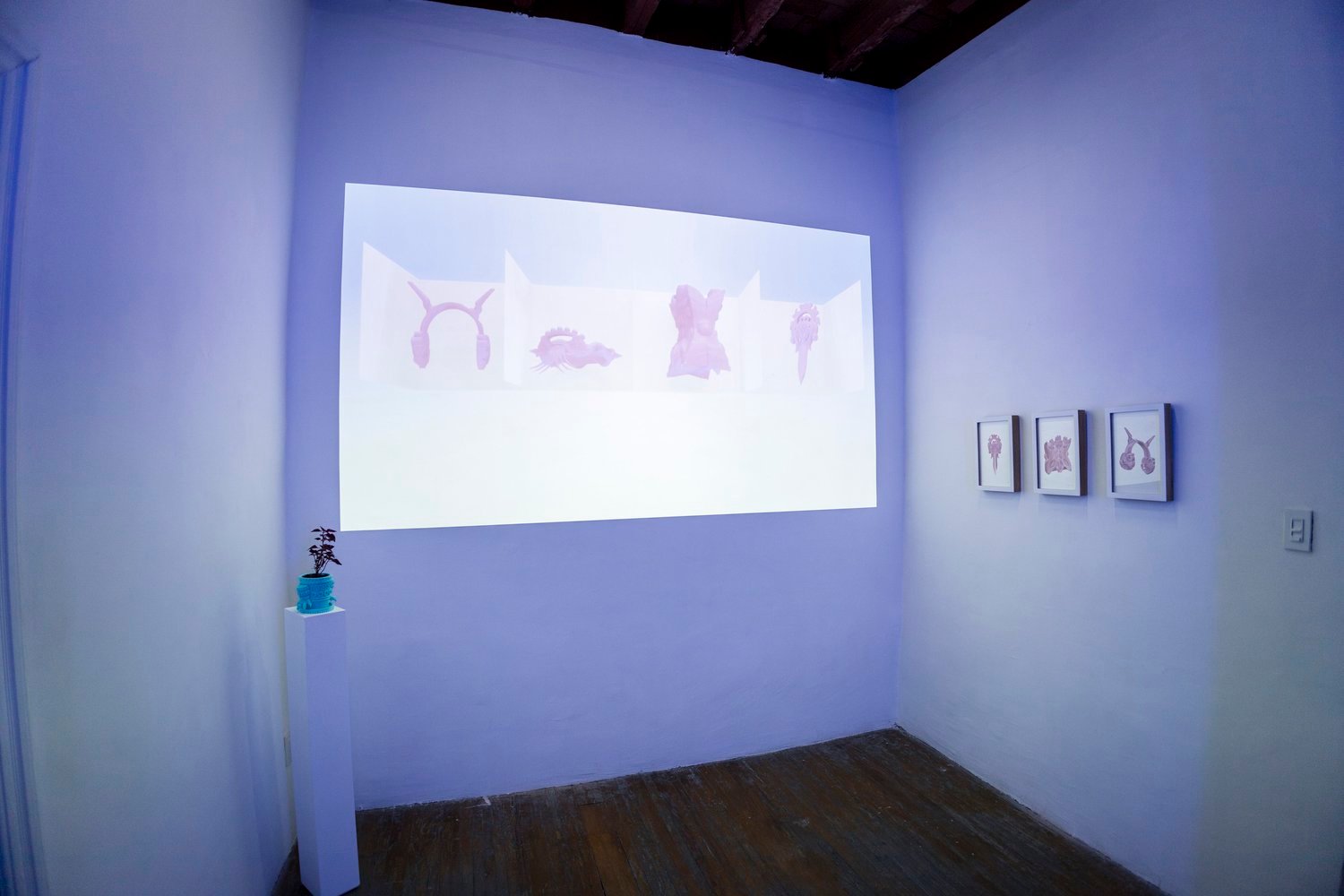
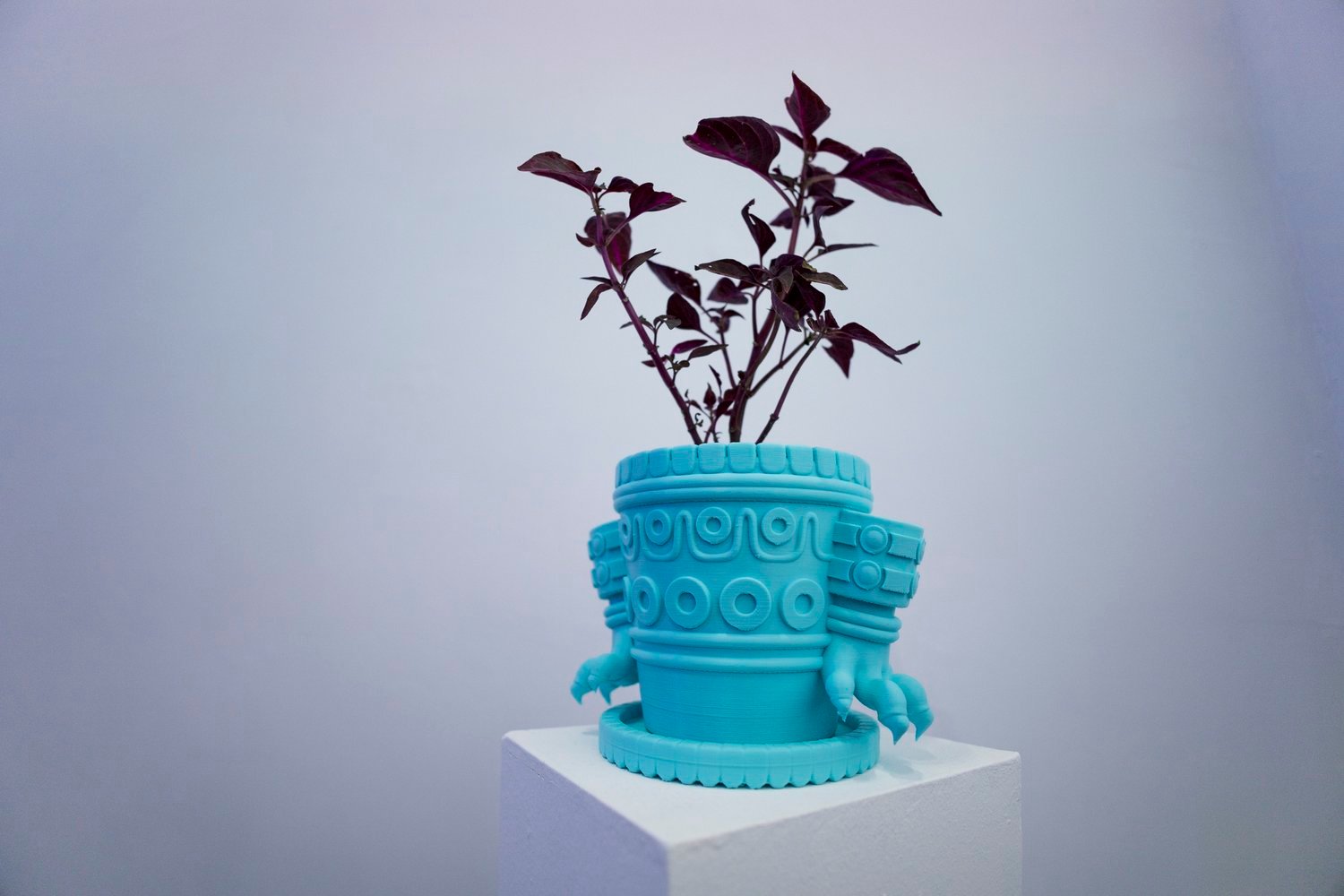
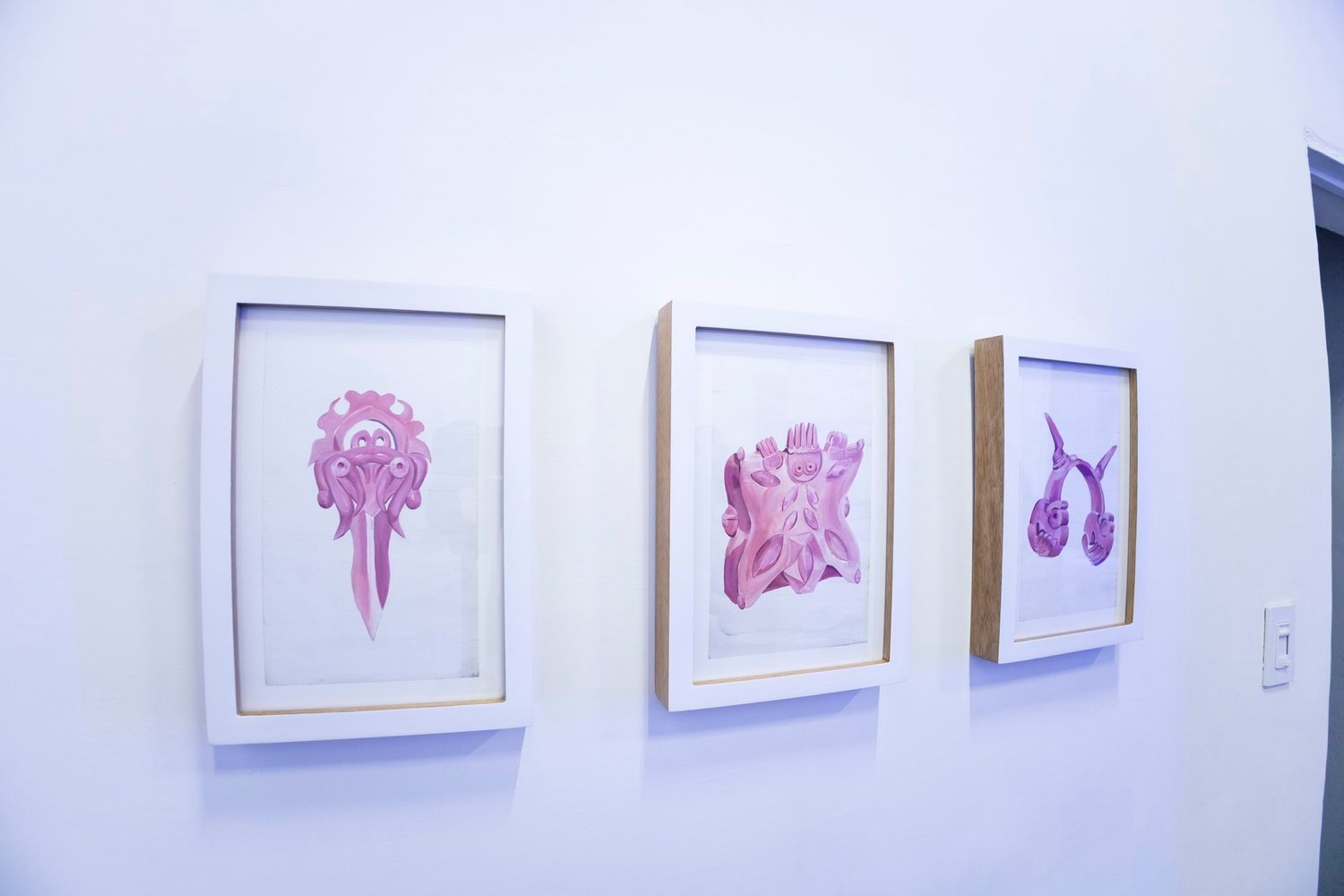
Ileana Moreno se niega a estas representaciones del mundo prehispánico impuestas por el régimen de la mod- ernidad priista usando la estrategia del cosplay y el fanart haciendo evidente el gran halo de ficción que envuelve a la historia. A partir de tecnologías de una era postmoderna Moreno logra generar fracturas en los aparatos de control que son los museos.

Cuando un museo no teatraliza, realiza la operación inversa, reduce los objetos precolombinos a pura forma, invisibilizando las ideas cosmológicas, dinastícas, políticas, militares, calendáricas o matemáticas, a partir de una recontextualización. Rehaciendo las formas con plena libertad sin la preocupación de los indígenas actuales y todo lo complejo que esto implica, tanto artistas, coleccionistas, y curadores tanto mexicanos como extranjeros están empeñados en esa contextualización.

A diferencia de estas prácticas, las piezas de la artista se resisten por medio de una estética pop que se puede reproducir una infinidad de veces generando una subversión de la atesorada presunción modernista del culto a la originalidad, revirtiendo la noción de monolito para reapropiarse de la historia nacional desde una perspectiva íntima. Ileana asume la tarea crítica de molestar, desenmarañar y destacar las estrategias del poder político y sus dispositivos de control cultural. Sus esculturas aluden a objetos utilitarios pero es imposible usarlos recordán- donos que el contexto original de los artefactos dentro de los museos se ha perdido para siempre y nunca más veremos ni comprenderemos estos objetos en la forma en la que fueron vistos por sus creadores. Ileana se separa de la modernidad mexicana del siglo XX a partir del uso de la publicidad deconstruyendo de los códigos coloniales haciendo evidente el vínculo entre la apropiación modernista con el colonialismo.

Wendy Cabrera Rubio

ENG:

HI - TEC.UHTLI.
THE MATERIALITY OF THE FERTILE MONSTER THAT, HAVING BEEN
KILLED, EXPLODES WITH LIFE.

On that day, February 28, 1978, I felt the power, full and complete: I could, by my own will, transform the reality that con- cealed the fundamental roots of Mexico, precisely at the original center of its history … I could place, next to the square of the temple of the crucified man, another temple for the dismembered woman … Open the space for the consciousness of an Exceptional Nation. I was able to do it. I simply said: expropriate the houses. Tear them down. And let it be revealed, by day and night, the Templo Mayor of the Aztecs.

José López Portillo, President of Mexico (1976-1982)

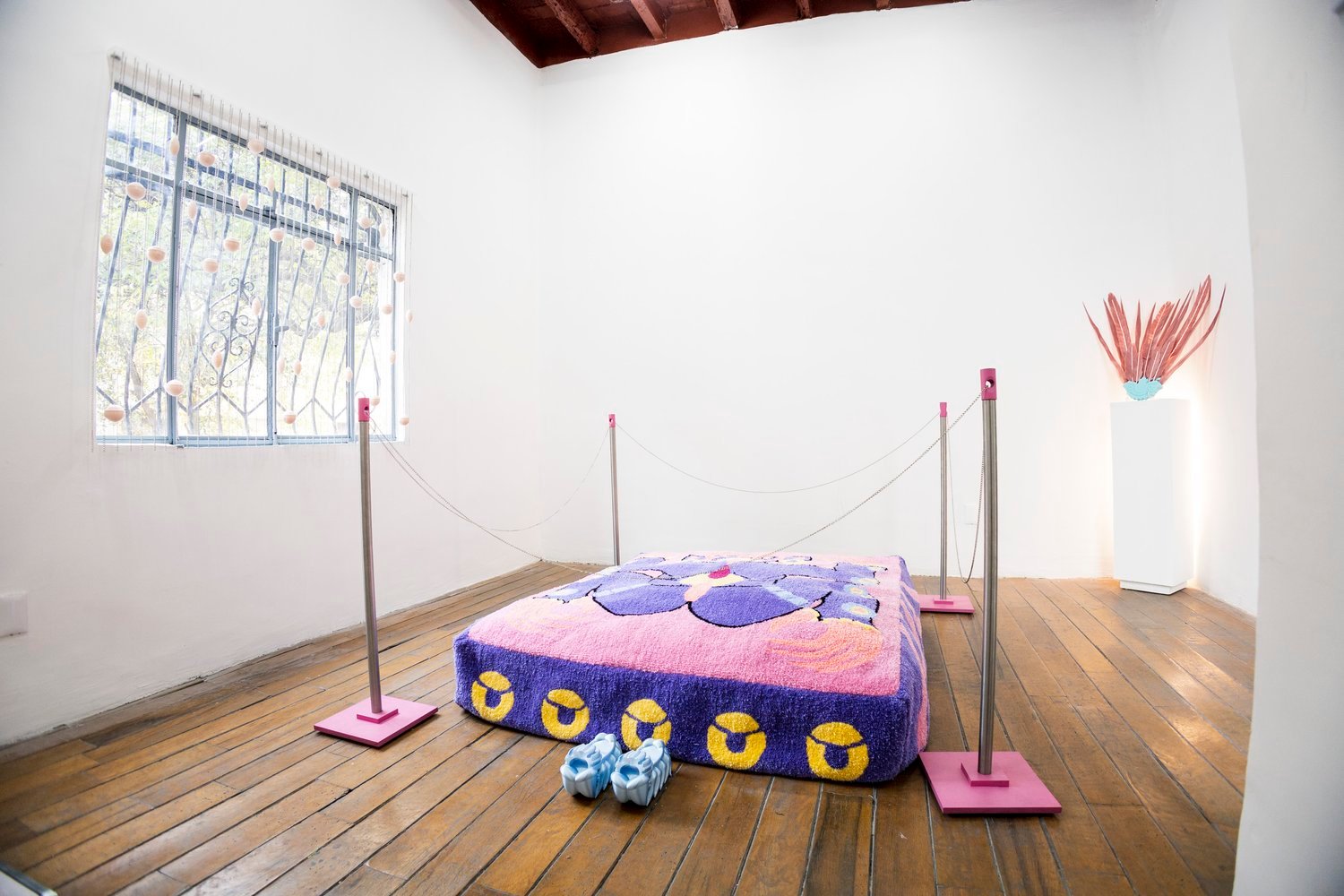
In 1978, in a six-year term favored by sudden oil prosperity, an immense monolith was found by chance in the center of Mexico City, a few meters from the main square. This event, under the commands of José López Portillo, started the Archaeological Project of Templo Mayor, one of the largest in the history of archeology in Mexico, which culminated in the construction of a museum built by the same architect of the Anthropology Museum, Pedro Ramírez Vázquez.

This serendipitous discovery made it possible to establish, beyond any doubt, the exact location for the main pyramid of the Aztec capital of Mexico-Tenochtitlan, on top of which the colonial city of New Spain was built and later the modern Mexican capital. This fact was used to continue with the old centralizing narrative that portrays the Aztecs as the culmination of the indigenous past, resulting in a museum with a theatrical discourse, where the atmosphere of dominant darkness surprisingly wraps around the visitor, directing light towards the objects and the graphics engraved on beveled glass in such a dim way that they can be admired as sculpture.

       In an interview with the chief curator Guillermo Ahua in 1995, he stated:

      Why make it gray and boring like so many museums? Why not compete with Perisur, with Hollywood?
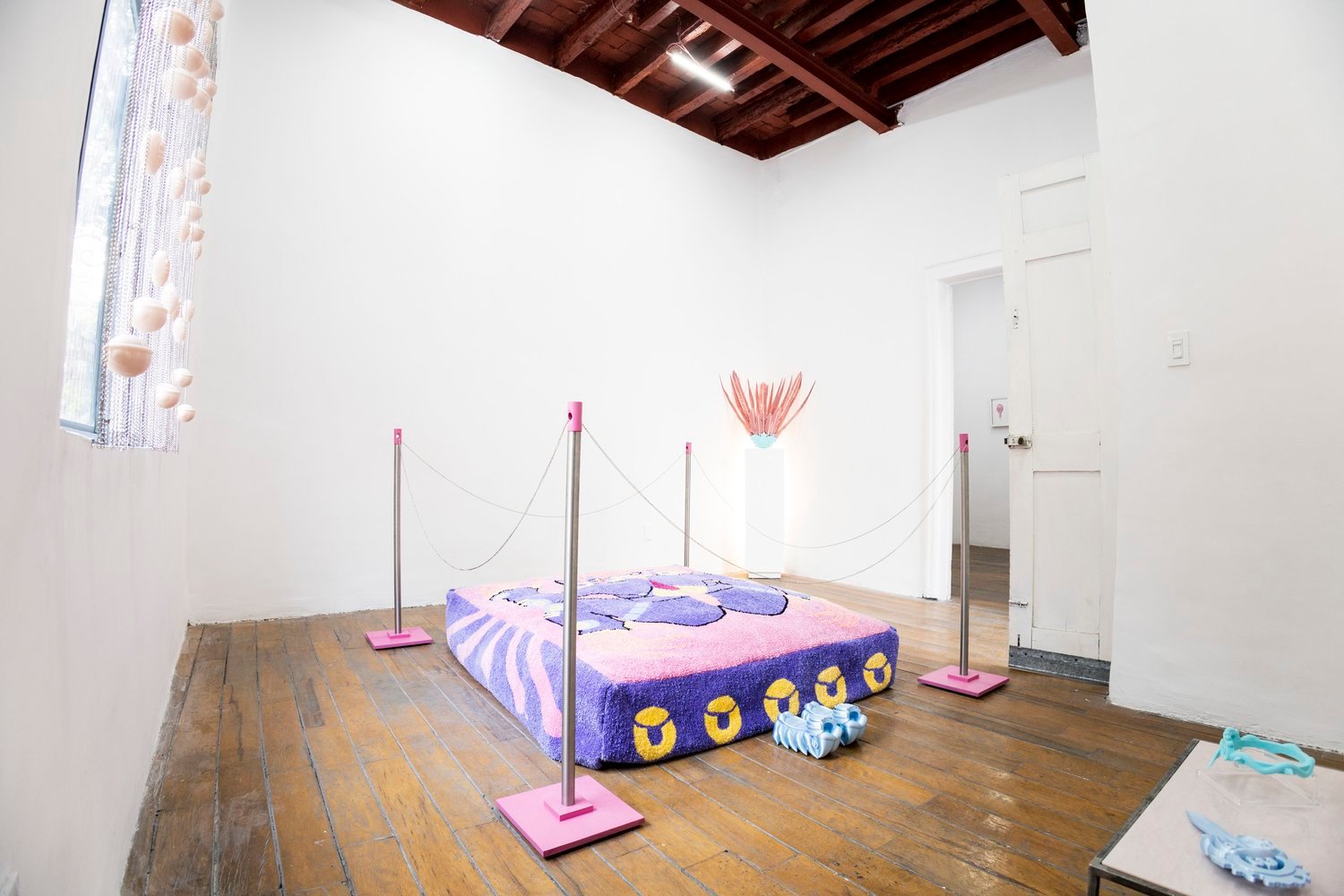
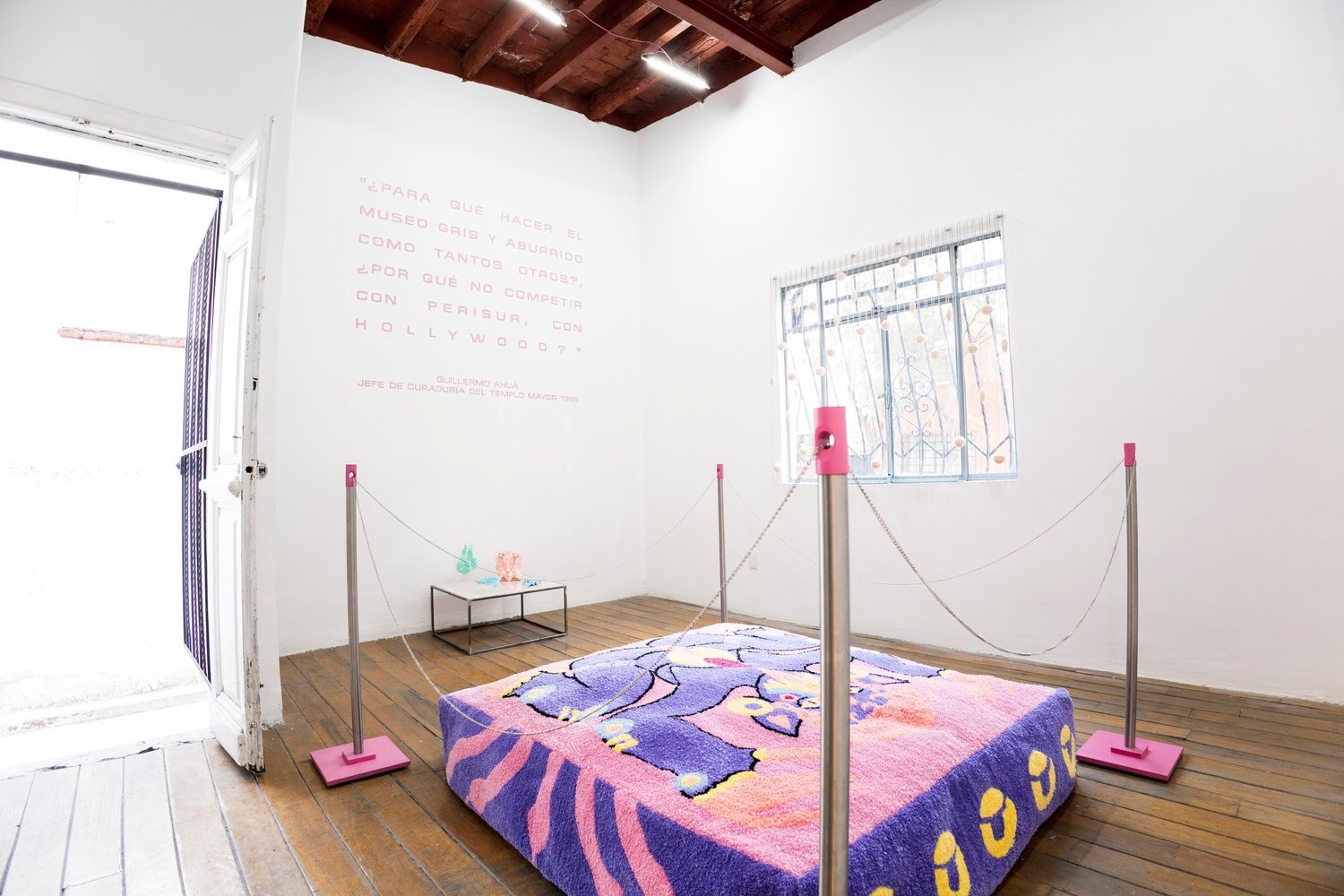
Ileana Moreno refuses these representations of the pre-Hispanic world imposed by the regime of PRI modernity, and by using strategies of cosplay and fan art, she shines light on the fictions within our history. By using technologies from the postmodern era, Moreno manages to generate fractures in the control apparatus that museums are.

When a museum does not dramatize, it performs the reverse operation, reducing pre-Columbian objects to pure form, making the cosmological, dynastic, political, military, calendrical or mathematical ideas invisible, starting by their recontextualization. Forms are remade freely, without care for the indigenous people currently alive, or concern for the complexities implied. Both mexican and foreign artists, collectors, and curators are committed to this recontextualization.

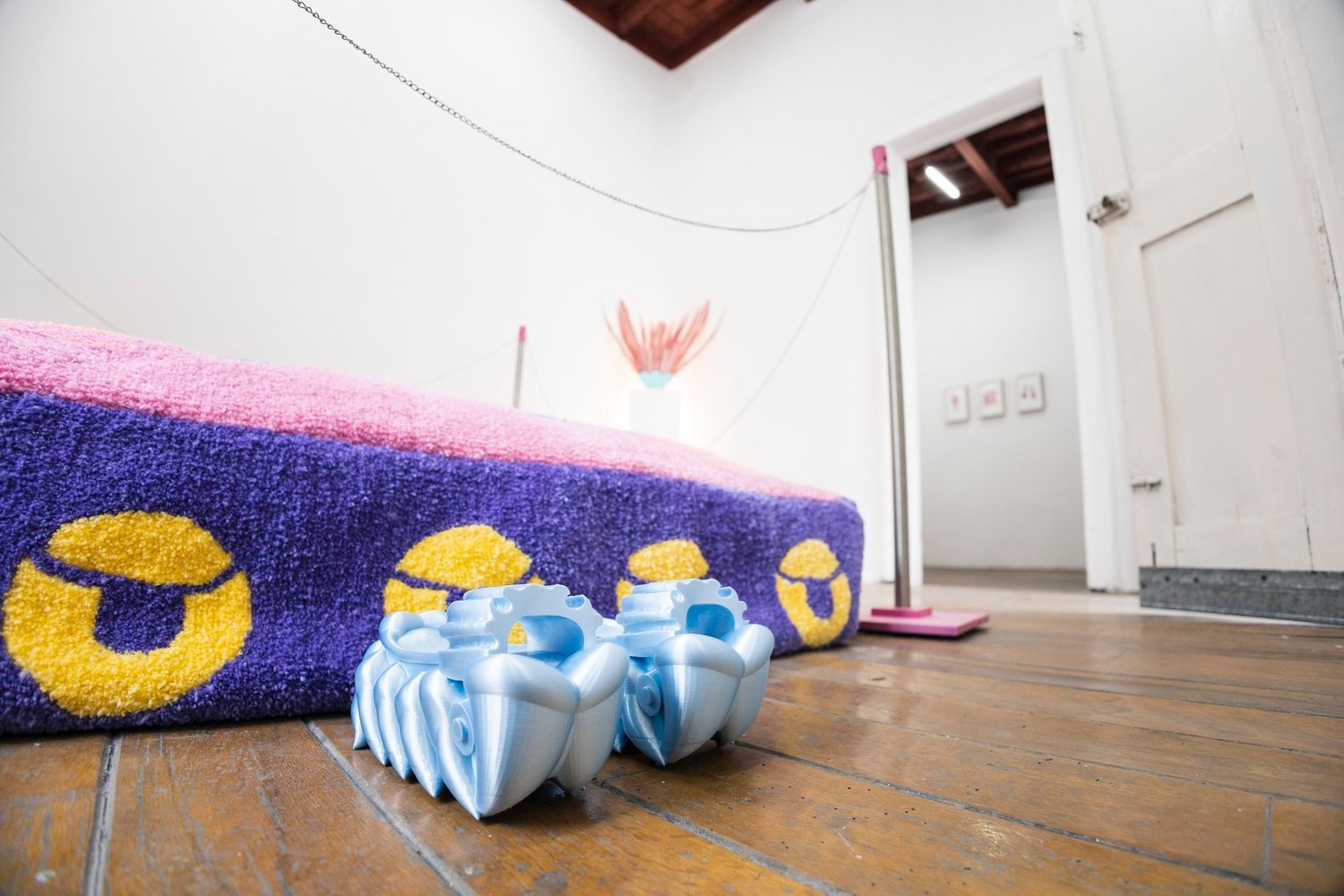
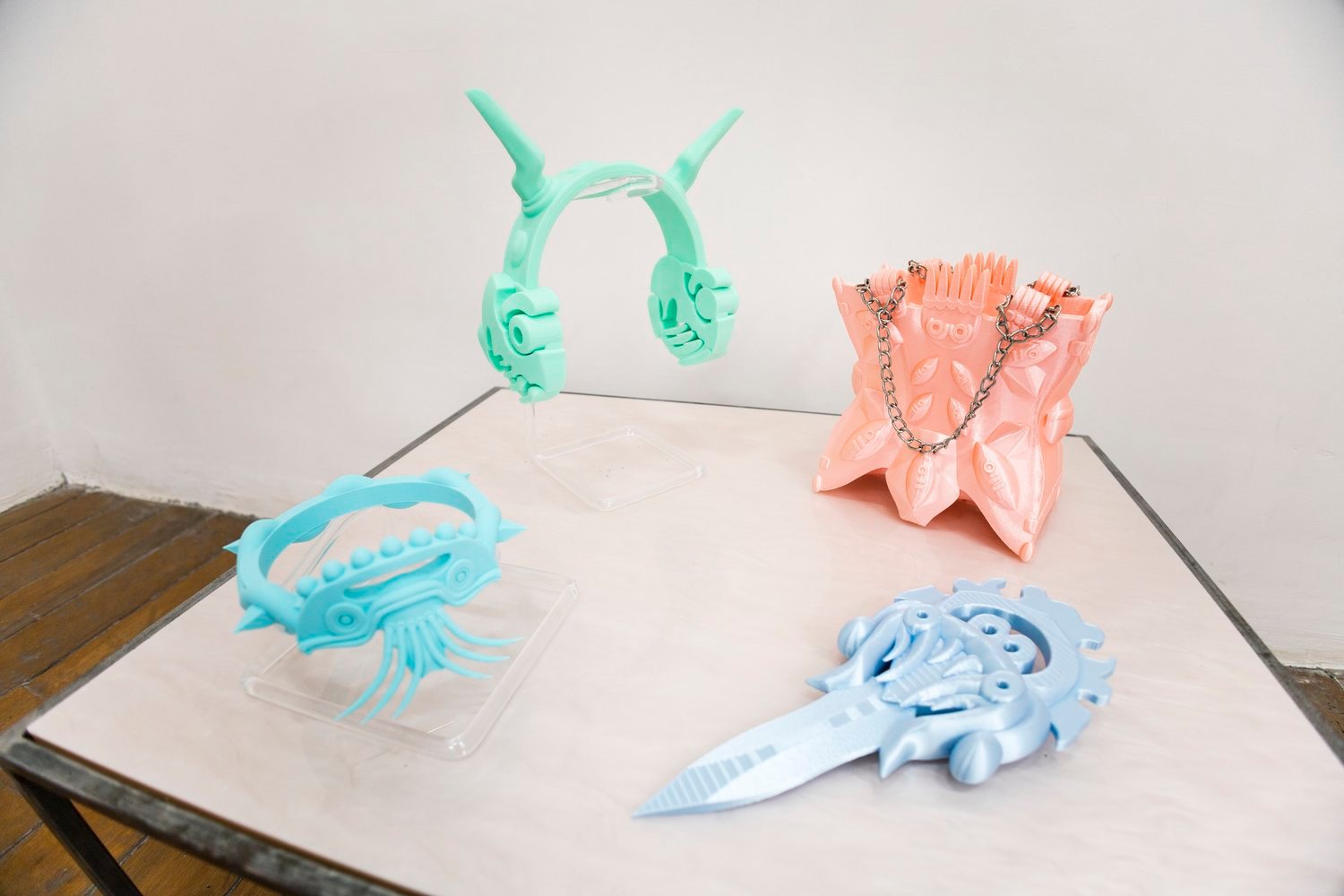
Unlike these practices, the artist’s pieces resist through a pop aesthetic that can be reproduced an infinite number of times, generating a subversion of the treasured modernist presumption of the cult of originality, reversing the notion of monolith to reappropriate the National history from an intimate perspective. Ileana assumes the critical task of disturbing, unraveling and highlighting the strategies of political power and its devices for cultural control. Her sculptures allude to utilitarian objects, but they are impossible to use, reminding us that the original context

of the artifacts has been lost forever within museums, and we will never again see or understand these objects in the way they were seen by their creators. Ileana separates herself from 20th century Mexican modernity through the use of advertising, deconstructing colonial codes, making the link between modernist appropriation and evident colonialism.

Wendy Cabrera Rubio

Fotografías: Luis Vázquez.